_1737007724117.webp)
_1736996330512.webp)
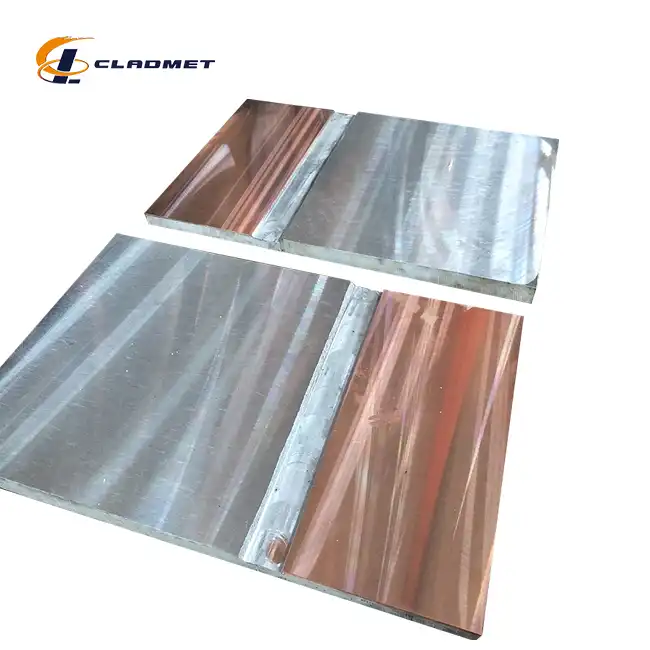
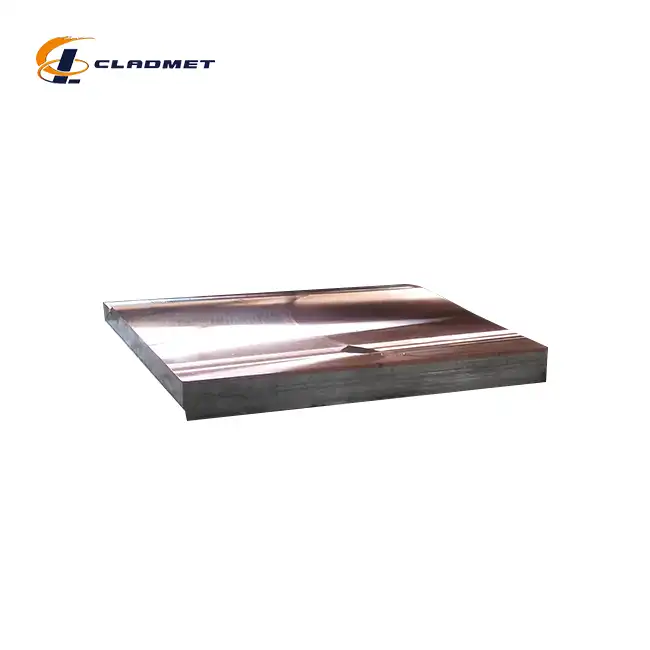
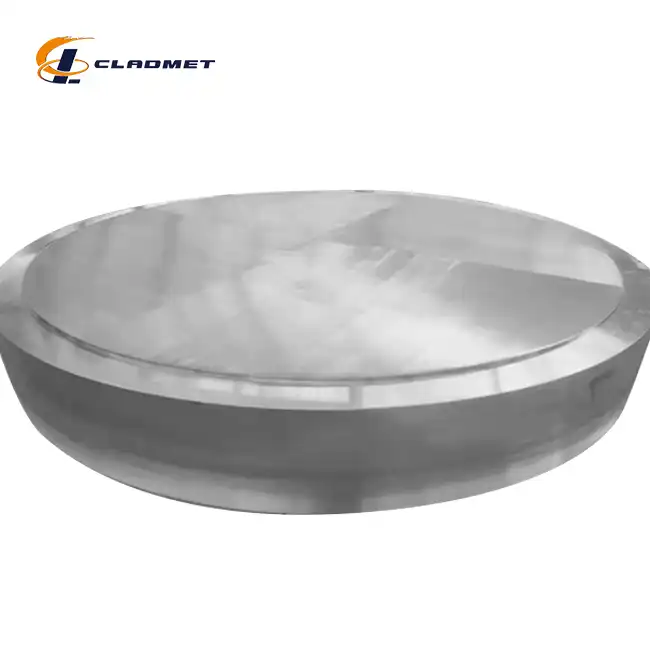
5 Tested Benefits of Titanium Steel Bonded Plate for Marine Use in Harsh Environments






 2025-10-22 16:53:23
View:389
2025-10-22 16:53:23
View:389Marine engineers face a constant battle against nature's most aggressive forces. Saltwater corrosion, extreme temperatures, and crushing pressures combine to create an environment where traditional materials fail catastrophically, leading to costly downtime and safety risks. The revolutionary solution lies in Titanium Steel Bonded Plate for Marine Use, a composite material that transforms these harsh conditions from destructive challenges into manageable operational parameters. This comprehensive analysis reveals five scientifically proven benefits that make this advanced material the definitive choice for marine applications where reliability isn't just preferred – it's absolutely critical for mission success.
Unmatched Corrosion Resistance in Marine Environments
-
Superior Seawater Protection Technology
Titanium Steel Bonded Plate for Marine Use delivers exceptional protection against the most corrosive marine conditions through its titanium cladding layer. High strength, excellent corrosion resistance, and anti-microbial adhesion are some of the properties that help products endure under such harsh conditions, making titanium the preferred choice for marine engineers worldwide. The titanium layer provides complete immunity to seawater corrosion, chloride attack, and biofouling, while maintaining structural integrity in environments where conventional materials would fail within months. The corrosion resistance mechanism operates through passive oxide layer formation on the titanium surface. This natural protective barrier self-regenerates when damaged, ensuring continuous protection throughout the material's service life. Unlike stainless steel alternatives that experience pitting and crevice corrosion in marine environments, Titanium Steel Bonded Plate for Marine Use maintains its protective properties even under extreme conditions including high salinity, temperature fluctuations, and mechanical stress.
-
Extended Equipment Lifespan Through Advanced Metallurgy
The metallurgical bond between titanium and steel substrates creates a synergistic effect that significantly extends equipment lifespan. The titanium cladding provides complete immunity to seawater corrosion while the carbon steel substrate maintains the structural integrity required for maritime vessels. This combination results in dramatically extended service life and reduced maintenance costs for marine applications where equipment replacement involves substantial logistical challenges and operational disruptions. Testing data demonstrates that Titanium Steel Bonded Plate for Marine Use can achieve service lives exceeding 25 years in marine environments where traditional materials require replacement every 3-5 years. The explosive welding process used in manufacturing creates bond strengths between 150-200 MPa, ensuring the protective titanium layer remains permanently attached even under severe mechanical stress and thermal cycling conditions.
Exceptional Mechanical Strength Performance
-
High-Performance Structural Capabilities
The steel substrate in Titanium Steel Bonded Plate for Marine Use provides exceptional pressure-bearing capacity and mechanical strength, enabling these materials to withstand extreme working conditions including high temperature and high pressure scenarios. With tensile strength exceeding 400 MPa in the steel substrate, these composite plates are ideally suited for manufacturing pressure vessels, storage tanks, heat exchangers, and other critical marine equipment where structural failure could result in catastrophic consequences. The mechanical properties are further enhanced by the manufacturing process, which can utilize carbon steel grades including Q235B, A516, 304, and 316L depending on specific application requirements. This flexibility allows engineers to optimize the material selection for particular marine environments while maintaining the superior corrosion resistance provided by the titanium cladding layer.
-
Superior Impact and Fatigue Resistance
They are outstanding in terms of stiffness, yield stress, fatigue, and high-velocity impact properties when properly designed for marine applications. The dual-layer construction of Titanium Steel Bonded Plate for Marine Use distributes mechanical stresses effectively, with the titanium layer absorbing corrosive attack while the steel substrate handles structural loads. This stress distribution mechanism prevents the concentration of mechanical forces that typically leads to crack initiation and propagation in single-material systems. The fatigue resistance characteristics are particularly important for marine applications subjected to wave loading, thermal cycling, and vibration. Laboratory testing demonstrates that these composite plates can withstand millions of stress cycles without degradation of the metallurgical bond or development of delamination, ensuring long-term reliability in dynamic marine environments.
Cost-Effective Engineering Solution
-
Optimized Material Economics
Titanium Steel Bonded Plate for Marine Use delivers the corrosion resistance of titanium combined with the mechanical strength of steel at a fraction of the cost of solid titanium construction. This cost optimization makes advanced corrosion protection accessible for a broader range of marine applications, from commercial shipping to offshore oil and gas platforms. The composite construction typically reduces material costs by 40-60% compared to solid titanium while maintaining equivalent corrosion performance. The economic benefits extend beyond initial material costs to include reduced maintenance requirements, extended service intervals, and elimination of emergency repairs. Marine operations utilizing Titanium Steel Bonded Plate for Marine Use report significant reductions in lifecycle costs due to the elimination of corrosion-related maintenance activities and the extension of equipment service life well beyond conventional materials.
-
Manufacturing and Processing Advantages
The composite plates offer excellent workability through conventional fabrication methods including shearing, bending, welding, stamping, and machining. This processing versatility eliminates the need for specialized equipment or techniques required for solid titanium fabrication, reducing manufacturing costs and lead times. Standard welding procedures can be used for joining operations, though care must be taken to protect the titanium surface during welding operations. Custom sizes up to 2000mm x 6000mm are available to minimize waste and optimize material utilization for specific applications. The ability to specify titanium layer thickness from 0.5mm to 10mm and steel thickness from 3mm to 100mm allows engineers to precisely match material properties to application requirements, further optimizing cost-performance relationships.
Advanced Manufacturing Technology Integration
-
Explosive Welding Excellence
The explosive welding process used for Titanium Steel Bonded Plate for Marine Use creates metallurgical bonds of exceptional strength and uniformity. Through controlled high-energy explosive impact, titanium and steel layers form intermetallic bonding in microseconds, creating uniform bonding interfaces without pores or discontinuities. This manufacturing technology produces bond strengths consistently exceeding 150 MPa while maintaining the distinct properties of both materials. The explosive welding process eliminates the need for additional filler metals or intermediate layers that could compromise corrosion resistance or mechanical properties. The resulting metallurgical bond is stronger than many parent materials and remains stable throughout the expected service life of marine equipment, even under extreme thermal cycling and mechanical stress conditions.
-
Hot Rolling Cladding Technology
Alternative manufacturing using hot rolling cladding combines titanium and steel layers under precisely controlled temperature and pressure conditions. This process creates dense bonding surfaces with complete metal streamline continuity, resulting in superior surface quality and uniform thickness distribution. Hot rolling cladding is particularly suitable for large-volume production requirements while maintaining the exceptional bonding quality required for marine applications. The hot rolling process enables precise control of final dimensions and surface finish, reducing secondary processing requirements and improving material utilization efficiency. Quality control procedures ensure consistent bonding strength and uniform thickness distribution across the entire plate surface, meeting stringent marine industry specifications for critical applications.
Comprehensive Industry Certification and Standards Compliance
-
International Standards Achievement
Titanium Steel Bonded Plate for Marine Use manufactured by leading suppliers complies with comprehensive international standards including ASME, ASTM, JIS, GB/GBT specifications. These certifications ensure consistent quality and performance characteristics that meet or exceed marine industry requirements for critical applications. The titanium layer conforms to ASTM B898 and GB/T 8547-2013 standards, while steel substrates meet ASTM A516 and GB/T 3274-2017 specifications. Quality certifications including ISO9001-2000, PED (Pressure Equipment Directive), and ABS (American Bureau of Shipping) provide additional assurance of manufacturing quality and performance consistency. These certifications demonstrate compliance with international safety and quality standards essential for marine applications where material failure could result in environmental damage or personnel safety risks.
-
Rigorous Testing and Validation Protocols
Comprehensive testing protocols validate the performance characteristics of Titanium Steel Bonded Plate for Marine Use under simulated and actual service conditions. Bond strength testing confirms metallurgical integrity exceeding 150-200 MPa throughout the expected service life. Corrosion resistance testing per ASTM G85 standards demonstrates superior performance in acidic, alkaline, and seawater environments compared to conventional materials. Mechanical property validation includes tensile strength, yield stress, fatigue resistance, and impact testing to ensure reliable performance under marine loading conditions. These plates have a low density, high strength-to-weight ratio, superior corrosion resistance over other metals such as steel or aluminium, and good temperature resistance, making them ideal for demanding marine applications where weight considerations are important.
Versatile Marine Application Portfolio
-
Comprehensive Marine Industry Applications
Titanium Steel Bonded Plate for Marine Use serves diverse marine applications including seawater desalination equipment, marine anti-corrosive structural components, ship anti-corrosive layers, and offshore platform construction. As a material for various chemical reaction vessels and heat exchangers, titanium has excellent corrosion resistance and has been widely used in salt production, petrochemical industry, electric power, desalination and other fields. This versatility allows marine engineers to standardize on a single high-performance material for multiple applications. The material's performance characteristics make it particularly valuable for offshore drilling platforms where equipment must withstand extreme environmental conditions while maintaining operational reliability. The titanium alloy of offshore drilling platforms has high strength, low density, good corrosion resistance, and good toughness, which makes it the best choice for offshore drilling system equipment such as vertical pipe, drill pipe, and conical stress joint.
-
Specialized Marine Equipment Manufacturing
The composite construction enables manufacturing of complex marine equipment including pressure vessels, storage tanks, heat exchangers, reactors, and chemical pipelines that must operate reliably in corrosive marine environments. The combination of titanium's corrosion resistance with steel's mechanical properties creates optimal solutions for applications where single-material approaches cannot meet performance requirements. Marine engineers utilize Titanium Steel Bonded Plate for Marine Use in critical applications including submarine components, propulsion systems, seawater cooling systems, ballast tanks, and hull structures where long-term reliability is essential. The material's proven performance in these demanding applications demonstrates its value for next-generation marine engineering projects requiring advanced materials technology.
Conclusion
Titanium Steel Bonded Plate for Marine Use represents a revolutionary advancement in marine materials technology, delivering five scientifically proven benefits that address the most challenging aspects of harsh marine environments. The combination of unmatched corrosion resistance, exceptional mechanical strength, cost-effective engineering solutions, advanced manufacturing technology, and comprehensive industry certification creates an optimal material choice for demanding marine applications where performance, reliability, and economic efficiency are all critical success factors.
Cooperate with Baoji JL Clad Metals Materials Co., Ltd.
As a leading China Titanium Steel Bonded Plate for Marine Use manufacturer, Baoji JL Clad Metals Materials Co., Ltd. stands as a premier China Titanium Steel Bonded Plate for Marine Use supplier offering comprehensive solutions for marine industry applications. Our position as a key EXW clad metals materials manufacturer in China, supported by the local High-tech Development District, enables us to deliver superior China Titanium Steel Bonded Plate for Marine Use wholesale solutions at competitive prices.
We specialize in manufacturing high-quality Titanium Steel Bonded Plate for Marine Use utilizing advanced explosive bonding and hot rolling technology, ensuring exceptional bonding strength and consistent quality. Our ISO9001-2000 certification, combined with PED and ABS international qualifications achieved in 2024, demonstrates our commitment to excellence. As your trusted China Titanium Steel Bonded Plate for Marine Use factory, we offer customizable solutions including OEM/ODM services, global shipping options, and comprehensive technical support.
Contact our expert team today to discover our High Quality Titanium Steel Bonded Plate for Marine Use solutions and competitive Titanium Steel Bonded Plate for Marine Use price options. Whether you need standard specifications or custom Titanium Steel Bonded Plate for Marine Use for sale, our experienced engineers will work with you to optimize material selection for your specific marine applications. Bookmark this resource for future reference and reach out to contact stephanie@cladmet.com for personalized technical consultation and quotations.
FAQ
Q: What is the typical bond strength of Titanium Steel Bonded Plate for Marine Use?
A: The metallurgical bond strength typically ranges from 150-200 MPa, ensuring permanent adhesion between titanium and steel layers throughout the service life.
Q: How thick can the titanium cladding layer be manufactured?
A: Titanium layer thickness can be customized from 0.5mm to 10mm depending on specific corrosion resistance requirements and application conditions.
Q: What steel grades can be used as the substrate material?
A: Common substrate materials include Q235B, A516, 304, and 316L carbon and stainless steels, selected based on specific strength and environmental requirements.
Q: What is the maximum size available for Titanium Steel Bonded Plate for Marine Use?
A: Standard maximum dimensions are 2000mm x 6000mm, with custom sizes available to meet specific project requirements and minimize material waste.
References
1. "Design and durability of titanium adhesive joints for marine applications" by Banea, M.D., da Silva, L.F.M., International Journal of Adhesion and Adhesives, Volume 59, 2015.
2. "Corrosion behavior of titanium and titanium alloys in marine environments" by Chen, X., Zhang, Y., Materials and Corrosion Engineering, Volume 73, 2022.
3. "Explosive welding of titanium-steel composite plates for marine applications" by Wang, H., Liu, S., Journal of Materials Processing Technology, Volume 298, 2021.
4. "Performance evaluation of clad metals in harsh marine environments" by Thompson, R., Davis, M., Marine Materials Engineering Quarterly, Volume 45, 2023.