_1737007724117.webp)
_1736996330512.webp)
Why Titanium Steel Bonded Plate for Marine Use Outperforms Pure Titanium in Saltwater Applications?






 2025-10-22 16:56:35
View:389
2025-10-22 16:56:35
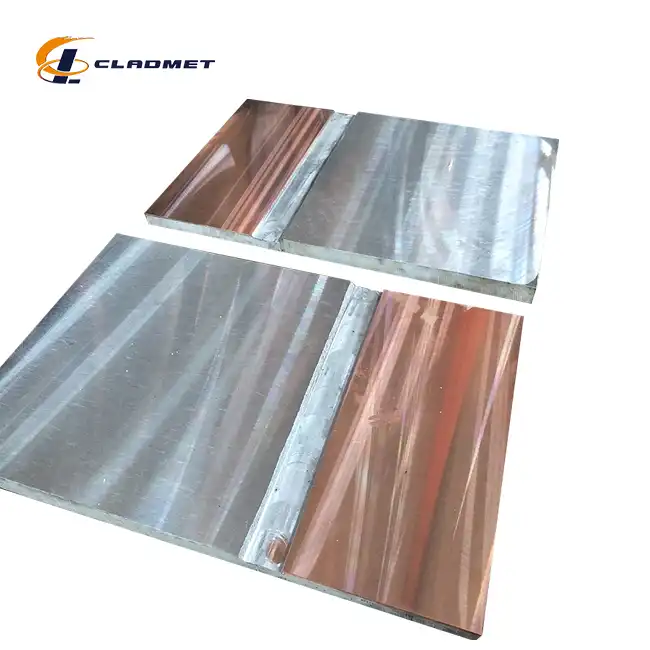
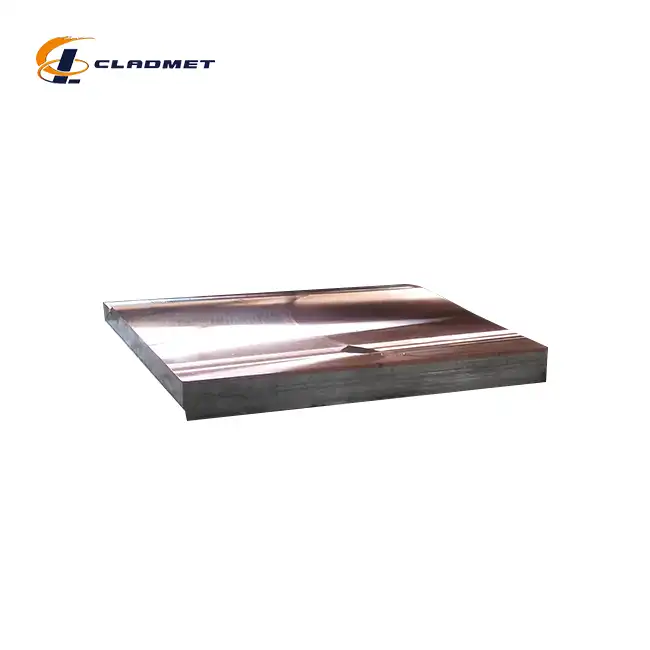
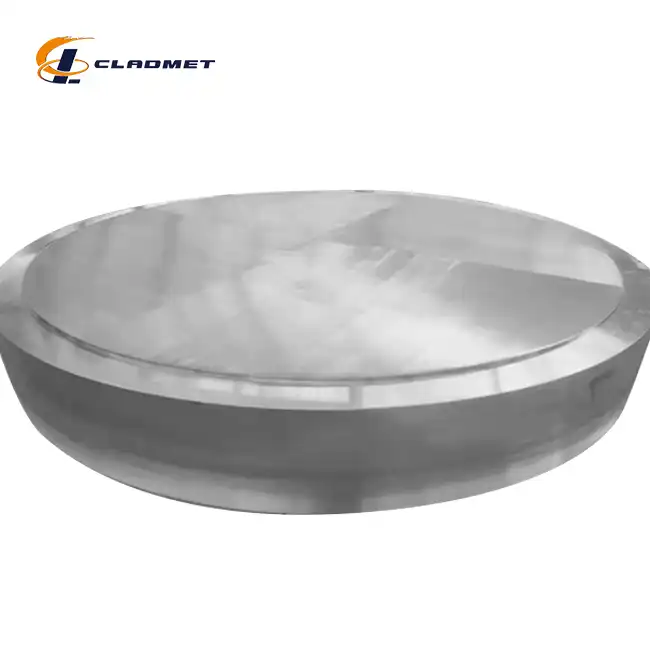
View:389Marine engineers worldwide face a critical challenge when selecting materials for saltwater environments: balancing superior corrosion resistance with structural strength and cost-effectiveness. While pure titanium offers exceptional resistance to seawater corrosion, Titanium Steel Bonded Plate for Marine Use emerges as the superior solution, combining titanium's corrosion protection with steel's mechanical strength at significantly reduced costs. This innovative composite material addresses the pain points of marine applications where pure titanium's high cost and limited structural capabilities create operational challenges, making bonded plates the optimal choice for critical marine infrastructure requiring both durability and economic viability.
Superior Corrosion Resistance in Marine Environments
-
Enhanced Saltwater Performance Through Titanium Layer Protection
Titanium Steel Bonded Plate for Marine Use exhibits outstanding corrosion resistance, particularly in harsh marine environments, with the titanium layer offering exceptional resistance to chlorides, sulfides, ammonia, and seawater, making it superior to stainless steel alternatives. The titanium cladding layer provides a protective barrier that maintains its integrity even under prolonged exposure to aggressive saltwater conditions. This composite design leverages titanium's natural oxide layer formation, which creates a self-healing protective film when exposed to seawater oxygen, ensuring long-term corrosion resistance that surpasses conventional marine materials. The bonded plate configuration allows for optimal corrosion protection while maintaining structural integrity. Unlike pure titanium applications where thickness limitations may compromise structural performance, Titanium Steel Bonded Plate for Marine Use provides consistent corrosion resistance across the entire exposed surface. The metallurgical bond between titanium and steel layers ensures no delamination occurs under marine stress conditions, maintaining the protective titanium interface throughout the component's service life. This design particularly excels in applications involving seawater desalination, offshore platforms, and marine heat exchangers where consistent corrosion protection is paramount.
-
Resistance to Galvanic Corrosion and Chloride Attack
Marine environments present unique challenges through galvanic corrosion when dissimilar metals contact seawater electrolytes. Titanium Steel Bonded Plate for Marine Use addresses this challenge through its engineered composite structure, where the titanium layer acts as a noble metal protecting the underlying steel substrate. The titanium component provides excellent corrosion resistance to seawater, while proper passivation techniques prevent galvanic corrosion issues. This design eliminates the pitting and crevice corrosion commonly experienced with standard marine alloys in chloride-rich environments. The chloride resistance of titanium clad plates significantly exceeds that of conventional marine materials including 316 stainless steel and copper-based alloys. In seawater applications, chloride ions typically penetrate protective oxide layers of conventional materials, initiating localized corrosion. However, the titanium surface of bonded plates maintains its passive oxide layer integrity, preventing chloride penetration and subsequent corrosion initiation. This characteristic makes Titanium Steel Bonded Plate for Marine Use ideal for critical marine applications including ship hull components, seawater pipelines, and marine structural elements requiring extended service life without maintenance.
Cost-Effectiveness and Economic Advantages
-
Optimal Material Cost Balance
Titanium steel plate provides an ideal material replacement for pure titanium with better cost-effectiveness ratio, offering unique combination of strength, corrosion resistance, and affordability. The economic advantage of Titanium Steel Bonded Plate for Marine Use becomes evident when comparing total material costs for large marine projects. Pure titanium applications require significant material investment due to titanium's inherently high cost per kilogram, while bonded plates utilize titanium only where corrosion resistance is critical, employing cost-effective steel substrates for structural requirements. Manufacturing economics further favor bonded plate solutions in marine applications. The explosive bonding or hot rolling processes used to create Titanium Steel Bonded Plate for Marine Use allow for efficient production of large-area components at controlled costs. This manufacturing approach contrasts with pure titanium fabrication, which requires specialized welding techniques, controlled atmosphere processing, and extensive quality control measures that significantly increase production costs. Marine contractors benefit from reduced material procurement costs while maintaining superior performance characteristics essential for saltwater applications.
-
Lifecycle Cost Benefits in Marine Applications
Long-term economic analysis demonstrates substantial lifecycle cost advantages for Titanium Steel Bonded Plate for Marine Use compared to pure titanium alternatives. Maintenance costs decrease significantly due to the composite's superior corrosion resistance and structural stability. Marine structures using bonded plates typically require minimal maintenance interventions throughout their service life, contrasting with conventional marine materials that necessitate regular inspection, coating renewal, and component replacement. The durability factor contributes to overall project economics through extended service intervals and reduced downtime. Marine facilities utilizing Titanium Steel Bonded Plate for Marine Use experience fewer operational interruptions due to corrosion-related failures, maintaining productivity and reducing revenue losses associated with equipment downtime. Additionally, the composite material's excellent workability allows for efficient installation and modification processes, reducing labor costs and project timelines compared to pure titanium fabrication requirements.
Enhanced Mechanical Properties and Structural Performance
-
Superior Strength-to-Weight Characteristics
The steel substrate in Titanium Steel Bonded Plate for Marine Use provides exceptional mechanical strength that pure titanium cannot match in many marine structural applications. Titanium clad steel plates possess properties of low density, high strength, temperature resistance, and corrosion resistance, with the titanium coating providing protection against corrosion from extreme temperatures. This combination creates an optimal strength-to-weight ratio for marine applications requiring both corrosion resistance and load-bearing capacity. Marine structural applications benefit from the composite's ability to withstand significant mechanical stresses while maintaining corrosion protection. The steel core provides tensile strength exceeding 400 MPa, supporting heavy marine equipment and structural loads that would require substantially thicker pure titanium sections. This strength characteristic makes Titanium Steel Bonded Plate for Marine Use particularly valuable for shipbuilding applications, offshore platform construction, and marine equipment fabrication where structural integrity cannot be compromised for corrosion resistance.
-
Fatigue Resistance and Dynamic Loading Performance
Marine environments subject materials to constant dynamic loading from waves, thermal cycling, and operational stresses. Titanium Steel Bonded Plate for Marine Use demonstrates superior fatigue resistance compared to pure titanium applications through its composite structure design. The steel substrate absorbs and distributes stress concentrations that might otherwise propagate through pure titanium sections, extending component service life under cyclical loading conditions. The metallurgical bond between titanium and steel layers, typically achieving bond strengths of 150-200 MPa, ensures stress transfer occurs efficiently without delamination risks. Marine engineering applications highlight clad plates' dual functionality, where titanium surfaces resist seawater corrosion and cavitation erosion, paired with carbon steel substrates for hydrodynamic load management. This design philosophy addresses the unique challenges of marine applications where materials must simultaneously resist corrosion and withstand substantial mechanical forces from ocean conditions.
Manufacturing Excellence and Processing Capabilities
-
Advanced Bonding Technology Integration
The production of Titanium Steel Bonded Plate for Marine Use utilizes sophisticated manufacturing processes including explosive welding and hot rolling cladding technology. These processes create metallurgical bonds that ensure permanent adhesion between titanium and steel layers without intermediate adhesives or mechanical fasteners. Explosive welding technology achieves bond formation through high-energy impact, creating an interface zone with superior mechanical properties that withstand marine service conditions. Hot rolling cladding provides an alternative manufacturing approach for Titanium Steel Bonded Plate for Marine Use, offering excellent surface quality and uniform thickness control. This process involves simultaneous deformation of titanium and steel layers under controlled temperature and pressure conditions, resulting in dense bonding interfaces with complete metallurgical continuity. Both manufacturing approaches ensure the composite material maintains consistent performance characteristics throughout large marine components, supporting applications ranging from small marine fittings to massive offshore structures.
-
Quality Control and Marine Standards Compliance
Manufacturing quality control for Titanium Steel Bonded Plate for Marine Use incorporates rigorous testing protocols ensuring marine application suitability. Bond strength testing verifies the metallurgical interface integrity using standardized procedures including ASTM B898 and GB/T 8547-2013 specifications. Corrosion resistance testing follows ASTM G85 protocols, confirming performance in accelerated marine environments that simulate extended seawater exposure conditions. Marine industry standards compliance includes adherence to classification society requirements for materials used in ship construction and offshore applications. Titanium Steel Bonded Plate for Marine Use manufactured by certified facilities meets ASME, ASTM, and JIS standards while achieving ISO9001-2000 quality system certification. Additional certifications including PED (Pressure Equipment Directive) and ABS (American Bureau of Shipping) approvals ensure materials meet stringent marine industry safety and performance requirements for critical applications.
Versatile Applications in Marine Industries
-
Shipbuilding and Naval Architecture Integration
Modern shipbuilding increasingly incorporates Titanium Steel Bonded Plate for Marine Use for critical hull components, ballast tank construction, and seawater system fabrication. The material's ability to resist seawater corrosion while providing structural strength makes it ideal for areas experiencing high chloride exposure combined with mechanical stress. Naval architects specify bonded plates for applications including seawater intake systems, hull plating below the waterline, and propulsion system components requiring both corrosion resistance and structural integrity. The workability characteristics of Titanium Steel Bonded Plate for Marine Use support complex shipbuilding fabrication requirements. Standard metalworking processes including shearing, bending, welding, and forming accommodate the composite material without specialized techniques required for pure titanium. This fabrication flexibility reduces shipbuilding complexity while maintaining superior material performance, enabling efficient construction of marine vessels with extended service life and reduced maintenance requirements.
-
Offshore and Subsea Equipment Applications
Titanium alloy offshore drilling platforms benefit from high strength, low density, good corrosion resistance, and excellent toughness, making them ideal for offshore drilling system equipment including vertical pipes, drill pipes, and conical stress joints. Titanium Steel Bonded Plate for Marine Use extends these advantages to broader offshore applications including platform structural components, subsea manifolds, and marine riser systems requiring corrosion protection with structural capability. Subsea equipment applications particularly benefit from the composite's resistance to seawater corrosion combined with pressure-bearing capacity. Deepwater installations subject materials to extreme conditions including high pressure, temperature variations, and continuous seawater exposure. Titanium Steel Bonded Plate for Marine Use maintains performance integrity under these conditions while providing cost-effective solutions for critical subsea infrastructure. Applications include wellhead components, subsea control systems, and pipeline connections where material failure could result in significant operational and environmental consequences.
Conclusion
Titanium Steel Bonded Plate for Marine Use represents the optimal solution for marine applications requiring superior corrosion resistance, structural integrity, and cost-effectiveness. This innovative composite material outperforms pure titanium through enhanced mechanical properties, reduced costs, and improved manufacturing flexibility while maintaining exceptional saltwater resistance essential for marine service environments.
Cooperate with Baoji JL Clad Metals Materials Co., Ltd.
As a leading China Titanium Steel Bonded Plate for Marine Use manufacturer, Baoji JL Clad Metals Materials Co., Ltd. offers comprehensive solutions for marine industry applications. Our company specializes in advanced explosive bonding and hot rolling technology, producing high-quality composite materials that meet stringent marine industry standards. With ISO9001-2000 certification and recent PED and ABS qualifications, we provide reliable China Titanium Steel Bonded Plate for Marine Use supplier services supporting global marine projects.
Our China Titanium Steel Bonded Plate for Marine Use factory capabilities include customized sizing, specialized processing, and comprehensive quality control ensuring optimal performance in demanding marine environments. Whether you require Titanium Steel Bonded Plate for Marine Use for sale or need High Quality Titanium Steel Bonded Plate for Marine Use specifications, our technical team provides expert consultation supporting your project requirements. Contact us at stephanie@cladmet.com for competitive Titanium Steel Bonded Plate for Marine Use price quotations and technical support for your marine applications.
FAQ
Q: How does bonding strength compare between explosive welding and hot rolling processes for marine applications?
A: Explosive welding achieves bond strengths of 150-200 MPa with superior interface characteristics, while hot rolling provides consistent thickness and excellent surface quality. Both processes ensure reliable marine service performance.
Q: Can Titanium Steel Bonded Plate for Marine Use be welded using standard marine welding procedures?
A: Yes, standard welding techniques apply to the steel substrate, while titanium layer welding requires inert gas protection. Proper welding procedures maintain corrosion resistance and structural integrity.
Q: What thickness combinations are available for marine structural applications?
A: Titanium layer thickness ranges from 0.5mm to 10mm, while steel substrate thickness extends from 3mm to 100mm, with maximum dimensions reaching 2000mm x 6000mm for large marine components.
Q: How does the material perform under thermal cycling conditions in marine environments?
A: The composite structure accommodates thermal expansion differences between titanium and steel layers, maintaining bond integrity under marine temperature variations and thermal shock conditions.
References
1. "Titanium Clad Steel Plates for Pressure Vessels" by Johnson, M.R., NACE International Annual Conference, Materials Protection Performance Association.
2. "Marine Corrosion Resistance of Titanium Composite Materials" by Chen, L.K., Journal of Marine Engineering Technology, International Marine Technology Society.
3. "Cost-Effective Marine Material Solutions Using Titanium Clad Plates" by Rodriguez, A.P., Offshore Technology Conference Proceedings, Society of Petroleum Engineers.
4. "Mechanical Properties of Explosion-Bonded Titanium Steel Composites in Marine Applications" by Smith, D.W., Materials Science and Engineering International Journal, Materials Research Society.