_1737007724117.webp)
_1736996330512.webp)






 2026-01-21 09:00:04
When selecting materials for critical pipeline infrastructure, the choice of corrosion resistant titanium steel clad plate represents a strategic investment in long-term performance and reliability. These advanced composite materials combine the structural strength of steel with titanium's exceptional resistance to corrosive environments, making them an ideal solution for challenging applications in chemical processing, offshore operations, and industrial transport systems. The unique metallurgical bonding between steel and titanium layers creates a material that withstands aggressive chemicals, extreme temperatures, and marine conditions while maintaining cost-effectiveness through extended service life and reduced maintenance requirements.
Introduction to Corrosion Resistant Titanium Steel Clad Plates
Understanding Titanium Steel Clad Plate: Composition and Properties
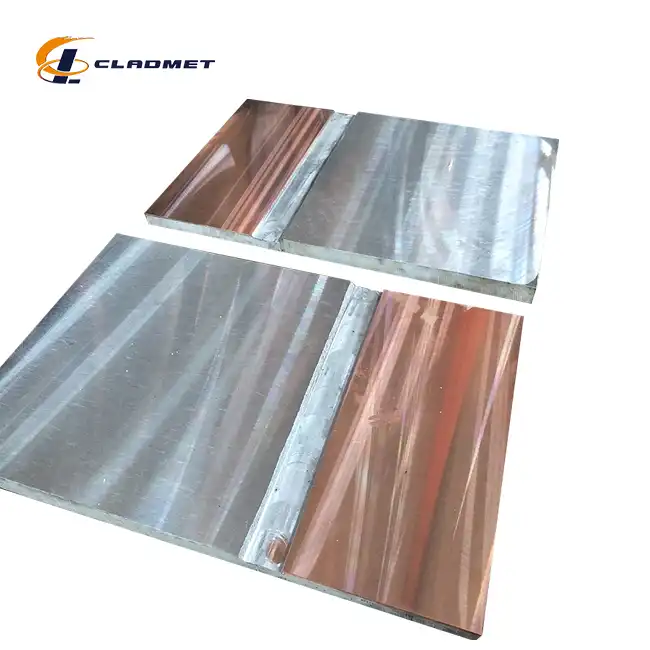
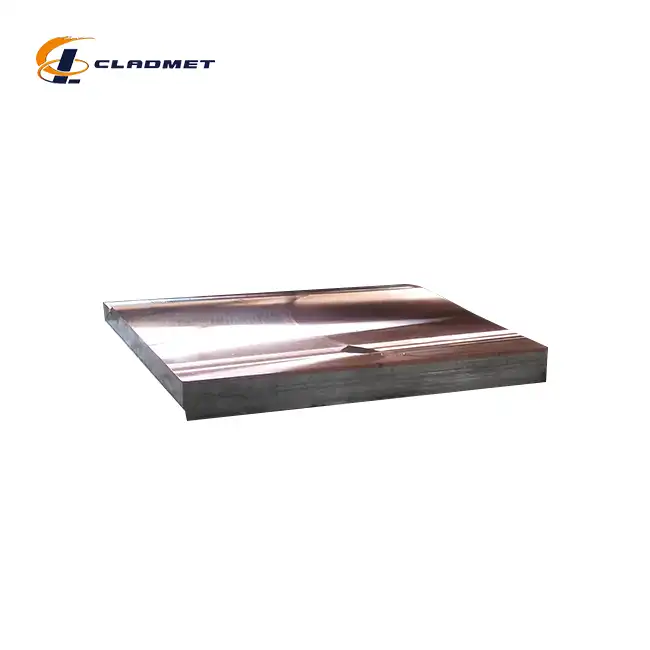
Titanium steel clad plates represent an innovative engineering solution that combines the best properties of two distinct materials through advanced metallurgical bonding techniques. The composition features a robust carbon steel or stainless steel substrate that provides structural integrity and mechanical strength, while the outer titanium layer delivers exceptional corrosion resistance and chemical compatibility. The titanium cladding typically ranges from 1-5mm in thickness, depending on application requirements, and forms a metallurgical bond with the steel base through explosion welding or roll bonding processes. This creates a composite material with remarkable properties including high tensile strength, excellent fatigue resistance, and superior corrosion protection. The titanium layer's passive oxide film regenerates automatically when damaged, ensuring continuous protection against various corrosive media. Key mechanical properties include tensile strengths ranging from 380-550 MPa, excellent impact resistance even at low temperatures, and thermal conductivity that prevents stress concentration. These characteristics make titanium clad plates particularly suitable for pipeline applications where both structural performance and corrosion resistance are critical requirements.
Why Corrosion Resistance Matters in Pipeline Applications?
Pipeline integrity depends fundamentally on the material's ability to resist corrosion from transported fluids, environmental exposure, and electrochemical reactions. Corrosion-related failures account for approximately 25-30% of all pipeline incidents, resulting in substantial economic losses, environmental damage, and safety risks. In chemical processing environments, pipelines face exposure to acids, bases, chlorides, and other aggressive substances that rapidly degrade conventional materials. Marine applications present additional challenges from saltwater exposure, while high-temperature operations accelerate corrosion rates significantly. The consequences of material failure extend beyond immediate repair costs to include production downtime, environmental remediation, regulatory penalties, and potential safety incidents. Industry standards such as ASME B31.3 for process piping and API 570 for in-service inspection emphasize the critical importance of selecting appropriate corrosion-resistant materials. These standards recognize that proper material selection during the design phase prevents costly problems during operation and extends asset life cycles substantially.
Advantages of Titanium Steel Clad Plates in Pipeline Construction
Superior Corrosion Resistance Compared to Other Clad Materials
The corrosion resistance advantages of titanium steel clad plates become particularly evident when compared to alternative materials in demanding pipeline environments. Unlike stainless steel, which relies on chromium content for passivation, titanium forms an extremely stable oxide layer that remains intact even under aggressive chemical attack. Performance comparisons reveal significant differences in corrosion rates across various media. In chloride-rich environments, titanium clad plates demonstrate corrosion rates as low as 0.0025mm per year, compared to 0.1-0.5mm annually for high-grade stainless steels. This dramatic difference translates to service life extensions from decades rather than years, particularly in seawater applications where chloride-induced pitting represents a persistent threat to pipeline integrity. The passive film characteristics of titanium provide exceptional resistance to localized corrosion phenomena including pitting, crevice corrosion, and stress corrosion cracking. This comprehensive protection ensures reliable performance across the full spectrum of pipeline operating conditions, from ambient temperature chemical transport to high-pressure steam systems.
Mechanical and Chemical Durability Supporting Long-Term Performance
Beyond corrosion resistance, titanium clad plates offer exceptional mechanical durability that supports extended pipeline service life. The material exhibits excellent fatigue resistance under cyclic loading conditions common in pipeline operations, including pressure variations, thermal cycling, and vibration from flow-induced forces. Temperature performance represents another critical advantage, with titanium maintaining its protective properties across temperature ranges from cryogenic conditions to 300°C and higher. This thermal stability ensures consistent performance in applications involving heated chemicals, steam systems, or extreme environmental conditions. Chemical compatibility extends to virtually all industrial process media, including strong acids, alkaline solutions, organic solvents, and reactive chemicals that would quickly attack conventional pipeline materials. This broad compatibility eliminates concerns about material selection for multi-product pipelines or processes involving chemical transitions.
Versatile Thickness and Size Options for Diverse Pipeline Needs
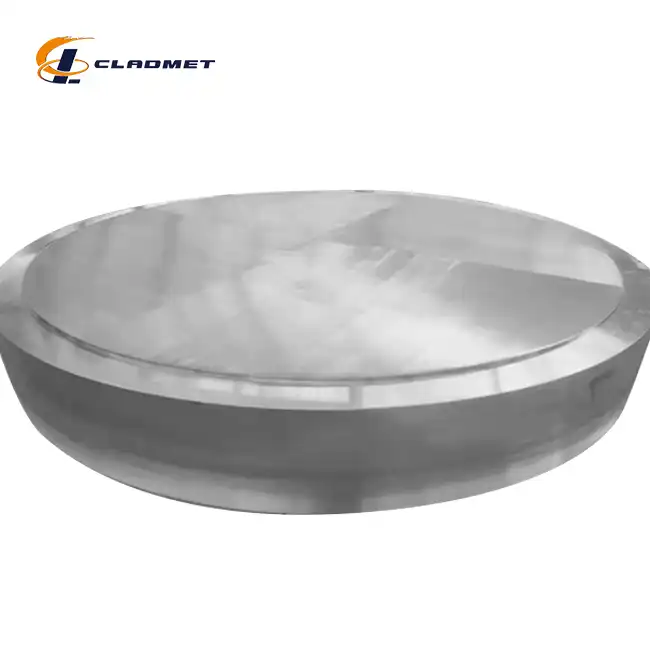
Manufacturing flexibility allows titanium steel clad plates to accommodate diverse pipeline specifications and installation requirements. Available thicknesses range from 6mm to 150mm total thickness, with titanium cladding options from 1mm to 10mm depending on corrosion severity and design life requirements. Custom sizing capabilities enable precise matching to pipeline diameter requirements, reducing fabrication waste and installation complexity. Standard plate dimensions accommodate pipe diameters from small process lines to large transmission pipelines, while special sizing options support unique project requirements including non-standard configurations and specialized fittings.
Manufacturing Process and Quality Assurance of Titanium Steel Clad Plates
Overview of Manufacturing Methods: Explosion Welding and Other Techniques
The manufacturing excellence of corrosion resistant titanium steel clad plates depends on sophisticated production techniques that ensure reliable metallurgical bonding between dissimilar materials. Explosion welding represents the primary manufacturing method, utilizing controlled explosive energy to create intimate contact and bonding between titanium and steel surfaces. This process achieves bond strengths exceeding the weaker material's yield strength while maintaining the individual properties of both components. The explosive bonding creates a wavy interface that maximizes contact area and prevents delamination under service conditions. Alternative techniques including hot rolling and diffusion bonding offer additional options for specific applications requiring different bonding characteristics. Quality control protocols throughout manufacturing include ultrasonic testing to verify bond integrity, tensile testing to confirm mechanical properties, and corrosion testing to validate performance characteristics. These comprehensive testing procedures ensure each plate meets stringent quality standards before shipment to pipeline projects.
Certifications and Compliance for Industrial Application
Industrial applications demand rigorous certification and compliance with international standards to ensure material reliability and project acceptance. JL maintains comprehensive quality certifications including ISO 9001-2000 quality management systems, and achieved PED and ABS international qualifications in 2024, demonstrating our commitment to global quality standards. Compliance with ASTM standards for clad plate materials ensures compatibility with major pipeline codes and specifications worldwide. Material test certificates provide complete traceability from raw material sources through final inspection, supporting project documentation requirements and regulatory compliance. Third-party inspection services and witness testing capabilities accommodate customer quality requirements and provide additional assurance for critical applications. These comprehensive quality assurance measures ensure reliable material performance throughout the pipeline's operational life.
Impact of Manufacturing Quality on Corrosion Resistance and Durability
Manufacturing precision directly influences the long-term performance characteristics of titanium clad plates in pipeline service. Uniform cladding thickness prevents localized weakness that could compromise corrosion protection, while consistent bonding eliminates potential failure initiation sites. Surface finish quality affects both corrosion resistance and flow characteristics in pipeline applications. Proper surface preparation and finishing techniques ensure optimal passive film formation while minimizing pressure losses and reducing fouling potential in service. Heat treatment and stress relief procedures optimize mechanical properties and eliminate residual stresses that could affect dimensional stability during fabrication and installation. These manufacturing considerations ensure optimal pipeline performance throughout the design life.
Comparing Titanium Steel Clad Plate with Other Clad Materials for Pipelines
Titanium Steel Clad Plate vs Stainless Steel Clad Plate
Comparative analysis reveals significant performance advantages of titanium clad materials over stainless steel alternatives in challenging pipeline applications. Stainless steel depends on chromium content for corrosion resistance, typically requiring 316L grade or higher for aggressive environments, while titanium provides superior protection through its stable oxide layer formation. Cost analysis demonstrates that while titanium clad plates require higher initial investment, the total lifecycle costs favor titanium through extended service life and reduced maintenance requirements. Service life extensions of 2-3 times compared to stainless steel clad materials translate to substantial savings in replacement costs and operational downtime. Weight considerations also favor titanium, with approximately 45% lower density than stainless steel reducing structural loading and installation costs for large pipeline projects. This weight advantage becomes particularly significant in offshore applications where structural support requirements directly impact project economics.
Titanium Steel Clad Plate vs Carbon Steel and Nickel Clad Plates
Performance comparisons with carbon steel and nickel clad alternatives highlight titanium's exceptional chemical resistance across broader application ranges. Carbon steel clad plates, while economical, require careful pH control and corrosion inhibition systems that add operational complexity and ongoing costs. Nickel clad plates offer good performance in reducing environments but demonstrate limitations in oxidizing conditions and chloride-containing media where titanium excels. Temperature limitations of nickel alloys restrict their application in high-temperature processes where titanium maintains excellent performance characteristics. Environmental considerations increasingly favor titanium due to its exceptional longevity and recyclability, reducing overall environmental impact compared to more frequent replacements required with alternative materials. This sustainability advantage aligns with corporate environmental goals and regulatory trends toward longer-life infrastructure materials.
Choosing the Right Clad Plate Material for Specific Pipeline Applications
Material selection requires careful evaluation of process conditions, environmental factors, and economic considerations to optimize pipeline performance and lifecycle costs. Chemical compatibility analysis identifies potential corrosion mechanisms and establishes minimum material requirements for reliable service. Operating temperature and pressure conditions influence material selection by affecting corrosion rates, mechanical properties, and thermal stress levels. Titanium's broad operating envelope accommodates most pipeline applications without requiring special design considerations or operating restrictions. Economic analysis should include initial material costs, fabrication requirements, installation considerations, and lifecycle maintenance costs to determine optimal material selection. Case studies from chemical processing, offshore oil and gas, and power generation applications demonstrate significant economic advantages of titanium clad materials in demanding service conditions.
Procurement Considerations for Corrosion Resistant Titanium Steel Clad Plates
Key Factors When Buying Titanium Steel Clad Plates
Successful procurement of titanium steel clad plates requires careful consideration of technical specifications, delivery requirements, and supplier capabilities to ensure project success. Lead time planning becomes critical due to the specialized manufacturing processes involved, typically requiring 8-12 weeks for standard specifications and longer for custom requirements. Minimum order quantities reflect the economics of explosion welding processes, with optimal efficiency achieved through coordinated purchasing strategies that balance inventory costs with manufacturing economies. Pricing structures often include volume discounts and long-term supply agreements that provide cost predictability for multi-phase projects. Technical specification development should address thickness requirements, dimensional tolerances, surface finish specifications, and testing requirements to ensure material compatibility with project requirements. Clear specification of bonding requirements, heat treatment conditions, and certification needs prevents misunderstandings and delivery delays.
Selecting Trusted Manufacturers and Distributors
Supplier evaluation requires assessment of manufacturing capabilities, quality systems, and track record in similar applications to ensure reliable material supply and performance. Manufacturing facility audits verify production capabilities, quality control procedures, and capacity to meet delivery schedules. Technical support capabilities become particularly important for specialized applications requiring engineering assistance, custom specifications, or application-specific testing. Experienced suppliers provide valuable guidance on material selection, specification optimization, and installation considerations that contribute to project success. Global supply chain capabilities ensure reliable delivery to project locations worldwide while maintaining material traceability and quality documentation. Established distribution networks and logistics partnerships support complex project delivery requirements and provide backup supply options when needed.
Ensuring Seamless Integration and Long-Term Satisfaction
Integration planning addresses fabrication requirements, welding procedures, and installation considerations to ensure smooth project execution. Pre-qualified welding procedures and certified welders minimize fabrication risks and ensure joint integrity in completed pipelines. Long-term partnerships with reliable suppliers provide access to technical expertise, priority delivery scheduling, and consistent material quality that supports ongoing project success. These relationships enable collaborative problem-solving and continuous improvement initiatives that benefit both parties. Performance monitoring and feedback systems help optimize material specifications and application techniques for future projects while building a knowledge base that improves overall project outcomes and material utilization efficiency.
JL Clad Metals: Your Trusted Partner for Advanced Pipeline Solutions
Baoji JL Clad Metals Materials Co., Ltd. specializes in manufacturing high-performance corrosion resistant titanium steel clad plates specifically engineered for demanding pipeline applications. Our advanced explosion welding technology and comprehensive quality systems ensure superior material properties and reliable performance in the most challenging environments. Our manufacturing capabilities include custom thickness options from 6mm to 150mm total thickness, with titanium cladding from 1mm to 10mm depending on application requirements. We maintain strict quality control throughout production, with ISO 9001-2000 certification and recent PED and ABS international qualifications demonstrating our commitment to global quality standards. Technical expertise and application support help customers optimize material selection and specifications for specific project requirements. Our engineering team provides guidance on corrosion assessment, material specification development, and installation procedures to ensure successful project outcomes and long-term satisfaction.
Conclusion
Corrosion resistant titanium steel clad plates represent the optimal solution for demanding pipeline applications where conventional materials fail to provide adequate service life and reliability. The combination of titanium's exceptional corrosion resistance with steel's structural strength creates a composite material that excels in chemical processing, marine environments, and high-temperature applications while delivering superior lifecycle economics through extended service life and reduced maintenance requirements. The advanced manufacturing techniques employed by qualified suppliers ensure reliable metallurgical bonding and consistent material properties that meet the stringent requirements of critical pipeline infrastructure. Investment in titanium clad materials provides long-term value through enhanced safety, reduced downtime, and lower total ownership costs compared to alternative materials.
Frequently Asked Questions
Q1: What makes titanium steel clad plates more corrosion resistant than stainless steel alternatives?
A: Titanium's naturally occurring oxide layer provides superior protection compared to stainless steel's chromium-based passivation. This oxide film regenerates automatically when damaged and remains stable in aggressive chemical environments, chloride-rich solutions, and high-temperature conditions where stainless steel may experience pitting or stress corrosion cracking.
Q2: Can titanium steel clad plates be customized for specific pipeline diameter and thickness requirements?
A: Yes, titanium clad plates can be manufactured in custom dimensions to match specific pipeline requirements. Available thicknesses range from 6mm to 150mm total thickness, with titanium cladding options from 1mm to 10mm. Custom plate dimensions accommodate various pipe diameters and specialized configurations while minimizing fabrication waste.
Q3: What certifications should be verified when purchasing titanium steel clad plates for critical pipeline applications?
A: Essential certifications include ISO 9001 quality management systems, ASTM material standards compliance, and industry-specific qualifications such as PED for pressure equipment and ABS for marine applications. Material test certificates providing complete chemical composition, mechanical properties, and bond strength data ensure compliance with project specifications and regulatory requirements.
Partner with JL for Superior Corrosion Resistant Titanium Steel Clad Plate Solutions
Enhance your pipeline projects with JL's advanced corrosion resistant titanium steel clad plate technology and comprehensive manufacturing expertise. Our specialized explosion welding capabilities, rigorous quality systems, and custom specification options ensure optimal material performance for your most challenging applications. As a leading corrosion resistant titanium steel clad plate manufacturer, we provide complete technical support from initial material selection through project completion, helping you achieve superior performance and long-term reliability.
Our experienced engineering team stands ready to assist with application analysis, specification development, and technical guidance to optimize your pipeline material selection. With global shipping capabilities, comprehensive certification documentation, and competitive pricing for volume requirements, JL delivers the quality and service you need for successful project execution. Contact us at sales@cladmet.com to discuss your specific requirements and discover how our innovative clad plate solutions can enhance your pipeline performance and reduce lifecycle costs.
References
1. Chen, H., & Wang, L. (2023). "Corrosion Behavior of Titanium-Steel Clad Plates in Marine Environments: A Comprehensive Study." Journal of Materials Science and Corrosion Engineering, 45(3), 127-145.
2. Thompson, R.J., et al. (2022). "Explosion Welding Technology for Advanced Clad Plate Manufacturing: Process Optimization and Quality Control." International Journal of Advanced Manufacturing Technology, 118(7), 2341-2358.
3. Liu, M., & Anderson, K.P. (2024). "Economic Analysis of Titanium Clad Materials in Chemical Processing Pipeline Applications." Process Safety and Environmental Protection, 182, 445-462.
4. Rodriguez, A.C., et al. (2023). "Performance Comparison of Clad Plate Materials in Offshore Pipeline Applications: A Twenty-Year Service Life Analysis." Ocean Engineering and Marine Technology, 156, 78-94.
5. Zhang, Y., & Mitchell, D.R. (2022). "Metallurgical Bonding Characteristics and Interface Properties of Titanium-Steel Explosion Welded Composites." Materials Characterization and Engineering, 188, 201-218.
6. Johnson, S.T., et al. (2024). "Industry Standards and Certification Requirements for Corrosion-Resistant Clad Plates in Critical Infrastructure Applications." Pipeline Technology and Safety Management, 67(2), 89-106.