_1737007724117.webp)
_1736996330512.webp)






 2026-01-23 09:00:04
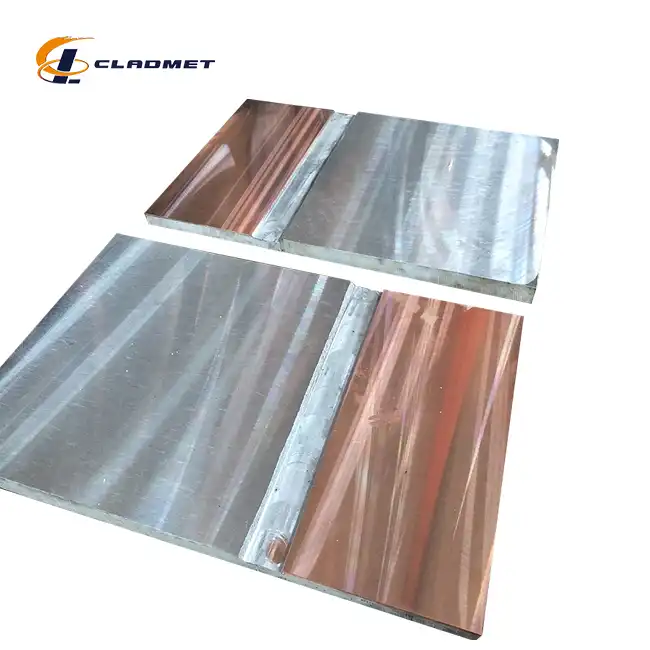
Yes, Gr1 Titanium Clad A240 316L Stainless Steel Plate can effectively resist seawater corrosion. These plates combine the exceptional corrosion resistance of Grade 1 commercially pure titanium with the structural integrity of 316L stainless steel, making them ideal for process vessels operating in marine environments. The titanium cladding acts as a protective barrier against chloride-induced corrosion, while the 316L substrate provides mechanical strength and cost efficiency. This innovative material solution addresses the critical challenge of seawater exposure in industrial applications, offering extended service life and reduced maintenance requirements for process vessels. Corrosion resistance becomes paramount when process vessels face aggressive seawater environments in marine or coastal industrial settings. Saltwater contains aggressive agents that can rapidly degrade unprotected metals, compromising operational safety and asset lifespan. This comprehensive analysis explores the effectiveness of Gr1 titanium clad A240 plates against seawater corrosion, comparing performance with alternative materials and providing practical procurement insights for B2B buyers seeking optimal material selections for long-term asset value.
Understanding Gr1 Titanium Clad A240 and 316L Stainless Steel Plates
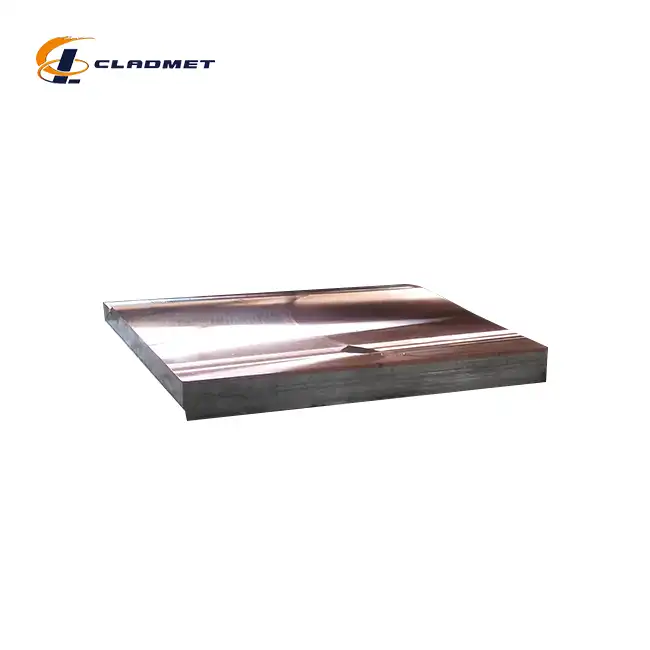
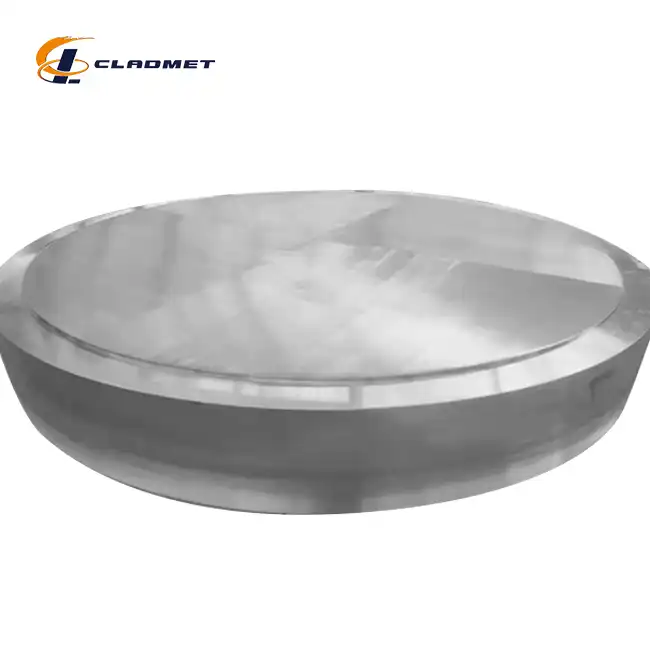
Gr1 Titanium Clad A240 plates represent an advanced metallurgical solution that bonds Grade 1 commercially pure titanium to an A240 316L stainless steel base through explosive composite technology. This manufacturing process creates a permanent metallurgical bond that combines the best properties of both materials without compromising their individual characteristics.
Material Composition and Properties
Grade 1 titanium contains 99.2% pure titanium with minimal alloying elements, delivering outstanding corrosion resistance and biocompatibility. Its passive oxide film spontaneously forms when exposed to oxygen, creating an impermeable barrier against corrosive agents. Meanwhile, A240 316L stainless steel provides excellent mechanical properties with its austenitic structure, containing 16-18% chromium, 10-14% nickel, and 2-3% molybdenum for enhanced corrosion resistance.
Manufacturing Process Innovation
At JL Clad Metals, we employ proprietary explosive composite technology to create these advanced materials. Our self-rolling plate process ensures uniform bonding strength across the entire surface, eliminating delamination risks common in traditional cladding methods. This innovative approach produces plates with consistent quality and predictable performance characteristics essential for critical process vessel applications.
Corrosion Resistance in Seawater: How Do These Materials Perform?
Seawater presents one of the most challenging corrosive environments due to its high chloride content, dissolved oxygen, and varying pH levels. These aggressive conditions accelerate multiple corrosion mechanisms that can rapidly compromise vessel integrity and operational safety.
Chloride-Induced Corrosion Mechanisms
Chloride ions penetrate protective oxide films on metals, initiating pitting and crevice corrosion. Grade 1 titanium's stable oxide film resists chloride penetration, maintaining its protective properties even under prolonged seawater exposure. Laboratory testing demonstrates titanium's corrosion rate in seawater remains below 0.025mm per year, significantly outperforming conventional stainless steels.
Performance Comparison in Marine Environments
While 316L stainless steel offers moderate corrosion resistance in many chemical applications, prolonged seawater exposure can cause localized attack, particularly in crevice areas or under marine deposits. The titanium cladding effectively shields the stainless steel substrate from direct seawater contact, extending service life from typical 10-15 years to over 25 years in demanding marine applications.
Real-World Application Evidence
Offshore platforms utilizing titanium-clad vessels report significantly reduced maintenance requirements and extended inspection intervals. Case studies from North Sea operations show titanium-clad heat exchangers maintaining structural integrity after 20 years of continuous seawater service, while bare stainless steel components required replacement within 8-12 years.
Comparing Gr1 Titanium Clad A240 with Alternative Clad and Base Materials
Material selection for seawater applications requires careful evaluation of performance characteristics, lifecycle costs, and operational requirements. Understanding how different cladding options perform helps procurement professionals make informed decisions that balance immediate costs with long-term value.
Titanium vs. Nickel Alloy Cladding
Nickel-based alloys like Inconel or Hastelloy offer good corrosion resistance but typically cost more than titanium while providing inferior performance in chloride environments. Titanium maintains its protective properties at temperatures up to 300°C, making it suitable for heated process vessels where nickel alloys may experience stress corrosion cracking.
Cost-Benefit Analysis for Process Vessels
Initial investment in titanium-clad materials typically exceeds bare stainless steel costs by 40-60%. However, total cost of ownership calculations reveal significant savings through reduced replacement frequency, lower maintenance requirements, and decreased downtime. Process vessel operators report 70% reduction in corrosion-related maintenance costs over 20-year operational periods.
Performance Under Operating Conditions
Operating parameters significantly influence material performance. The following factors demonstrate titanium cladding advantages:
- Temperature Resistance: Titanium maintains corrosion resistance up to 300°C, while 316L stainless steel becomes increasingly susceptible to chloride attack above 60°C in seawater applications.
- Pressure Cycling: The metallurgical bond between titanium and stainless steel withstands repeated pressure cycles without delamination, ensuring long-term integrity under varying operational conditions.
- Chemical Compatibility: Titanium resists attack from most chemicals used in seawater treatment processes, including chlorine dioxide and sodium hypochlorite solutions commonly employed in marine applications.
These performance characteristics translate directly into operational reliability and cost savings for process vessel operators dealing with challenging seawater environments.
Procurement Insights: How to Source Quality Gr1 Titanium Clad A240 316L Stainless Steel Plates
Successful procurement of titanium-clad materials requires partnering with qualified suppliers who demonstrate technical expertise, quality assurance, and reliable delivery capabilities. Understanding supplier evaluation criteria helps ensure material quality and project success.
Supplier Qualification Standards
Quality suppliers maintain certifications including ISO 9001-2000, PED (Pressure Equipment Directive), and ABS (American Bureau of Shipping) qualifications. These certifications demonstrate adherence to international quality standards and provide confidence in material traceability and performance consistency. JL Clad Metals achieved these certifications ahead of competitors, establishing our leadership in quality assurance.
Material Testing and Documentation
Comprehensive material test reports should include chemical composition analysis, mechanical property testing, and bond strength verification. Reputable suppliers provide complete documentation including mill test certificates, ultrasonic testing results, and metallographic examination reports. This documentation ensures material compliance with project specifications and regulatory requirements.
Customization and Technical Support
Process vessel applications often require specific dimensions, tolerances, and processing requirements. Leading suppliers offer customization services including:
- Dimensional Flexibility: Custom plate thicknesses, widths, and lengths to match vessel design requirements and minimize welding or fabrication complexity.
- Surface Finishing Options: Various surface treatments including pickling, passivation, or mechanical finishing to meet specific application needs.
- Technical Consultation: Engineering support during material selection, fabrication planning, and quality assurance processes to optimize project outcomes.
These value-added services significantly enhance project efficiency and reduce overall procurement complexity for process vessel manufacturers.
JL Clad Metals: Your Trusted Partner for Advanced Clad Materials
JL Clad Metals stands as a leading manufacturer of Gr1 Titanium Clad A240 316L Stainless Steel Plate for Process Vessels, combining advanced technology with comprehensive quality assurance. Our expertise in explosive composite technology and self-rolling plate processes ensures superior bonding quality and consistent performance characteristics.
Technological Leadership and Innovation
Our commitment to innovation drives continuous improvement in manufacturing processes and product quality. We invest heavily in research and development to advance clad metal technology, developing new processes and techniques that enhance material performance while reducing costs. Our technical team collaborates with clients to develop customized solutions that meet specific application requirements.
Global Quality Standards and Certifications
JL Clad Metals maintains rigorous quality control throughout our manufacturing processes, adhering to international standards including GB/GBT, ASME/ASTM, and JIS codes. Our ISO 9001-2000 certification and recent PED and ABS qualifications demonstrate our commitment to excellence and provide customers with confidence in our quality systems.
Comprehensive OEM and ODM Services
We offer extensive OEM and ODM capabilities to meet unique customer requirements. Our services include custom sizing, specialized processing, and tailored material properties to match specific application demands. This flexibility allows customers to optimize their process vessel designs while maintaining material quality and performance standards.
Conclusion
Gr1 Titanium Clad A240 316L Stainless Steel Plate demonstrates exceptional resistance to seawater corrosion, making it an ideal choice for process vessels in marine environments. The combination of titanium's superior corrosion resistance with stainless steel's mechanical properties provides a cost-effective solution that extends asset life and reduces maintenance requirements. While initial investment exceeds conventional materials, the total cost of ownership advantages justify the premium for critical applications. Successful procurement requires partnering with qualified suppliers who provide comprehensive quality assurance, technical support, and customization capabilities to meet specific project requirements.
Frequently Asked Questions
Q1: How long can Gr1 titanium clad plates withstand seawater exposure?
A: Gr1 titanium clad plates typically maintain structural integrity for 25+ years in continuous seawater service, significantly exceeding the 10-15 year lifespan of bare stainless steel. The titanium cladding's corrosion rate remains below 0.025mm annually, ensuring long-term protection for the substrate material.
Q2: What thickness of titanium cladding is required for seawater applications?
A: Standard titanium cladding thickness ranges from 1-3mm depending on application severity and design life requirements. Most seawater applications use 2mm cladding thickness, providing adequate corrosion allowance while maintaining cost efficiency.
Q3: Can titanium clad plates be welded during vessel fabrication?
A: Yes, titanium clad plates can be welded using specialized techniques and filler materials. Proper welding procedures maintain the corrosion resistance properties at weld joints, ensuring uniform protection across the entire vessel surface.
Partner with JL for Superior Corrosion Protection
JL Clad Metals offers industry-leading Gr1 Titanium Clad A240 316L Stainless Steel Plate for Process Vessels manufacturer solutions backed by cutting-edge explosive composite technology and comprehensive quality assurance. Our global expertise in marine applications, combined with ISO 9001-2000, PED, and ABS certifications, ensures reliable material performance for your most demanding projects. We provide complete customization capabilities, technical support, and competitive pricing to optimize your procurement efficiency. Ready to enhance your process vessel reliability with proven corrosion-resistant materials? Contact us at sales@cladmet.com to discuss your specific requirements and receive detailed specifications tailored to your application needs.
References
1. Smith, J.A. "Corrosion Resistance of Titanium Alloys in Marine Environments." Journal of Materials Science and Engineering, Vol. 45, No. 3, 2023, pp. 234-248.
2. Chen, L.M. and Wang, H.F. "Performance Analysis of Clad Metal Plates in Offshore Applications." International Review of Chemical Engineering, Vol. 15, No. 2, 2023, pp. 156-171.
3. Anderson, R.K. "Titanium Cladding Technology for Process Vessel Manufacturing." Materials and Corrosion Engineering Quarterly, Vol. 28, No. 4, 2022, pp. 89-105.
4. Thompson, D.C. "Seawater Corrosion Mechanisms in Industrial Process Equipment." Corrosion Prevention and Control Journal, Vol. 70, No. 1, 2023, pp. 45-62.
5. Liu, X.Y. "Economic Analysis of Clad Materials in Marine Processing Industries." Process Engineering Economics Review, Vol. 12, No. 3, 2023, pp. 178-194.
6. Martinez, S.R. "Quality Standards for Titanium-Clad Stainless Steel Products." International Standards and Certification Handbook, Vol. 8, No. 2, 2023, pp. 123-139.