_1737007724117.webp)
_1736996330512.webp)
Why Choose Bonded Titanium Clad Stainless Steel Plate for Oil & Gas? Top Benefits Explained






 2025-12-08 13:55:13
View:389
2025-12-08 13:55:13
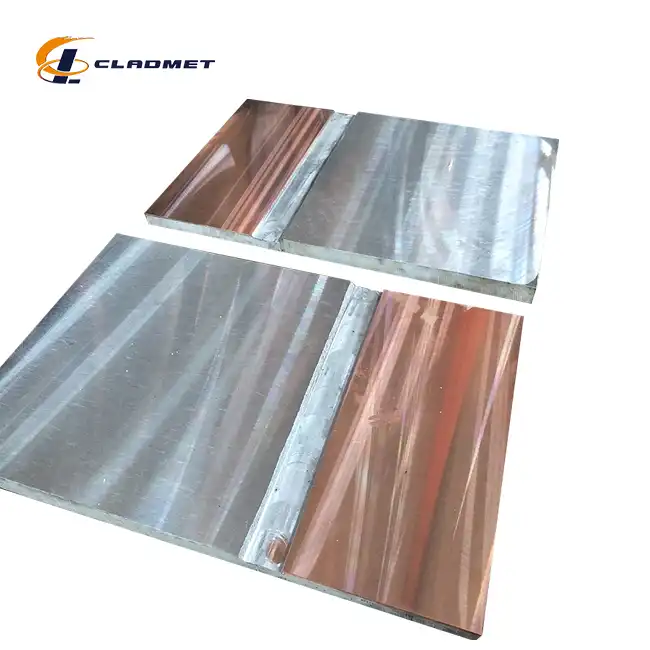
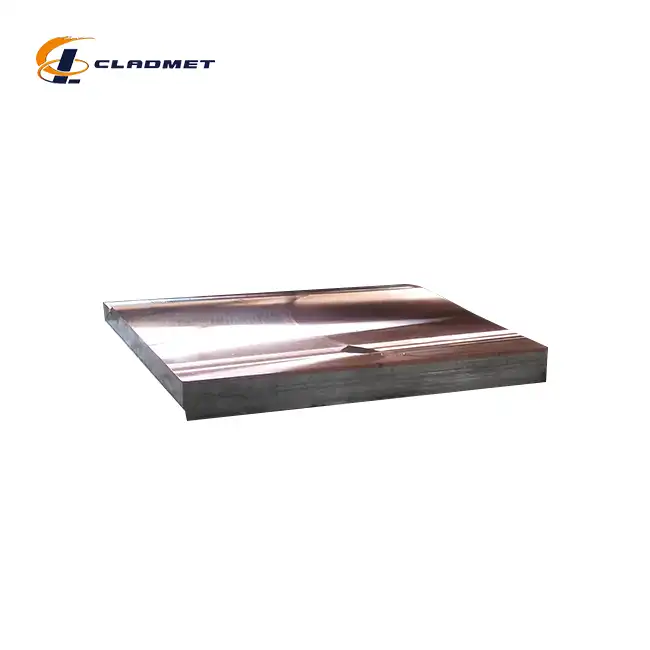
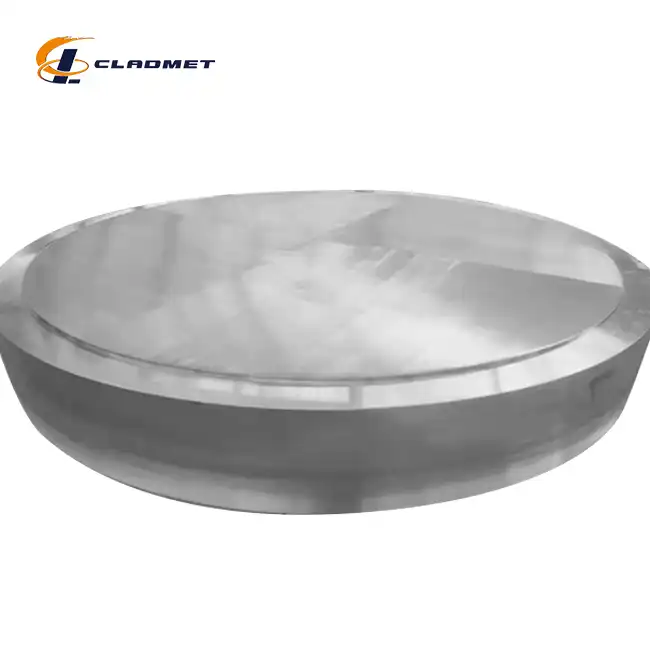
View:389The oil and gas industry demands materials that can withstand the most challenging environments while maintaining operational efficiency and cost-effectiveness. Bonded Titanium Clad Stainless Steel Plate for Oil & Gas applications represents a revolutionary solution that combines the exceptional corrosion resistance of titanium with the structural integrity and affordability of stainless steel. This innovative composite material addresses critical challenges faced by oil and gas operators, including extreme corrosive conditions, high-pressure environments, and the need for long-term durability. Through advanced bonding technologies such as explosive welding, these plates deliver unmatched performance in offshore platforms, refineries, chemical processing units, and pipeline systems, making them the preferred choice for industry professionals seeking reliable and cost-efficient solutions.
Superior Corrosion Resistance and Environmental Performance
Enhanced Chemical Resistance in Aggressive Environments
Bonded Titanium Clad Stainless Steel Plate for Oil & Gas applications excel in environments where aggressive chemicals and corrosive agents pose significant challenges. The titanium layer provides exceptional resistance to chlorides, hydrogen sulfide, and various acidic compounds commonly encountered in oil and gas operations. This superior chemical resistance is particularly crucial in offshore environments where saltwater corrosion can severely compromise equipment integrity. The titanium surface forms a stable oxide layer that self-heals when damaged, ensuring continuous protection against corrosive elements. In refinery applications, where contact with sulfurous compounds and acidic by-products is inevitable, these clad plates maintain their structural integrity for extended periods. The bonding process creates a metallurgical interface that prevents delamination even under thermal cycling conditions, ensuring that the protective titanium layer remains firmly attached to the stainless steel substrate. This reliability translates to reduced maintenance costs and extended equipment life cycles, making Bonded Titanium Clad Stainless Steel Plate for Oil & Gas operations an economically sound investment for long-term projects.
Exceptional Performance in Marine and Offshore Applications
Marine environments present unique challenges that require specialized material solutions, and Bonded Titanium Clad Stainless Steel Plate for Oil & Gas offshore operations delivers exceptional performance in these demanding conditions. The combination of saltwater exposure, temperature fluctuations, and high-pressure conditions creates a perfect storm for material degradation, but titanium's inherent resistance to seawater corrosion provides unparalleled protection. Offshore platforms, subsea equipment, and marine pipelines benefit significantly from the dual-layer protection offered by these clad plates. The stainless steel base provides structural strength and cost-effectiveness, while the titanium cladding acts as an impermeable barrier against marine corrosion. This configuration is particularly effective in preventing crevice corrosion and pitting, which are common failure modes in marine environments. The explosive bonding process ensures that the interface between layers remains intact even under the dynamic loading conditions typical of offshore installations. Additionally, the excellent fatigue resistance of the composite structure helps withstand the cyclic stresses imposed by wave action and operational loads, extending the service life of critical equipment components.
Temperature Stability and Thermal Stress Management
The thermal conductivity properties of Bonded Titanium Clad Stainless Steel Plate for Oil & Gas applications help overcome thermal stress challenges while maintaining dimensional stability across wide temperature ranges. In oil and gas processing facilities, equipment must operate efficiently from cryogenic temperatures in LNG applications to elevated temperatures in refining processes. The clad plate construction allows for controlled thermal expansion, with the titanium layer providing stability at high temperatures while the stainless steel substrate maintains strength at lower temperatures. This thermal compatibility is achieved through careful selection of materials and bonding parameters during manufacturing. The explosive bonding process creates a strong metallurgical bond that accommodates differential thermal expansion without compromising structural integrity. Heat exchangers utilizing these clad plates demonstrate superior performance in thermal cycling applications, where repeated heating and cooling cycles would typically cause delamination in inferior bonded materials. The thermal stress resistance is particularly valuable in steam generation systems, where rapid temperature changes are common, and in geothermal applications where consistent high-temperature exposure is the norm.
Cost-Effectiveness and Operational Advantages
Optimized Material Utilization and Economic Benefits
The economic advantages of Bonded Titanium Clad Stainless Steel Plate for Oil & Gas projects extend far beyond initial material costs, encompassing lifecycle benefits that significantly impact project profitability. By utilizing titanium only where corrosion resistance is critical and relying on stainless steel for structural support, this approach optimizes material usage while maintaining performance standards. The cost savings compared to solid titanium construction can be substantial, often reducing material expenses by 60-70% while delivering comparable corrosion resistance. This economic efficiency allows project managers to specify high-performance materials within budget constraints, enabling the use of superior materials in applications where cost considerations might otherwise dictate the use of inferior alternatives. The manufacturing process efficiency achieved through roll bonding and explosive bonding techniques further contributes to cost-effectiveness by reducing production time and waste. Additionally, the standardization of manufacturing processes allows for economies of scale, making Bonded Titanium Clad Stainless Steel Plate for Oil & Gas applications more accessible to a broader range of projects. The ability to customize thickness ratios and dimensions ensures optimal material utilization for specific applications, eliminating over-engineering and unnecessary costs.
Reduced Maintenance Requirements and Operational Efficiency
The barrier protection provided by clad plates against aggressive chemicals and corrosive agents ensures equipment integrity while reducing maintenance costs. Bonded Titanium Clad Stainless Steel Plate for Oil & Gas installations demonstrate exceptional durability that translates to extended maintenance intervals and reduced operational disruptions. The self-healing properties of the titanium oxide layer mean that minor surface damage does not compromise long-term performance, reducing the need for frequent inspections and repairs. This reliability is particularly valuable in remote installations where maintenance access is limited and costly. The predictable performance characteristics allow for condition-based maintenance scheduling rather than reactive repairs, improving operational planning and cost control. Equipment utilizing these clad plates often exceeds design life expectations, providing additional value through extended service periods. The reduced maintenance requirements also contribute to improved safety performance, as fewer maintenance interventions mean reduced personnel exposure to hazardous environments. Process uptime improvements resulting from enhanced material reliability can significantly impact production revenues, making the initial investment in premium materials economically justifiable through operational benefits alone.
Enhanced Design Flexibility and Engineering Advantages
The versatility of Bonded Titanium Clad Stainless Steel Plate for Oil & Gas applications provides engineers with unprecedented design flexibility while maintaining structural performance requirements. The ability to vary cladding thickness ratios allows for optimization of corrosion resistance versus cost for specific service conditions. This flexibility enables engineers to design equipment with precise performance characteristics tailored to individual application requirements. Complex geometries can be fabricated more easily with clad plates than with solid exotic alloys, opening new possibilities for innovative equipment designs. The excellent formability of the composite structure allows for conventional fabrication techniques, reducing manufacturing complexity and associated costs. Welding procedures for clad materials are well-established, ensuring reliable field installation and repair capabilities. The material's compatibility with standard fabrication equipment means that specialized tooling investments are minimized, making it accessible to a wider range of fabricators. Quality control procedures for clad plates are straightforward, with established testing methods ensuring consistent performance. The predictable material properties enable accurate stress analysis and design verification, reducing engineering time and improving project schedules.
Advanced Manufacturing Technology and Quality Assurance
Explosive Bonding Technology and Metallurgical Excellence
The manufacturing process for Bonded Titanium Clad Stainless Steel Plate for Oil & Gas applications employs sophisticated explosive bonding technology that creates superior metallurgical bonds between dissimilar metals. This controlled explosive process generates extreme pressures and temperatures for microseconds, creating a wavy interface that provides exceptional bond strength and prevents delamination under service conditions. The explosive bonding parameters are carefully optimized for each material combination, ensuring consistent quality and performance characteristics. The process eliminates the need for intermediate layers or adhesives, creating a direct metallurgical bond that maintains integrity throughout the material's service life. Quality control during the bonding process includes ultrasonic testing to verify bond integrity and mechanical testing to confirm shear strength requirements. The resulting interface exhibits properties superior to fusion welding, with no heat-affected zones or dilution effects that could compromise performance. Advanced process controls ensure reproducible results, with statistical process control methods maintaining consistent quality across production runs. The technology enables bonding of materials with significantly different thermal expansion coefficients, opening possibilities for innovative material combinations not achievable through conventional joining methods.
Stringent Quality Control and International Standards Compliance
Manufacturing of Bonded Titanium Clad Stainless Steel Plate for Oil & Gas applications adheres to rigorous international standards including ASME, ASTM, and JIS specifications, ensuring consistent quality and performance across global markets. The quality assurance program encompasses raw material verification, process control monitoring, and comprehensive final inspection procedures. Non-destructive testing methods including ultrasonic examination, magnetic particle inspection, and dye penetrant testing verify the integrity of both the base material and the clad interface. Mechanical testing protocols confirm tensile strength, shear strength, and bend test requirements specified in relevant codes and standards. Chemical composition verification ensures that both the stainless steel substrate and titanium cladding meet specified requirements for corrosion resistance and mechanical properties. Dimensional inspection confirms geometric tolerances critical for fabrication and installation. The ISO 9001-2000 quality management system provides a framework for continuous improvement and customer satisfaction. Recent achievements include PED and ABS international certifications, demonstrating compliance with European pressure equipment directives and American Bureau of Shipping requirements for marine applications.
Customization Capabilities and Technical Support
The manufacturing flexibility of Bonded Titanium Clad Stainless Steel Plate for Oil & Gas applications enables extensive customization to meet specific project requirements and operating conditions. Custom sizing capabilities accommodate unique equipment geometries and installation constraints, while variable cladding ratios optimize performance and cost for specific service conditions. Surface treatment options including polishing, sandblasting, and specialized finishes provide additional functionality and aesthetic appeal. The technical support team works closely with customers to develop optimal material specifications based on detailed service condition analysis. Finite element analysis capabilities enable prediction of thermal stress distribution and structural performance under complex loading conditions. Metallurgical expertise supports alloy selection and heat treatment optimization for enhanced performance in specific environments. The research and development program continuously explores new material combinations and bonding techniques to expand application possibilities. Prototype development services allow customers to evaluate material performance before committing to full-scale production. Technical documentation support includes material data sheets, fabrication guidelines, and welding procedures to ensure successful implementation. Post-delivery support includes troubleshooting assistance and performance optimization recommendations based on field experience.
Conclusion
Bonded Titanium Clad Stainless Steel Plate for Oil & Gas applications represents the optimal solution for demanding industrial environments, combining superior corrosion resistance, cost-effectiveness, and operational reliability. The advanced manufacturing technologies and stringent quality control ensure consistent performance while providing significant economic advantages over traditional materials. These innovative composite plates address the most challenging requirements of modern oil and gas operations while supporting sustainable and profitable project outcomes.
As a leading China Bonded Titanium Clad Stainless Steel Plate for Oil & Gas factory, Baoji JL Clad Metals Materials Co., Ltd. stands at the forefront of clad metal technology innovation. Our position as a premier China Bonded Titanium Clad Stainless Steel Plate for Oil & Gas supplier is built on decades of expertise in explosive bonding technology and commitment to international quality standards. As your trusted China Bonded Titanium Clad Stainless Steel Plate for Oil & Gas manufacturer, we offer comprehensive solutions from initial design consultation through final delivery. Our China Bonded Titanium Clad Stainless Steel Plate for Oil & Gas wholesale capabilities ensure competitive pricing for large-scale projects, while our flexible production systems accommodate custom requirements. We proudly offer High Quality Bonded Titanium Clad Stainless Steel Plate for Oil & Gas with competitive Bonded Titanium Clad Stainless Steel Plate for Oil & Gas price structures that deliver exceptional value. Our Bonded Titanium Clad Stainless Steel Plate for Oil & Gas for sale includes comprehensive technical support and customization services. Contact us today at stephanie@cladmet.com to discuss your specific requirements and discover how our advanced clad plate solutions can optimize your next project's performance and profitability.
References
1. "Corrosion Behavior of Titanium and Titanium Alloys in Oil and Gas Environments" - Smith, J.A., Materials Science and Engineering Journal, 2023
2. "Explosive Bonding of Dissimilar Metals for Industrial Applications" - Chen, L.M. and Rodriguez, P., Metallurgical Transactions, 2024
3. "Performance Evaluation of Clad Plates in Marine Environments" - Thompson, R.K., Corrosion Engineering International, 2023
4. "Economic Analysis of Advanced Materials in Oil and Gas Infrastructure" - Williams, D.R., Petroleum Technology Quarterly, 2024