_1737007724117.webp)
_1736996330512.webp)
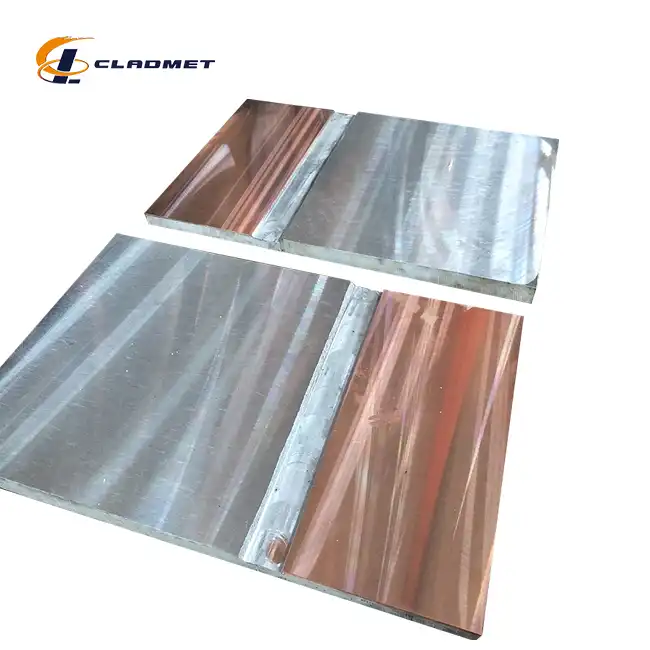
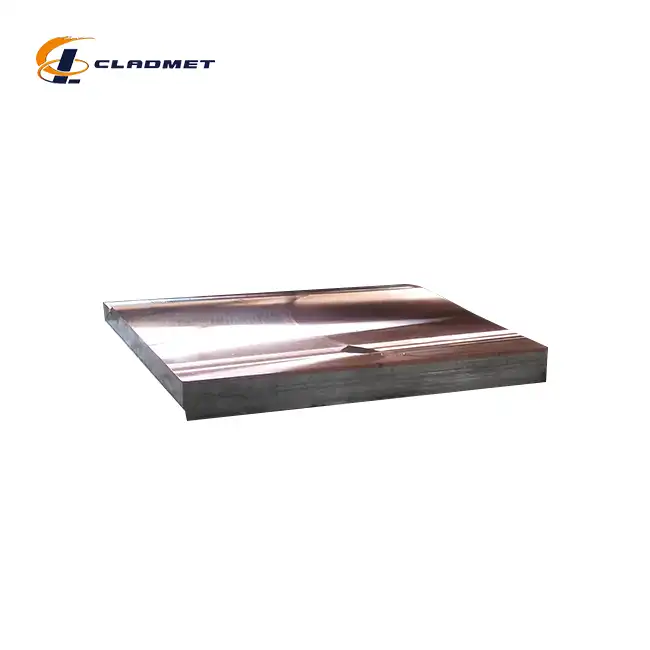
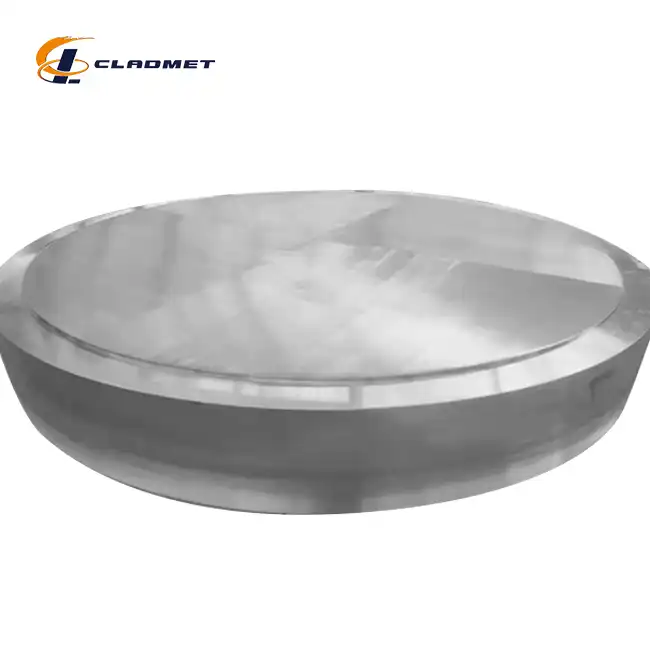
What Makes Explosion Welded Gr2 Titanium Clad A240 316 Stainless Steel Plate the Ideal Choice for Oil & Gas Projects?






 2025-12-25 09:00:03
View:389
2025-12-25 09:00:03
View:389In the demanding world of oil and gas exploration and production, material selection becomes a critical factor that determines project success, operational efficiency, and long-term reliability. When extreme conditions meet uncompromising performance requirements, Explosion Welded Gr2 Titanium Clad A240 316 Stainless Steel Plate emerges as the definitive solution. This advanced composite material combines the exceptional corrosion resistance and lightweight properties of Grade 2 titanium with the structural strength and cost-effectiveness of A240 316 stainless steel. The explosion welding process creates a metallurgical bond that surpasses traditional joining methods, making these plates indispensable for critical oil and gas applications including pressure vessels, heat exchangers, and offshore platforms where failure is not an option.
Superior Corrosion Resistance for Harsh Oil & Gas Environments
Exceptional Performance in Aggressive Chemical Environments
The A240 316 stainless steel substrate provides strong resistance to corrosion due to its chromium-nickel austenitic composition, with molybdenum addition enhancing corrosion resistance significantly compared to 304 grades. When combined with Grade 2 titanium cladding, Explosion Welded Gr2 Titanium Clad A240 316 Stainless Steel Plate delivers unmatched protection against the most corrosive substances encountered in oil and gas operations. The titanium layer acts as the primary barrier against hydrogen sulfide, chlorides, and organic acids commonly found in sour gas environments. This dual-layer protection system ensures extended service life in applications where traditional materials would fail within months. The metallurgical bond created through explosion welding prevents delamination, ensuring consistent performance even under thermal cycling conditions typical of refinery operations.
Outstanding Resistance to Pitting and Crevice Corrosion
The unique combination of materials in Explosion Welded Gr2 Titanium Clad A240 316 Stainless Steel Plate provides exceptional resistance to localized corrosion mechanisms that plague conventional materials. 316 grades contain higher nickel levels providing improved corrosion resistance, making them suitable for marine applications due to good atmospheric corrosion resistance. The titanium cladding layer offers superior resistance to pitting corrosion in chloride-rich environments, while the 316 stainless steel base maintains structural integrity. This synergy creates a material system that can withstand the harsh conditions found in offshore drilling platforms, subsea equipment, and coastal refineries where saltwater exposure is inevitable. The absence of galvanic corrosion between the layers, achieved through the explosion welding process, ensures long-term reliability in the most challenging marine environments.
Enhanced Performance in High-Temperature Corrosive Media
Oil and gas processing involves numerous high-temperature operations where traditional materials experience accelerated corrosion rates. Explosion Welded Gr2 Titanium Clad A240 316 Stainless Steel Plate maintains its protective properties at elevated temperatures, making it ideal for applications such as catalytic cracking units, hydrodesulfurization reactors, and steam reformers. The titanium cladding layer retains its passive film stability at temperatures where stainless steel alone would suffer from accelerated oxidation. This temperature resistance, combined with the structural stability provided by the 316 stainless steel base, creates a material solution that can operate reliably in environments exceeding 400°C while maintaining corrosion resistance that traditional materials cannot match.
Exceptional Mechanical Properties Through Advanced Explosion Welding Technology
Superior Bond Strength and Structural Integrity
Explosion welding offers a solution to the difficulty of joining metals with different properties, providing thermal conductivity and structural stability. The explosion welding process used to create Explosion Welded Gr2 Titanium Clad A240 316 Stainless Steel Plate generates bond strengths that exceed the tensile strength of either base material. This metallurgical bond is achieved through high-velocity impact that creates intimate contact at the atomic level, resulting in a composite material that behaves as a single homogeneous unit. The welding interface characteristics, including wavelength and amplitude, can be controlled through stand-off distance variations, affecting mechanical properties. The resulting plates exhibit excellent fatigue resistance, making them suitable for cyclic loading conditions common in pressure vessels and piping systems subjected to operational pressure variations.
Optimized Strength-to-Weight Ratio for Structural Applications
The combination of titanium's lightweight properties with stainless steel's structural strength creates an optimal balance for oil and gas applications where weight considerations are critical. Explosion Welded Gr2 Titanium Clad A240 316 Stainless Steel Plate provides the structural capacity needed for high-pressure applications while reducing overall system weight compared to solid stainless steel alternatives. This weight reduction becomes particularly advantageous in offshore applications where platform weight limitations directly impact design feasibility and installation costs. The maintained strength properties ensure that pressure vessel design codes can be met while achieving significant weight savings that translate to reduced foundation requirements and improved seismic performance in critical facilities.
Enhanced Fabricability and Weldability Characteristics
Unlike traditional composite materials that present fabrication challenges, Explosion Welded Gr2 Titanium Clad A240 316 Stainless Steel Plate can be formed, cut, and welded using established techniques adapted for both constituent materials. These plates can be welded and fabricated using techniques suitable for both titanium and stainless steel, with special care taken to prevent contamination and ensure strong bonds. The explosion welding process creates a bond that remains intact through typical fabrication operations, including cold forming, hot forming, and machining processes. Welding procedures developed specifically for clad materials ensure that the titanium cladding layer maintains its protective properties at weld joints, preventing the creation of vulnerable areas that could compromise long-term performance in corrosive service.
Cost-Effectiveness and Long-Term Value in Oil & Gas Operations
Significant Reduction in Life-Cycle Costs
While the initial investment in Explosion Welded Gr2 Titanium Clad A240 316 Stainless Steel Plate may exceed conventional materials, the long-term economic benefits are substantial. Explosion bonded clad plate is used in the oil and gas industry for equipment such as pressure vessels, heat exchangers, and pipelines. The extended service life achievable with this material system eliminates frequent replacement cycles that plague facilities using conventional materials in corrosive service. Maintenance costs are dramatically reduced due to the superior corrosion resistance, resulting in fewer unplanned shutdowns and reduced inspection requirements. The reliability of explosion welded clad plates in critical applications translates to improved operational uptime, which is essential for maintaining profitability in competitive oil and gas markets.
Optimized Material Utilization and Resource Efficiency
The clad plate design philosophy maximizes material efficiency by placing the expensive titanium layer only where it provides the greatest benefit - at the process-exposed surface. Explosion Welded Gr2 Titanium Clad A240 316 Stainless Steel Plate uses titanium cladding thicknesses optimized for corrosion protection while relying on the more economical stainless steel base for structural requirements. This approach delivers titanium's corrosion resistance at a fraction of the cost of solid titanium construction. The material efficiency extends beyond initial costs to include reduced transportation expenses due to lower weight compared to alternative high-performance alloys, and simplified inventory management through standardized clad plate specifications.
Proven Performance in Critical Applications
The track record of Explosion Welded Gr2 Titanium Clad A240 316 Stainless Steel Plate in oil and gas service demonstrates its reliability in the most demanding applications. Major oil companies have successfully implemented clad plate solutions in refinery applications, offshore platforms, and petrochemical processing facilities where material failure could result in catastrophic consequences. This proven performance reduces project risk and provides confidence for designers and operators selecting materials for critical applications. The extensive database of successful applications, combined with established design codes and fabrication procedures, ensures that clad plate solutions can be implemented with confidence in new projects requiring superior corrosion resistance and structural performance.
Conclusion
Explosion Welded Gr2 Titanium Clad A240 316 Stainless Steel Plate represents the pinnacle of materials engineering for oil and gas applications, combining exceptional corrosion resistance, superior mechanical properties, and outstanding economic value. The explosion welding process creates a metallurgical bond that delivers performance characteristics impossible to achieve through conventional joining methods. This advanced material solution addresses the critical challenges facing modern oil and gas operations, from harsh corrosive environments to demanding structural requirements, while providing long-term economic benefits through extended service life and reduced maintenance costs.
For oil and gas projects requiring uncompromising performance and reliability, partnering with the right manufacturer is essential. Baoji JL Clad Metals Materials Co., Ltd. stands as a leading China Explosion Welded Gr2 Titanium Clad A240 316 Stainless Steel Plate factory, offering comprehensive solutions from a trusted China Explosion Welded Gr2 Titanium Clad A240 316 Stainless Steel Plate supplier. As an established China Explosion Welded Gr2 Titanium Clad A240 316 Stainless Steel Plate manufacturer, we provide competitive China Explosion Welded Gr2 Titanium Clad A240 316 Stainless Steel Plate wholesale pricing for bulk orders. Our High Quality Explosion Welded Gr2 Titanium Clad A240 316 Stainless Steel Plate for sale comes with full ISO9001-2000 certification, PED and ABS international qualifications, ensuring compliance with the most stringent industry standards. Contact us today at stephanie@cladmet.com for competitive Explosion Welded Gr2 Titanium Clad A240 316 Stainless Steel Plate price quotes and discover how our expertise in explosive composite technology, custom fabrication capabilities, and global supply chain can support your next critical project.
References
1. Blazynski, T.Z. (1983). "Explosive Welding, Forming and Compaction." Applied Science Publishers, London.
2. Kahraman, N., Gülenç, B., and Findık, F. (2005). "Joining of titanium/stainless steel by explosive welding and effect on interface." Journal of Materials Processing Technology, 169(2), 127-133.
3. Findık, F. (2011). "Recent developments in explosive welding." Materials & Design, 32(3), 1081-1093.
4. Acarer, M., Gülenç, B., and Findık, F. (2003). "Investigation of explosive welding parameters and their effects on microhardness and shear strength." Materials & Design, 24(8), 659-664.