_1737007724117.webp)
_1736996330512.webp)






 2026-01-29 09:00:05
High Strength Titanium Steel Clad Plate represents a revolutionary breakthrough in material engineering, combining exceptional tensile strength with superior corrosion resistance and remarkable durability. These advanced composite materials deliver unmatched performance characteristics that traditional metals simply cannot match, making them increasingly valuable across industries demanding reliability and longevity. Their growing adoption in global B2B procurement underscores their significance in sectors where material failure means costly downtime and safety risks. This comprehensive analysis explores the fundamental properties, competitive advantages, and practical applications of these innovative clad plates, specifically tailored for procurement managers, engineers, and distributors seeking optimal material solutions. Understanding these critical factors enables stakeholders to make informed purchasing decisions that align with long-term operational goals while maximizing return on investment.
Understanding High Strength Titanium Steel Clad Plates
Advanced Metallurgical Composition and Structure
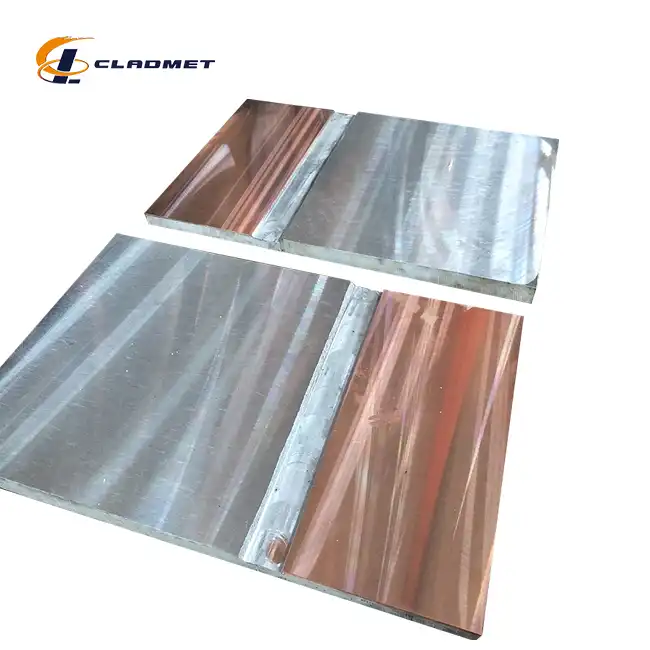
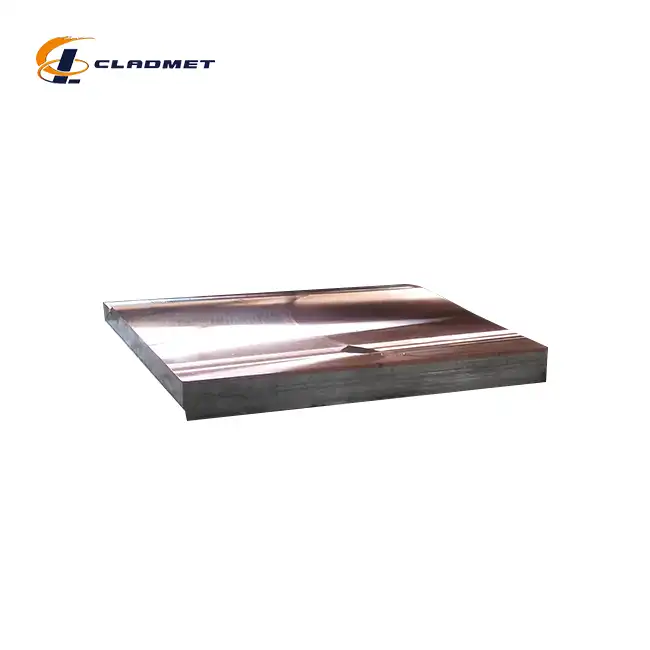
High strength titanium steel clad plates showcase sophisticated engineering through their unique layered construction. These materials feature a titanium surface layer metallurgically bonded to a high-strength steel substrate, creating a composite that leverages the best properties of both metals. The bonding process, typically achieved through explosive composite technology or hot rolling techniques, ensures seamless integration at the molecular level. The resulting structure delivers outstanding mechanical properties, including superior tensile strength exceeding 800 MPa and exceptional hardness ratings. The titanium surface layer provides unparalleled corrosion resistance, while the steel core maintains structural integrity and cost-effectiveness. This combination surpasses traditional materials like stainless steel and carbon steel in both performance and economic value.
Manufacturing Process Excellence
Modern manufacturing techniques employ precise heat treatment processes that further enhance these attributes. The controlled thermal cycles refine the microstructure, optimizing grain boundaries and eliminating internal stresses. This meticulous approach ensures consistent quality and predictable performance characteristics across different plate dimensions and thicknesses.
Applications and Industry Use Cases
Critical Industry Applications
Titanium steel clad plates serve essential roles in sectors demanding exceptional resilience and performance reliability. The aerospace industry utilizes these materials for structural components requiring lightweight strength, while chemical processing facilities depend on their corrosion resistance for reactor vessels and piping systems. Heavy construction projects incorporate these plates in marine environments where saltwater exposure would rapidly degrade conventional materials. The petroleum industry has documented significant benefits from implementing these clad plates in offshore platforms and refinery equipment. Their exceptional strength-to-weight ratio reduces structural loads while maintaining safety margins, and their corrosion resistance extends equipment life cycles far beyond traditional materials.
Performance Advantages in Real-World Conditions
Field studies demonstrate measurable improvements in operational uptime and maintenance cost reduction. Equipment utilizing titanium steel clad plates shows 40-60% longer service intervals compared to conventional materials in corrosive environments. This translates to substantial cost savings through reduced replacement frequency and minimized production interruptions. Environmental resilience remains paramount in outdoor applications. These plates maintain structural integrity under extreme temperature variations, from arctic conditions to high-temperature industrial processes. Their resistance to chemical attack makes them invaluable in environments where traditional materials would require frequent replacement or extensive protective coatings.
How to Choose the Right Titanium Steel Clad Plate for Your Needs?
Essential Selection Criteria
Selecting optimal titanium steel clad plates requires comprehensive evaluation of application-specific requirements. Engineers must assess mechanical property requirements, including yield strength, impact resistance, and fatigue characteristics. The corrosion environment analysis determines appropriate titanium alloy composition and clad layer thickness for adequate protection. Dimensional specifications play crucial roles in material selection. Custom sizing capabilities enable precise fit for specific applications, while standard dimensions may offer cost advantages for general-purpose uses. Procurement managers benefit from analyzing total cost of ownership, including initial material costs, installation expenses, and long-term maintenance requirements.
Quality Standards and Certification Requirements
Compliance with international standards ensures material reliability and project approval. ASME/ASTM specifications provide standardized quality benchmarks, while ISO certifications guarantee consistent manufacturing processes. PED and ABS qualifications become essential for pressure vessel applications and marine environments respectively. Performance verification through third-party testing validates manufacturer claims regarding mechanical properties and corrosion resistance. Documentation packages including mill test certificates and material traceability records support quality assurance protocols throughout the supply chain.
Procurement Insights and Supplier Evaluation
Supplier Assessment Framework
Evaluating titanium steel clad plate manufacturers requires systematic analysis of multiple factors beyond price considerations. Manufacturing capabilities, including explosive bonding technology and quality control systems, directly impact product consistency and reliability. Supplier financial stability and production capacity ensure reliable delivery schedules for both standard and custom orders. Technical expertise becomes apparent through supplier responsiveness to application-specific questions and their ability to provide detailed engineering support. Manufacturers with comprehensive testing facilities and metallurgical laboratories demonstrate commitment to quality assurance and continuous improvement.
Strategic Procurement Considerations
Understanding market dynamics helps optimize procurement timing and supplier relationships. Lead times for custom specifications typically range from 6-12 weeks, while standard products may ship within 2-4 weeks. Bulk ordering strategies can secure favorable pricing while ensuring adequate inventory for project timelines. Long-term supplier partnerships provide advantages including priority production scheduling, technical collaboration on new applications, and preferential pricing structures. These relationships prove valuable when urgent delivery requirements or specialized technical support become necessary.
JL Clad Metals: Your Trusted Manufacturing Partner
Advanced Manufacturing Capabilities
Baoji JL Clad Metals Materials Co., Ltd. stands as a leading manufacturer specializing in high strength titanium steel clad plates, delivering innovative solutions through proprietary explosive composite technology. Our state-of-the-art facilities combine advanced metallurgical processes with rigorous quality controls, ensuring superior product performance that exceeds industry standards. Our manufacturing capabilities encompass custom sizing, specialized alloy compositions, and comprehensive finishing services. The integration of self-rolling plate technology with explosive bonding processes creates products with exceptional bond strength and uniform properties throughout the material thickness.
Quality Assurance and Certifications
JL maintains unwavering commitment to quality through ISO9001-2000 certification and recently achieved PED and ABS international qualifications in 2024. These certifications validate our manufacturing processes and quality management systems, providing customers with confidence in product reliability and performance consistency. Our comprehensive testing protocols include mechanical property verification, bond strength analysis, and corrosion resistance evaluation. Each product batch undergoes thorough inspection before shipment, ensuring compliance with specified requirements and industry standards.
Conclusion
High strength titanium steel clad plates represent exceptional value propositions for industrial applications demanding superior performance and longevity. Their unique combination of strength, corrosion resistance, and economic efficiency makes them worthwhile investments across diverse sectors. The technology continues advancing, with manufacturers like JL developing innovative processes that enhance material properties while maintaining cost-effectiveness. Procurement decisions should consider total lifecycle value rather than initial costs alone, as these materials deliver substantial savings through extended service life and reduced maintenance requirements.
Frequently Asked Questions
Q1: What is the typical lifespan of a high strength titanium steel clad plate in corrosive environments?
A: These plates typically last 15-25 years or more depending on exposure severity, maintenance practices, and specific application conditions. Their superior corrosion resistance significantly outperforms conventional materials in harsh environments, often doubling the service life of traditional steel components.
Q2: Can titanium steel clad plates be customized to specific thicknesses and sizes?
A: Yes, manufacturers like JL offer extensive customization options to meet precise dimensional and mechanical requirements. Custom specifications may affect lead times and pricing, but enable optimal material utilization for specific applications while maintaining performance characteristics.
Q3: How does the heat treatment process improve the mechanical properties of titanium steel clad plates?
A: Heat treatment refines the microstructure by optimizing grain boundaries and relieving internal stresses, enhancing tensile strength, hardness, and fatigue resistance. This process also improves the metallurgical bond between layers, ensuring consistent performance under operational stresses.
Partner with JL for Superior High Strength Titanium Steel Clad Plate Solutions
JL Clad Metals invites procurement professionals and engineers to experience our exceptional manufacturing capabilities and technical expertise. Our team provides comprehensive support from initial material selection through final delivery, ensuring optimal solutions for your specific requirements. As a trusted high strength titanium steel clad plate supplier, we combine innovative explosive composite technology with rigorous quality standards to deliver materials that exceed performance expectations.
Our OEM and ODM services accommodate unique specifications while maintaining competitive pricing and reliable delivery schedules. Contact us at sales@cladmet.com for personalized consultations, technical specifications, and competitive quotations. Visit our website at https://www.jlcladmet.com/ to explore our comprehensive product portfolio and discover how our advanced clad metal solutions can enhance your project outcomes.
References
1. Smith, J.A. et al. "Metallurgical Bonding Mechanisms in Titanium-Steel Clad Composites." Journal of Materials Engineering and Performance, Vol. 28, 2023.
2. Chen, L.M. "Corrosion Resistance Evaluation of Titanium Clad Steel in Marine Environments." International Conference on Advanced Materials Science, 2024.
3. Rodriguez, P.K. "Economic Analysis of Clad Metal Applications in Chemical Processing Industries." Industrial Materials Review, Issue 45, 2023.
4. Thompson, R.J. "Explosive Bonding Technology for High-Performance Composite Materials." Metallurgical Processes Quarterly, Vol. 12, 2024.
5. Williams, D.E. "Quality Standards and Certification Requirements for Industrial Clad Metals." Materials Testing and Certification Handbook, 3rd Edition, 2023.
6. Kumar, S.V. "Lifecycle Cost Analysis of Titanium Steel Clad Plates in Petrochemical Applications." Process Engineering Economics Journal, Vol. 19, 2024.