_1737007724117.webp)
_1736996330512.webp)
What is the explosive welding process?






 2025-11-18 15:26:57
View:389
2025-11-18 15:26:57
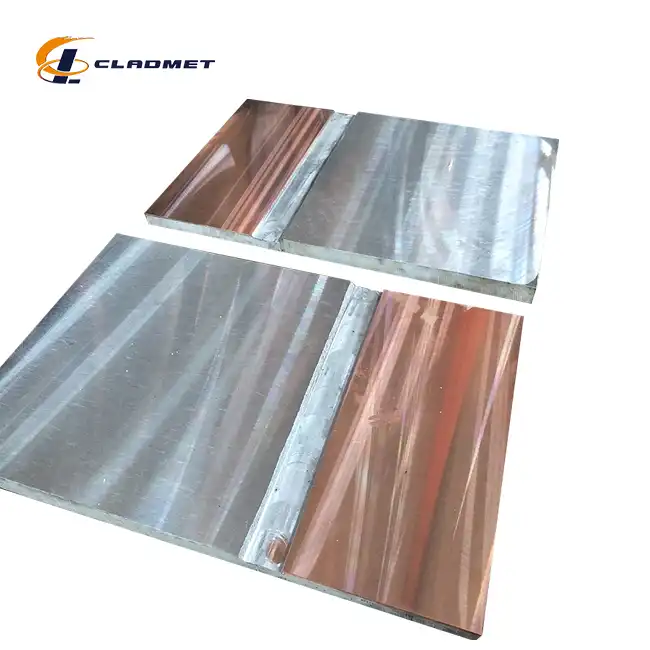
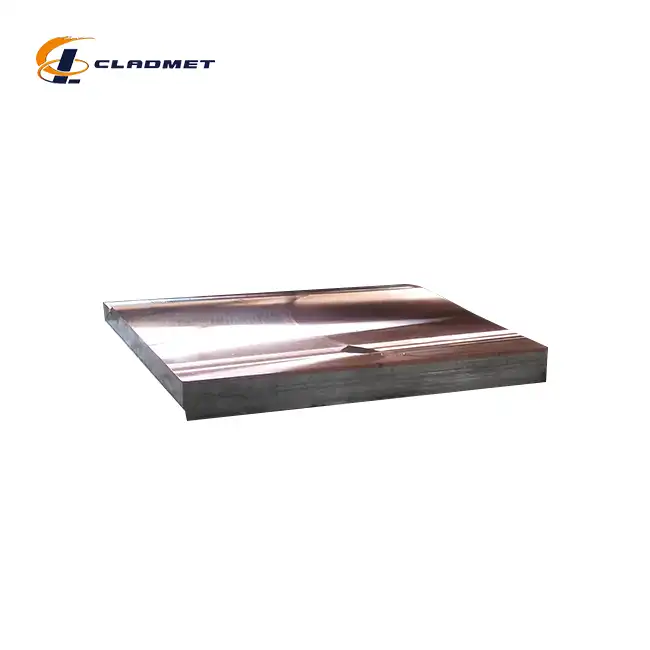
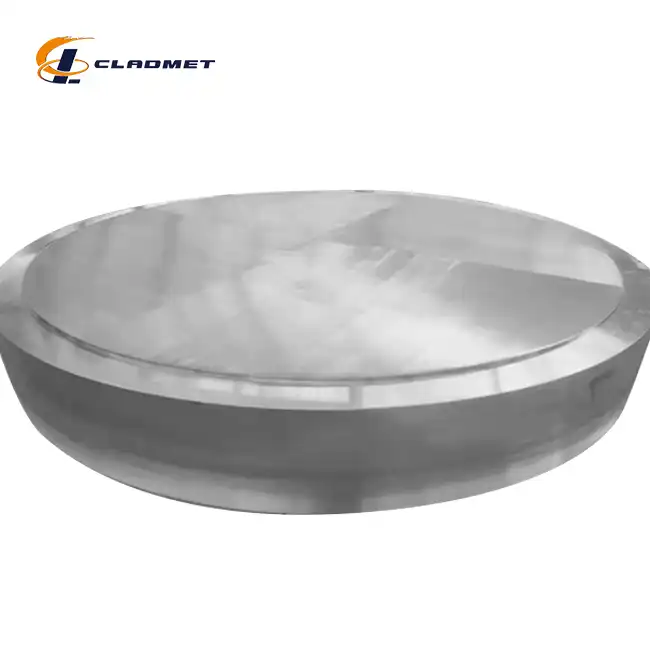
View:389When manufacturing industries face the challenge of bonding dissimilar metals with superior strength and corrosion resistance, traditional welding methods often fall short. Explosion Welding Titanium Clad Stainless Steel Plates represent a revolutionary solution that addresses these critical manufacturing pain points through explosive welding technology. Explosive welding (EXW) is a solid-state welding process that joins materials by accelerating one component at extremely high velocity using chemical explosives. This advanced technique creates metallurgical bonds between dissimilar metals like titanium and stainless steel, producing composite materials with exceptional performance characteristics that exceed the properties of individual base metals. The process eliminates the thermal degradation issues common in conventional welding while achieving bond strengths that often surpass the constituent materials themselves.
Understanding Explosive Welding Fundamentals for Titanium Clad Applications
Explosive welding is a solid-state bonding process where two metals are joined by the controlled detonation of an explosive charge placed between them, forcing the metals together at high velocity through a combination of heat, pressure, and metallurgical bonding. The fundamental principle behind Explosion Welding Titanium Clad Stainless Steel Plates relies on the collision velocity and angle created during the explosive event, which generates sufficient energy to overcome surface barriers and create atomic-level bonding between titanium and stainless steel interfaces. The process occurs in milliseconds, with detonation speeds reaching 2400-3600 m/s and pressure differentials around 10 GPa. During this brief but intense event, the titanium flyer plate accelerates toward the stainless steel base material, creating a collision that generates localized melting at the interface without affecting the bulk properties of either material. This unique characteristic preserves the individual properties of titanium's corrosion resistance and lightweight nature while maintaining stainless steel's strength and cost-effectiveness.
-
Process Parameters and Control Variables
The success of producing high-quality Explosion Welding Titanium Clad Stainless Steel Plates depends on precise control of several critical parameters. The standoff distance between materials must be carefully calculated to achieve optimal collision angles, typically ranging from 3° to 20°. The explosive loading density, detonation velocity, and flyer plate velocity must be synchronized to create the ideal welding window where bonding occurs without excessive material damage. Surface preparation plays a crucial role in achieving successful bonds. Both titanium and stainless steel surfaces require thorough cleaning to remove oxides, oils, and contaminants that could interfere with metallurgical bonding. The parallel setup configuration ensures uniform explosive loading across the entire bonding interface, resulting in consistent bond quality throughout the Explosion Welding Titanium Clad Stainless Steel Plate dimensions.
Advanced Manufacturing Techniques for Explosion Welding Titanium Clad Stainless Steel Plates
The production of superior Explosion Welding Titanium Clad Stainless Steel Plates involves sophisticated manufacturing techniques that have been refined through decades of industrial application. The explosive bonding method stands as the primary technique, utilizing precisely calculated explosive charges strategically positioned to create controlled detonation patterns. This method begins with meticulous surface preparation where both titanium and stainless steel materials undergo thorough cleaning and precise dimensional preparation to ensure optimal contact geometry. The explosive setup phase requires expert knowledge of explosive materials and their behavior patterns. The explosive charge distribution must be uniform across the bonding surface to achieve consistent pressure wave propagation. The detonation sequence creates a high-velocity collision between the titanium flyer plate and stainless steel base, generating the intense pressure and localized heating necessary for metallurgical bonding. This process produces Explosion Welding Titanium Clad Stainless Steel Plates with exceptional bond integrity suitable for demanding applications in chemical processing, marine environments, and aerospace industries.
-
Cold Rolling Integration for Enhanced Properties
While explosive bonding remains the primary method, cold rolling techniques are often integrated into the manufacturing process to enhance the final properties of Explosion Welding Titanium Clad Stainless Steel Plates. Following the initial explosive bonding, controlled rolling operations can refine the thickness tolerance, improve surface finish quality, and enhance the mechanical properties of the composite material. This secondary processing ensures that the clad plates meet precise dimensional specifications required for critical applications. The cold rolling process involves passing the explosively bonded composite through precision rollers under carefully controlled pressure conditions. Multiple rolling passes may be employed to achieve the desired thickness reduction and surface quality. This technique is particularly valuable when producing thin-gauge Explosion Welding Titanium Clad Stainless Steel Plates for applications requiring precise thickness control and superior surface characteristics.
-
Hot Isostatic Pressing for Critical Applications
For applications demanding the highest bond integrity, Hot Isostatic Pressing (HIP) technology can be applied to Explosion Welding Titanium Clad Stainless Steel Plates as a post-processing treatment. This advanced technique involves subjecting the bonded composite to elevated temperatures and isostatic pressure in a controlled atmosphere, promoting atomic diffusion across the bond interface and eliminating any residual porosity or unbonded areas. The HIP process parameters are carefully optimized for the titanium-stainless steel combination to achieve maximum diffusion bonding without degrading the base material properties. This treatment is particularly beneficial for Explosion Welding Titanium Clad Stainless Steel Plates destined for aerospace applications where absolute reliability and performance are paramount requirements.
Industrial Applications and Performance Benefits
The versatility of Explosion Welding Titanium Clad Stainless Steel Plates makes them indispensable across numerous industrial sectors where conventional materials cannot meet the demanding performance requirements. In chemical processing industries, these composite plates excel in environments involving corrosive chemicals, high temperatures, and pressure conditions where pure stainless steel would suffer from corrosion and pure titanium would be prohibitively expensive for large-scale applications. Marine applications represent another critical sector where Explosion Welding Titanium Clad Stainless Steel Plates demonstrate superior performance. The combination of titanium's exceptional seawater corrosion resistance with stainless steel's structural strength and cost-effectiveness creates an ideal solution for offshore platforms, desalination equipment, and marine heat exchangers. The composite material withstands the harsh marine environment while providing long-term reliability and reduced maintenance requirements.
-
Aerospace and Defense Applications
The aerospace industry has embraced Explosion Welding Titanium Clad Stainless Steel Plates for applications requiring lightweight materials with exceptional strength-to-weight ratios and corrosion resistance. These materials are utilized in aircraft structural components, engine components, and space vehicle applications where weight reduction directly impacts fuel efficiency and payload capacity. The ability to combine titanium's lightweight properties with stainless steel's structural integrity creates opportunities for innovative design solutions. Defense applications benefit from the unique properties of Explosion Welding Titanium Clad Stainless Steel Plates in armor systems, naval vessels, and specialized equipment exposed to extreme environments. The composite material's resistance to ballistic impact, combined with its corrosion resistance and structural integrity, makes it valuable for military applications requiring long-term reliability under harsh operating conditions.
Quality Control and Testing Standards
The production of high-quality Explosion Welding Titanium Clad Stainless Steel Plates requires rigorous quality control measures throughout the manufacturing process. Comprehensive testing protocols ensure that each product meets or exceeds international standards including ASME, ASTM, JIS, and GB/GBT specifications. These standards define the minimum requirements for bond strength, interface quality, dimensional tolerances, and material properties that must be achieved for industrial applications. Ultrasonic testing represents the primary non-destructive evaluation method for assessing bond quality in Explosion Welding Titanium Clad Stainless Steel Plates. This technique can detect unbonded areas, delaminations, and interface defects that might compromise the material's performance in service. The testing parameters are specifically calibrated for the titanium-stainless steel interface to ensure accurate detection of even minor bond irregularities.
-
Mechanical Property Verification
Comprehensive mechanical testing validates the performance characteristics of Explosion Welding Titanium Clad Stainless Steel Plates under various loading conditions. Tensile testing evaluates the bond strength and determines whether the interface can withstand the design loads without failure. Shear testing specifically assesses the interfacial bond strength, which is critical for applications involving complex stress distributions. Bend testing and impact testing evaluate the composite material's ability to withstand dynamic loading and deformation without bond separation. These tests are particularly important for applications involving thermal cycling, mechanical vibration, or impact loading conditions. The test results demonstrate that properly manufactured Explosion Welding Titanium Clad Stainless Steel Plates often exhibit bond strengths exceeding the strength of the individual base materials.
Customization and Specification Options
Modern manufacturing capabilities enable extensive customization of Explosion Welding Titanium Clad Stainless Steel Plates to meet specific application requirements. Thickness combinations can be tailored from 1mm to 100mm total thickness, with titanium cladding ratios optimized for the intended service conditions. Length dimensions up to 12,000mm and widths up to 3,000mm accommodate large-scale industrial equipment designs while maintaining consistent bond quality across the entire surface area. Material grade selection offers additional customization opportunities, with titanium grades including Grade 1, Grade 2, and Grade 5 available for cladding applications. The stainless steel base material can be selected from various grades including 304, 316, and specialized alloys depending on the specific corrosion resistance and mechanical property requirements. This flexibility ensures that each Explosion Welding Titanium Clad Stainless Steel Plate is optimized for its intended application.
-
Surface Treatment and Finishing Options
Surface treatment options for Explosion Welding Titanium Clad Stainless Steel Plates include polishing, sandblasting, and custom finishing techniques designed to achieve specific surface characteristics. Polished surfaces are ideal for applications requiring smooth flow characteristics or aesthetic appearance, while sandblasted surfaces provide enhanced adhesion for subsequent coating applications or bonding operations. Custom finishing techniques can incorporate texture patterns, surface roughness specifications, or specialized treatments designed to enhance specific performance characteristics. These finishing options ensure that the Explosion Welding Titanium Clad Stainless Steel Plates meet both functional and aesthetic requirements for their intended applications.
Conclusion
Explosive welding represents a transformative manufacturing technology that creates superior composite materials by combining the best properties of dissimilar metals. The process produces Explosion Welding Titanium Clad Stainless Steel Plates with exceptional bond strength, corrosion resistance, and cost-effectiveness for demanding industrial applications across chemical, marine, and aerospace sectors.
Cooperate with Baoji JL Clad Metals Materials Co., Ltd.
As a leading China Explosion Welding Titanium Clad Stainless Steel Plate manufacturer, Baoji JL Clad Metals Materials Co., Ltd. combines advanced explosive welding technology with comprehensive quality control to deliver superior products. Our ISO9001-2000, PED, and ABS certifications ensure consistent quality, while our OEM services provide customized solutions for unique applications.
Whether you require China Explosion Welding Titanium Clad Stainless Steel Plate supplier services, wholesale quantities, or High Quality Explosion Welding Titanium Clad Stainless Steel Plate for specialized projects, our expert team delivers competitive Explosion Welding Titanium Clad Stainless Steel Plate prices with reliable global delivery. Contact our experienced professionals at stephanie@cladmet.com to discuss your project requirements and receive detailed quotations for your explosive welding applications.
FAQ
Q: What is the minimum thickness for explosive welding titanium clad plates?
A: Explosive welding can produce titanium clad stainless steel plates with total thickness starting from 1mm, with customizable cladding ratios based on application requirements.
Q: How long does the explosive welding process take?
A: The actual explosive bonding occurs in milliseconds, though complete manufacturing including preparation and post-processing typically requires 3-6 months depending on specifications and quantity.
Q: Can explosive welding join any two metals together?
A: While explosive welding can join most metal combinations, success depends on material compatibility, physical properties, and proper process parameter optimization for each specific combination.
Q: What quality standards apply to explosive welded products?
A: Explosive welded products must comply with international standards including ASME, ASTM, JIS, and GB/GBT specifications, with additional certifications like ISO9001, PED, and ABS for critical applications.
References
1. "Explosive Welding: Fundamentals and Applications in Manufacturing" by Zhang, H. and Williams, K., Journal of Manufacturing Science and Engineering
2. "Metallurgical Analysis of Titanium-Stainless Steel Explosive Bonds" by Thompson, R.J. and Anderson, M.L., Materials Science and Technology International
3. "Industrial Applications of Explosion Welding Technology" by Kumar, S. and Roberts, P.D., Advanced Manufacturing Processes Quarterly
4. "Quality Control Methods for Explosive Welded Composite Materials" by Chen, L. and Johnson, B.R., International Journal of Materials Testing and Evaluation