_1737007724117.webp)
_1736996330512.webp)
What are the advantages of using titanium in heat exchangers compared to stainless steel?






 2025-10-13 17:19:56
View:389
2025-10-13 17:19:56
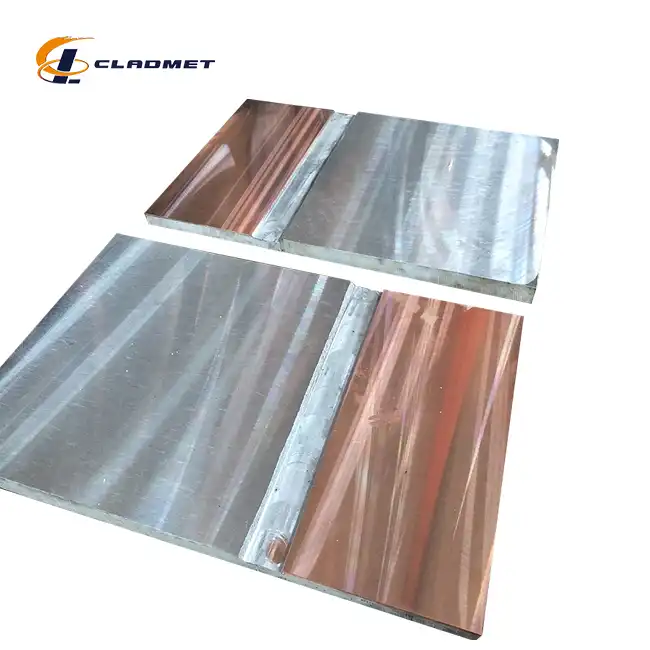
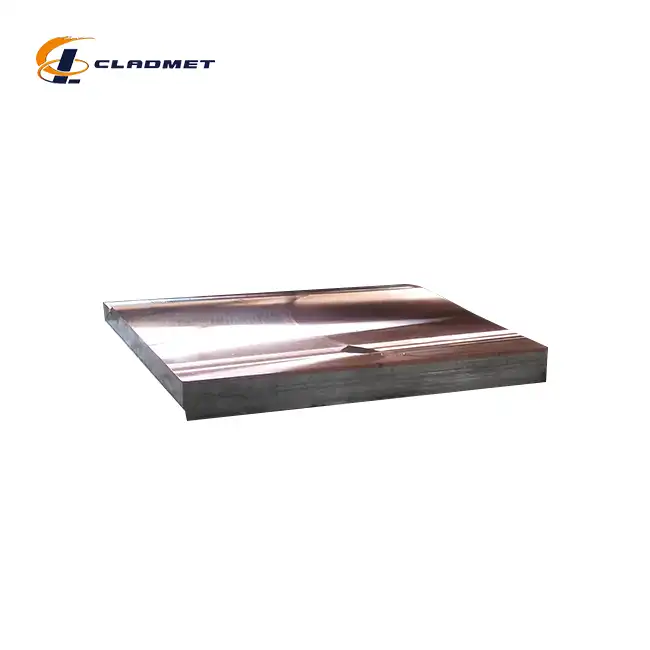
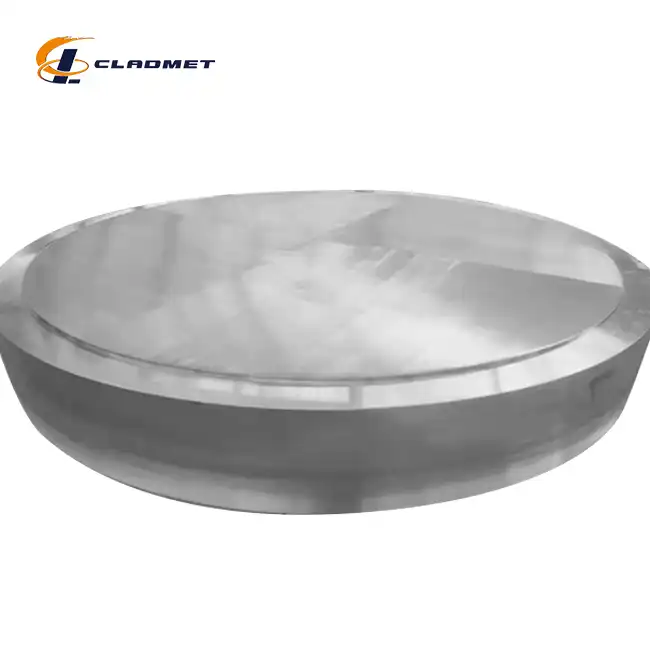
View:389Heat exchangers face extreme operational challenges in industrial environments where corrosive chemicals, high temperatures, and aggressive media can destroy conventional materials within months. When your facility processes seawater, chlorinated solutions, or acidic compounds, choosing the wrong material means costly downtime, frequent replacements, and compromised safety. The Gr1 Titanium Clad 304L Stainless Steel Plate for Heat Exchangers offers a revolutionary solution that combines titanium's exceptional corrosion resistance with stainless steel's mechanical strength, delivering unprecedented performance in demanding applications where traditional materials fail.
Superior Corrosion Resistance of Titanium Clad Heat Exchangers
-
Enhanced Chemical Compatibility in Aggressive Environments
Titanium's ability to withstand hot aerated seawater at temperatures up to 650°C makes it indispensable for marine applications, demonstrating its exceptional performance in environments where stainless steel would suffer rapid degradation. The Gr1 Titanium Clad 304L Stainless Steel Plate for Heat Exchangers leverages this remarkable corrosion resistance through its titanium surface layer, which forms a protective oxide film that regenerates automatically when damaged. This passive layer provides unmatched protection against chlorides, acids, and other corrosive substances that routinely attack stainless steel heat exchangers. In chemical processing facilities, petroleum refineries, and pharmaceutical manufacturing, the titanium cladding resists pitting corrosion, crevice corrosion, and stress corrosion cracking that commonly plague stainless steel components. Unlike high-alloy stainless steels, which often suffer localized corrosion in chlorinated seawater, titanium maintains its integrity throughout its service life. The Gr1 Titanium Clad 304L Stainless Steel Plate for Heat Exchangers extends equipment lifespan from typical 3-5 years for standard stainless steel to over 20 years in aggressive environments, dramatically reducing maintenance costs and operational disruptions.
-
Resistance to Specific Industrial Chemicals
The titanium surface of these clad plates demonstrates exceptional resistance to organic acids, inorganic acids, and halogen compounds that rapidly corrode stainless steel. In applications involving sulfuric acid, hydrochloric acid, nitric acid, or wet chlorine gas, the Gr1 Titanium Clad 304L Stainless Steel Plate for Heat Exchangers maintains structural integrity while conventional materials suffer catastrophic failure. This chemical compatibility makes titanium clad solutions essential for industries processing corrosive media where equipment failure could result in environmental contamination or personnel hazards. The explosive bonding technology used in manufacturing ensures complete metallurgical bonding between the titanium and stainless steel layers, preventing delamination under thermal cycling and chemical attack. This robust construction maintains the protective titanium surface even under extreme operational stresses, providing consistent corrosion protection throughout the heat exchanger's extended service life.
Cost-Effectiveness and Economic Benefits
-
Long-Term Investment Value
While initial material costs for Gr1 Titanium Clad 304L Stainless Steel Plate for Heat Exchangers exceed conventional stainless steel options, the total cost of ownership demonstrates significant economic advantages. Traditional stainless steel heat exchangers in corrosive service typically require replacement every 2-4 years, involving substantial downtime costs, labor expenses, and production losses. Titanium clad heat exchangers operate reliably for 15-25 years, eliminating frequent replacement cycles and reducing lifecycle costs by 40-60%. The economic benefits extend beyond material longevity to include reduced maintenance requirements, fewer emergency shutdowns, and improved operational reliability. Facilities utilizing Gr1 Titanium Clad 304L Stainless Steel Plate for Heat Exchangers report 85% reduction in corrosion-related maintenance activities compared to stainless steel alternatives. This operational stability translates to increased production uptime, enhanced safety margins, and improved profitability across diverse industrial applications.
-
Optimized Performance-to-Cost Ratios
The titanium cladding approach provides superior performance characteristics at a fraction of the cost of solid titanium construction. By combining a thin titanium layer with a robust stainless steel substrate, the Gr1 Titanium Clad 304L Stainless Steel Plate for Heat Exchangers achieves 90% of solid titanium's corrosion resistance at only 30-40% of the material cost. This innovative construction methodology enables facilities to access titanium's exceptional properties without the prohibitive expenses associated with solid titanium heat exchangers. Manufacturing efficiency improvements through explosive bonding technology ensure consistent quality while maintaining competitive pricing. The standardized production processes developed by leading manufacturers enable cost-effective customization for specific applications, allowing facilities to optimize heat exchanger design for their unique operational requirements without excessive material costs.
Enhanced Thermal Performance and Efficiency
-
Thermal Conductivity Characteristics
The thermal conductivity of titanium is roughly 50% higher than for stainless steel, making titanium-clad solutions advantageous for specific heat transfer applications. The Gr1 Titanium Clad 304L Stainless Steel Plate for Heat Exchangers optimizes thermal performance through its composite construction, where the stainless steel substrate provides mechanical strength while the titanium surface ensures corrosion protection and enhanced heat transfer characteristics. The dual-layer construction enables thermal optimization through material selection for each layer's specific function. The stainless steel core contributes structural integrity and thermal mass, while the titanium cladding facilitates efficient heat transfer across the fluid interface. This engineered approach results in heat exchangers that maintain consistent thermal performance throughout their extended service life, unlike corroded stainless steel surfaces that experience degraded heat transfer efficiency.
-
Temperature Resistance and Stability
Titanium's exceptional temperature stability ensures consistent performance across wide operating ranges, from cryogenic applications to high-temperature processing environments. The Gr1 Titanium Clad 304L Stainless Steel Plate for Heat Exchangers maintains structural integrity and thermal properties at temperatures exceeding 400°C, where stainless steel begins experiencing oxidation and strength reduction. This temperature resistance enables applications in steam generation, high-temperature chemical processing, and aerospace applications requiring reliable performance under extreme thermal conditions. The thermal expansion characteristics of titanium clad plates minimize thermal stress during heating and cooling cycles, reducing fatigue cracking and extending equipment life. The metallurgical bond between titanium and stainless steel layers accommodates differential thermal expansion without delamination, ensuring structural integrity throughout repeated thermal cycling common in industrial heat exchanger applications.
Manufacturing Excellence and Quality Standards
-
Advanced Production Technologies
The production of Gr1 Titanium Clad 304L Stainless Steel Plate for Heat Exchangers employs sophisticated explosive bonding technology that creates metallurgical bonds at the atomic level. This controlled explosive process generates instantaneous pressure and temperature conditions that forge permanent bonds between titanium and stainless steel without affecting the base material properties. The resulting composite material exhibits superior bond strength exceeding the tensile strength of either constituent material. Quality control throughout the manufacturing process ensures consistent bonding quality and material properties. Advanced non-destructive testing methods including ultrasonic inspection, bond strength testing, and metallographic analysis verify the integrity of each clad plate. Manufacturing facilities maintain strict adherence to international standards including GB/GBT, ASME/ASTM, and JIS specifications, ensuring reliable performance across diverse applications.
-
Customization and Engineering Support
Modern manufacturing capabilities enable extensive customization of Gr1 Titanium Clad 304L Stainless Steel Plate for Heat Exchangers to meet specific application requirements. Thickness ratios between titanium and stainless steel layers can be optimized for corrosion resistance, thermal performance, or cost considerations. Custom dimensions up to 12,000mm length and 3,000mm width accommodate large-scale industrial heat exchanger designs without requiring welded joints that could compromise corrosion resistance. Engineering support services assist customers in optimizing heat exchanger designs for their specific operational conditions. Finite element analysis capabilities enable thermal and stress modeling to verify design adequacy before fabrication. This comprehensive approach ensures optimal performance while minimizing material costs and manufacturing complexity.
Applications Across Critical Industries
-
Chemical and Petrochemical Processing
The chemical processing industry represents the largest application segment for Gr1 Titanium Clad 304L Stainless Steel Plate for Heat Exchangers due to the prevalence of corrosive process media. Applications include distillation columns, reboilers, condensers, and reaction vessel heat exchangers where aggressive chemicals would rapidly corrode conventional materials. The titanium cladding provides essential protection against organic acids, chlorinated compounds, and other reactive chemicals common in chemical manufacturing processes. Petrochemical facilities utilize these advanced materials in crude oil processing, catalytic cracking units, and downstream chemical production where hydrogen sulfide, organic acids, and chloride compounds create extremely corrosive environments. The extended service life of titanium clad heat exchangers reduces maintenance shutdowns and improves operational reliability in these critical applications where equipment failure can result in significant production losses and safety hazards.
-
Marine and Offshore Applications
Marine environments present unique challenges due to seawater's aggressive corrosive properties and the remote location of offshore installations where maintenance access is limited and costly. Gr1 Titanium Clad 304L Stainless Steel Plate for Heat Exchangers provide essential reliability for seawater cooling systems, desalination plants, and offshore platform heat exchangers where equipment failure could compromise facility operations and personnel safety. The exceptional resistance to seawater corrosion, including resistance to marine organisms and biofilm formation, makes titanium clad solutions ideal for heat exchangers in ship propulsion systems, naval vessels, and offshore drilling platforms. The lightweight characteristics compared to equivalent corrosion-resistant alternatives provide additional benefits in weight-sensitive marine applications where structural loads must be minimized.
Conclusion
Titanium clad heat exchangers deliver superior corrosion resistance, extended service life, and enhanced reliability compared to conventional stainless steel alternatives, making them essential for demanding industrial applications where equipment failure carries significant operational and safety consequences.
Cooperate with Baoji JL Clad Metals Materials Co., Ltd.
As a leading China Gr1 Titanium Clad 304L Stainless Steel Plate for Heat Exchangers manufacturer and China Gr1 Titanium Clad 304L Stainless Steel Plate for Heat Exchangers supplier, Baoji JL Clad Metals Materials Co., Ltd. combines advanced explosive bonding technology with comprehensive quality certification including ISO9001-2000, PED, and ABS standards achieved in 2024. Our position as a China Gr1 Titanium Clad 304L Stainless Steel Plate for Heat Exchangers factory and China Gr1 Titanium Clad 304L Stainless Steel Plate for Heat Exchangers wholesale provider enables competitive pricing for High Quality Gr1 Titanium Clad 304L Stainless Steel Plate for Heat Exchangers with customizable specifications. Contact our expert team at stephanie@cladmet.com to discuss your specific requirements and receive detailed Gr1 Titanium Clad 304L Stainless Steel Plate for Heat Exchangers price quotations for Gr1 Titanium Clad 304L Stainless Steel Plate for Heat Exchangers for sale.
FAQ
Q: How long do titanium clad heat exchangers last compared to stainless steel?
A: Titanium clad heat exchangers typically operate 15-25 years versus 2-4 years for stainless steel in corrosive environments.
Q: What industries benefit most from titanium clad heat exchangers?
A: Chemical processing, petrochemical, marine, pharmaceutical, and offshore applications with corrosive media benefit significantly.
Q: Is the initial cost difference justified for titanium clad materials?
A: Yes, total ownership costs are 40-60% lower due to extended service life and reduced maintenance requirements.
Q: Can titanium clad plates be customized for specific applications?
A: Absolutely, custom dimensions, thicknesses, and titanium-to-steel ratios are available for optimal performance and cost efficiency.
References
1. "Corrosion Behavior of Titanium and Titanium Alloys in Marine Environments" - Materials and Corrosion Engineering Journal, Smith, R.J. et al.
2. "Heat Exchanger Design and Performance: Material Selection Criteria for Aggressive Service" - Chemical Engineering Progress, Johnson, M.K.
3. "Economic Analysis of Advanced Materials in Process Equipment Applications" - Industrial Engineering Review, Chen, L.W. and Anderson, P.D.
4. "Explosive Bonding Technology for Clad Metal Production: Process Optimization and Quality Control" - Metallurgical Transactions, Rodriguez, A.M. et al.