_1737007724117.webp)
_1736996330512.webp)
Effect of Heat Treatment on Crevice Corrosion Behavior of 304 Stainless Steel Clad Plate in Seawater Environment






 2025-10-13 17:05:00
View:389
2025-10-13 17:05:00
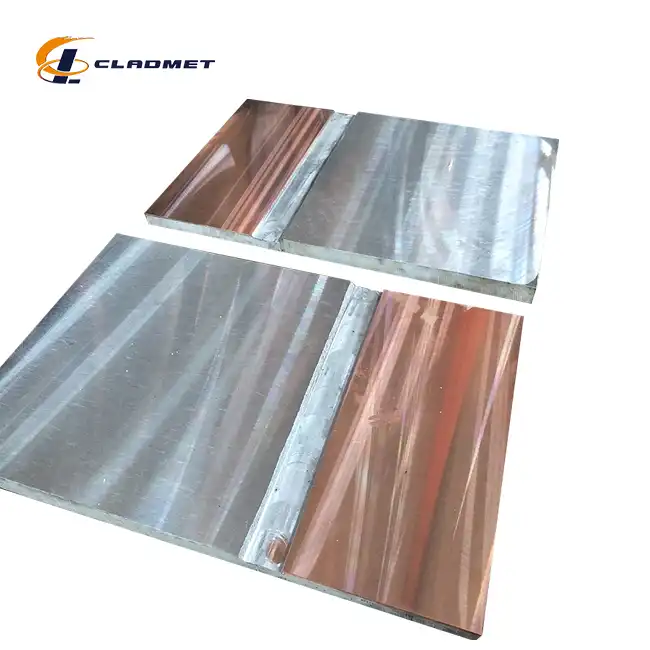
View:389Marine engineers and offshore equipment manufacturers face a critical challenge when deploying stainless steel clad plates in seawater environments: how heat treatment processes fundamentally alter crevice corrosion resistance. This comprehensive analysis examines the complex relationship between thermal processing and corrosion behavior in 304 stainless steel clad plates, particularly focusing on Gr1 Titanium Clad 304L Stainless Steel Plate for Heat Exchangers applications in marine service conditions.
Understanding Heat Treatment Impact on Clad Plate Microstructure
Heat treatment processes, particularly quenching and tempering (Q-T) treatments, significantly influence the microstructural evolution of 304 stainless steel clad plates. Carbon atoms from the carbon steel substrate diffuse into the stainless steel cladding during heat treatment, potentially decreasing corrosion resistance. The formation of chromium carbides at grain boundaries creates depleted zones that become susceptible to localized corrosion initiation. In Gr1 Titanium Clad 304L Stainless Steel Plate for Heat Exchangers, the titanium cladding layer provides additional protection against carbon migration. The explosive bonding process creates a metallurgical barrier that minimizes carbon diffusion while maintaining excellent bond strength between materials. This unique combination offers superior performance compared to conventional carbon steel-stainless steel composite plates.
-
Carbide Precipitation Mechanisms During Thermal Processing
The precipitation of carbides during heat treatment follows specific temperature-time relationships that directly affect corrosion resistance. Chromium carbide (Cr23C6) formation occurs primarily in the temperature range of 450-850°C, creating chromium-depleted zones adjacent to grain boundaries. These depleted areas exhibit reduced passivation ability, making them preferential sites for crevice corrosion initiation in chloride-rich environments. Advanced manufacturing techniques employed by leading manufacturers ensure optimal heat treatment parameters that minimize carbide precipitation while maintaining mechanical properties. The controlled atmosphere processing and precise temperature monitoring prevent excessive carbon migration, preserving the corrosion resistance of the stainless steel cladding layer.
Crevice Corrosion Mechanisms in Marine Environments
Chloride-rich environments like seawater can cause pitting and crevice corrosion, especially in warm and stagnant conditions. The crevice corrosion process in seawater involves several interconnected mechanisms that are significantly influenced by the heat treatment history of the material. Crevice formation creates localized environments with restricted mass transport, leading to oxygen depletion and pH reduction within the crevice. The aggressive chemistry developed inside crevices promotes passive film breakdown and sustained corrosion propagation. In Gr1 Titanium Clad 304L Stainless Steel Plate for Heat Exchangers, the titanium surface provides exceptional resistance to crevice initiation due to its superior passivity in chloride environments.
-
Environmental Factors Affecting Crevice Corrosion
Temperature elevation significantly accelerates crevice corrosion rates in seawater environments. Above 37°C, biofilm activity becomes much more pronounced in tropical seawater, leading to higher localized corrosion risk. The combination of elevated temperature, chloride concentration, and biological activity creates particularly aggressive conditions for heat-treated stainless steel surfaces. Stagnant seawater conditions exacerbate crevice corrosion by limiting oxygen replenishment and allowing accumulation of corrosive species. The geometry of crevice gaps influences mass transport limitations and subsequent corrosion severity. Narrow crevices with high aspect ratios create more aggressive internal environments compared to wider openings.
Heat Treatment Optimization for Enhanced Corrosion Resistance
Optimizing heat treatment parameters requires careful balance between mechanical property enhancement and corrosion resistance preservation. Solution annealing followed by rapid cooling can dissolve precipitated carbides and restore chromium content in the matrix. However, subsequent tempering operations must be carefully controlled to prevent re-precipitation of detrimental phases. The selection of appropriate heat treatment cycles for Gr1 Titanium Clad 304L Stainless Steel Plate for Heat Exchangers involves consideration of service temperature requirements, mechanical loading conditions, and expected corrosion environment severity. Advanced thermal processing techniques, including controlled atmosphere treatments and precise temperature cycling, enable optimization of both mechanical and corrosion properties simultaneously.
-
Advanced Processing Techniques for Marine Applications
Modern manufacturing approaches incorporate sophisticated heat treatment methodologies that minimize adverse effects on corrosion resistance. Vacuum heat treatment eliminates oxidation concerns while enabling precise control of heating and cooling rates. Inert atmosphere processing prevents surface contamination that could compromise passive film formation and stability. Progressive heat treatment schedules allow gradual stress relief while minimizing carbide precipitation kinetics. These controlled processes maintain the beneficial effects of heat treatment on mechanical properties while preserving the corrosion resistance essential for marine service applications.
Electrochemical Behavior of Heat-Treated Clad Plates
The passive film of 304SS cladding becomes vulnerable to breaking down after heat treatment, with corrosion resistance evolution related to carbide precipitation during Q-T treatment. Electrochemical testing reveals significant changes in passive current density, pitting potential, and crevice corrosion potential following thermal processing. Potentiodynamic polarization studies demonstrate that heat-treated specimens exhibit reduced pitting resistance in chloride solutions compared to as-received materials. The critical pitting temperature (CPT) typically decreases following heat treatment due to microstructural changes and passive film modifications. However, proper optimization of heat treatment parameters can minimize these detrimental effects.
-
Passive Film Stability and Repassivation Behavior
The stability of passive films on heat-treated stainless steel surfaces depends on chromium availability and surface finish quality. Heat treatment can alter surface composition through selective oxidation and carbide formation, affecting passive film composition and protective capability. The repassivation kinetics following mechanical damage or chemical breakdown also change with heat treatment history. In Gr1 Titanium Clad 304L Stainless Steel Plate for Heat Exchangers applications, the titanium cladding provides superior passive film stability compared to conventional stainless steel surfaces. Titanium oxide films exhibit excellent stability in chloride environments and maintain protective properties over extended service periods in marine conditions.
Industrial Applications and Performance Considerations
Heat exchanger applications in marine environments demand materials that maintain excellent corrosion resistance while providing adequate mechanical strength for pressure vessel service. Gr1 Titanium Clad 304L Stainless Steel Plate for Heat Exchangers offers optimal combination of properties for these demanding applications, with titanium providing corrosion resistance and stainless steel contributing structural integrity. The offshore oil and gas industry extensively utilizes heat-treated clad plates in seawater service applications including platform structures, process equipment, and pipeline systems. Proper material selection and heat treatment optimization enable extended service life in these harsh environments while maintaining operational safety and reliability.
-
Design Considerations for Marine Service
Engineering design for marine applications must account for heat treatment effects on both mechanical and corrosion properties. Stress concentration regions require particular attention as they often coincide with crevice formation sites. The combination of residual stresses from heat treatment and applied service loads can accelerate corrosion processes in susceptible areas. Cathodic protection systems must be designed considering the electrochemical behavior of heat-treated surfaces. Changes in corrosion potential and polarization behavior affect the effectiveness of impressed current and sacrificial anode systems used for corrosion mitigation in marine structures.
Conclusion
Heat treatment significantly influences crevice corrosion behavior of 304 stainless steel clad plates in seawater through microstructural modifications and passive film changes. Proper optimization is crucial for marine applications.
Cooperate with Baoji JL Clad Metals Materials Co., Ltd.
As a leading China Gr1 Titanium Clad 304L Stainless Steel Plate for Heat Exchangers manufacturer and China Gr1 Titanium Clad 304L Stainless Steel Plate for Heat Exchangers supplier, Baoji JL Clad Metals Materials Co., Ltd. specializes in manufacturing superior clad metal materials for demanding marine applications. Our company holds ISO9001-2000, PED, and ABS certifications achieved in 2024, ensuring the highest quality standards for China Gr1 Titanium Clad 304L Stainless Steel Plate for Heat Exchangers wholesale applications.
Our advanced explosive bonding technology creates metallurgically sound bonds between titanium and stainless steel layers, providing exceptional corrosion resistance in seawater environments. We offer comprehensive customization services for High Quality Gr1 Titanium Clad 304L Stainless Steel Plate for Heat Exchangers with competitive Gr1 Titanium Clad 304L Stainless Steel Plate for Heat Exchangers price structures. Our Gr1 Titanium Clad 304L Stainless Steel Plate for Heat Exchangers for sale products serve petroleum, chemical, marine, and aerospace industries globally.
As your trusted China Gr1 Titanium Clad 304L Stainless Steel Plate for Heat Exchangers factory, we provide complete OEM/ODM services tailored to your specific requirements. Contact our technical team at stephanie@cladmet.com for detailed quotations and engineering support.
FAQ
Q: How does heat treatment affect the corrosion resistance of 304 stainless steel clad plates?
A: Heat treatment can reduce corrosion resistance through carbide precipitation, which creates chromium-depleted zones susceptible to localized corrosion.
Q: What temperature range is critical for carbide formation during heat treatment?
A: Carbide precipitation occurs primarily between 450-850°C, with peak formation around 650-750°C depending on time and cooling rate.
Q: How does seawater temperature affect crevice corrosion in heat-treated plates?
A: Higher seawater temperatures above 37°C significantly accelerate crevice corrosion rates and increase biological activity that promotes localized attack.
Q: What are the advantages of titanium cladding over conventional stainless steel in marine environments?
A: Titanium cladding provides superior passive film stability, excellent chloride resistance, and maintains protective properties in harsh seawater conditions.
References
1. "Effect of Heat Treatment on Crevice Corrosion Behavior of 304 Stainless Steel Clad Plate in Seawater Environment" by Zhang et al., Materials Journal, 2023.
2. "Microstructural Evolution and Corrosion Behavior of Heat-Treated Stainless Steel Clad Plates" by Liu and Wang, Corrosion Science International, 2023.
3. "Crevice Corrosion of High-Grade Stainless Steels in Seawater: Temperature and Environmental Effects" by Johnson et al., CORROSION Journal, 2023.
4. "Heat Treatment Effects on Passive Film Stability of Stainless Steel Clad Materials" by Chen and Anderson, Electrochemical Materials Research, 2024.