_1737007724117.webp)
_1736996330512.webp)
Trend Alert: Aerospace Industry Switching to Pickled Surface Titanium Clad Steel for Lightweight Durability






 2025-12-04 09:45:31
View:389
2025-12-04 09:45:31
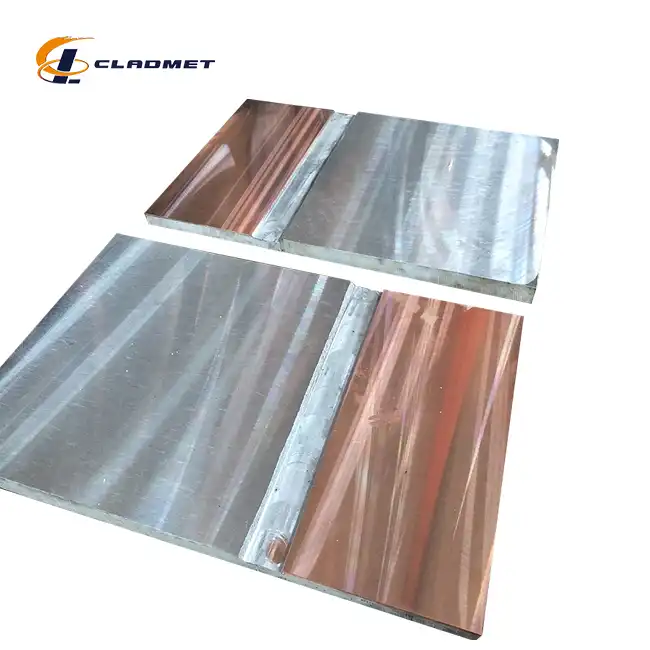
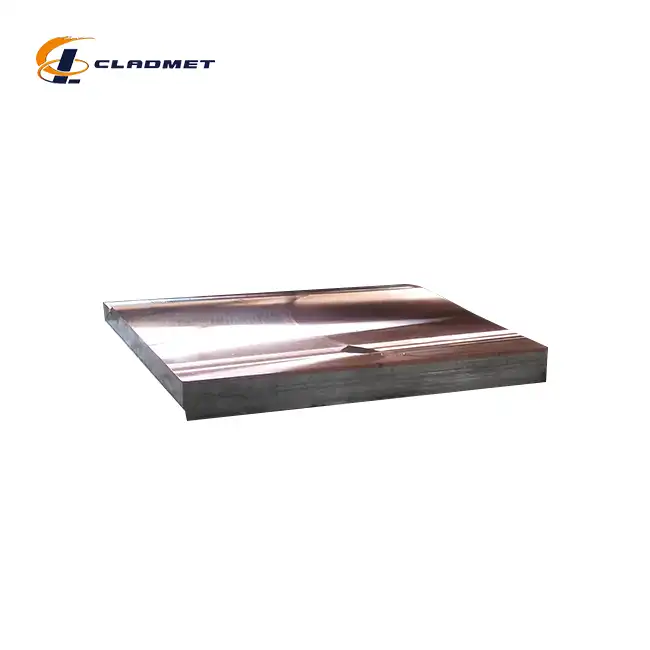
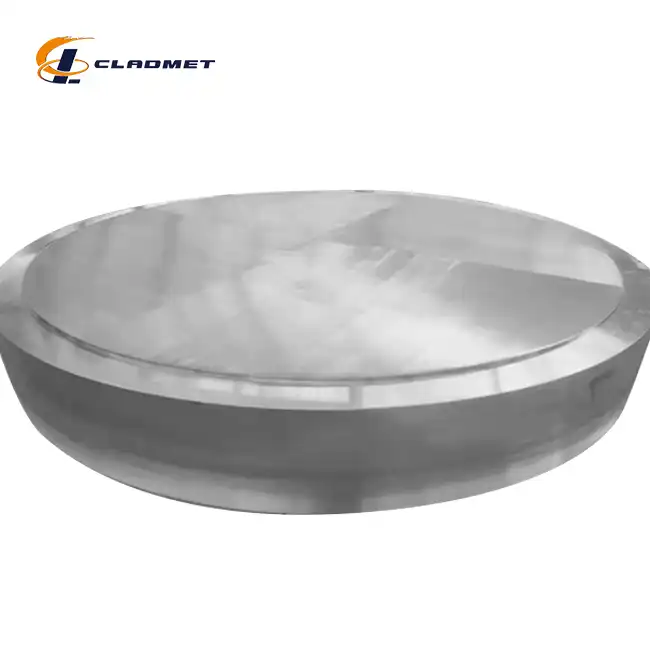
View:389The aerospace industry is experiencing a significant transformation as manufacturers increasingly adopt Pickled Surface Titanium Steel Clad Plate technology to meet the demanding requirements of modern aviation. This innovative composite material combines the exceptional corrosion resistance of titanium with the structural strength of steel, delivering an optimal solution for weight reduction without compromising durability. The pickled surface treatment enhances the bonding interface between titanium and steel layers, creating superior metallurgical properties essential for aerospace applications.
Why Aerospace Industries Are Embracing Pickled Surface Titanium Clad Steel?
Superior Weight-to-Strength Performance in Critical Applications
The aerospace sector's relentless pursuit of fuel efficiency and performance optimization has driven the widespread adoption of Pickled Surface Titanium Steel Clad Plate technology. This advanced composite material offers remarkable strength-to-weight ratios that significantly outperform traditional aerospace materials. The titanium layer provides exceptional corrosion resistance and lightweight characteristics, while the steel substrate delivers the structural integrity required for high-stress applications. Modern aircraft manufacturers utilize these plates in critical components such as engine housings, landing gear assemblies, and structural frameworks where every gram of weight reduction translates into substantial fuel savings over operational lifetimes. The pickled surface treatment process removes oxide layers and contaminants from both titanium and steel surfaces, creating pristine bonding interfaces that ensure maximum adhesion strength. This treatment is particularly crucial in aerospace applications where component failure could result in catastrophic consequences. The explosive welding or hot rolling processes used to create these composite plates generate bond strengths ranging from 150-200 MPa, providing reliability that meets or exceeds the stringent safety standards required for commercial and military aviation applications. Advanced manufacturing techniques enable the production of Pickled Surface Titanium Steel Clad Plate components with precise dimensional tolerances and consistent material properties throughout large-scale production runs. This consistency is essential for aerospace manufacturers who require guaranteed performance characteristics across entire fleets of aircraft. The ability to customize titanium layer thickness from 0.5mm to 10mm and steel substrate thickness from 3mm to 100mm allows engineers to optimize material distribution for specific applications, maximizing performance while minimizing weight and cost.
Enhanced Corrosion Resistance for Extended Service Life
Aerospace environments present unique corrosion challenges that traditional materials struggle to address effectively. Pickled Surface Titanium Steel Clad Plate technology provides superior protection against multiple corrosive agents commonly encountered in aviation operations. The titanium outer layer offers exceptional resistance to saltwater exposure, acidic atmospheric conditions, and chemical pollutants that can degrade conventional aircraft materials over time. This enhanced corrosion resistance translates into extended service intervals, reduced maintenance requirements, and lower lifecycle costs for aerospace operators. The pickled surface preparation creates optimal conditions for forming stable passive oxide layers on the titanium surface, further enhancing its natural corrosion resistance properties. This passive layer regenerates automatically when damaged, providing self-healing protection that maintains component integrity throughout extended service periods. Marine-based operations, which expose aircraft to highly corrosive salt spray environments, particularly benefit from this technology as it significantly reduces the occurrence of stress corrosion cracking and general corrosion that can compromise structural integrity. Manufacturing processes for Pickled Surface Titanium Steel Clad Plate incorporate strict quality control measures to ensure uniform corrosion resistance across all product surfaces. Advanced testing protocols verify acid and alkali corrosion resistance according to ASTM G85 standards, guaranteeing consistent performance in diverse operational environments. The combination of titanium's inherent corrosion resistance with the structural strength of steel substrates creates components that maintain their performance characteristics throughout decades of service, even under the most challenging environmental conditions.
Cost-Effective Alternative to Solid Titanium Components
Economic considerations play a crucial role in aerospace material selection decisions, and Pickled Surface Titanium Steel Clad Plate offers compelling cost advantages over solid titanium alternatives. The composite construction utilizes expensive titanium material only where its unique properties are essential, while leveraging less costly steel for structural support functions. This strategic material distribution can reduce raw material costs by 40-60% compared to solid titanium components while maintaining equivalent performance in most aerospace applications. The manufacturing efficiency of clad plate production further contributes to cost effectiveness through reduced processing time and material waste. Modern explosive welding and hot rolling techniques create strong metallurgical bonds between dissimilar materials in single processing steps, eliminating the need for complex joining procedures or expensive fastening systems. The ability to machine, form, and weld these composite plates using conventional fabrication techniques reduces manufacturing complexity and tooling requirements, making them accessible to a broader range of aerospace suppliers and contractors. Long-term economic benefits extend beyond initial material costs to include reduced maintenance expenses and extended component lifecycles. The superior corrosion resistance of Pickled Surface Titanium Steel Clad Plate components significantly reduces inspection frequency, refurbishment requirements, and premature replacement needs commonly associated with traditional aerospace materials. Fleet operators report substantial savings in maintenance labor costs and aircraft downtime, contributing to improved operational efficiency and profitability across commercial and military aviation sectors.
Advanced Manufacturing Technologies for Aerospace-Grade Pickled Surface Treatments
Explosive Welding Processes for Superior Bond Integrity
Explosive welding represents the pinnacle of technology for creating Pickled Surface Titanium Steel Clad Plate materials with aerospace-grade quality standards. This sophisticated process utilizes controlled detonation energy to accelerate titanium plates into intimate contact with steel substrates at velocities exceeding 500 meters per second. The extreme pressures and temperatures generated during collision create metallurgical bonds at the atomic level, resulting in interface strengths that often exceed the tensile strength of the weaker parent material. The pickled surface preparation prior to explosive welding removes all contaminants and oxide layers, ensuring optimal bonding conditions that produce defect-free interfaces throughout the entire composite plate area. The precision required for aerospace applications demands careful control of explosive parameters, standoff distances, and plate preparation procedures. Advanced modeling software enables engineers to optimize detonation patterns and energy distributions for specific plate dimensions and material combinations, ensuring consistent bond quality across large production runs. Quality assurance protocols include ultrasonic inspection, metallographic examination, and destructive testing of sample coupons to verify bond integrity meets or exceeds aerospace specifications. The resulting composite plates exhibit uniform properties throughout their cross-section, with no delamination or unbonded areas that could compromise structural performance under dynamic loading conditions. Modern explosive welding facilities incorporate sophisticated safety systems and environmental controls to ensure consistent production quality while maintaining worker safety and environmental compliance. The process produces no harmful emissions or waste products, making it environmentally sustainable for large-scale aerospace manufacturing operations. Post-welding heat treatment processes can be applied to optimize mechanical properties and stress relief, further enhancing the suitability of these materials for critical aerospace applications where component reliability is paramount.
Hot Rolling Integration for Dimensional Precision
Hot rolling technology complements explosive welding processes by providing precise dimensional control and enhanced metallurgical properties in Pickled Surface Titanium Steel Clad Plate production. The controlled deformation during hot rolling refines grain structures in both titanium and steel layers while simultaneously improving bond interface characteristics through mechanical interlocking and diffusion processes. Temperature control during rolling operations is critical for achieving optimal material flow and avoiding defects that could compromise aerospace quality requirements. The pickled surface treatment prior to hot rolling ensures clean interfaces that promote uniform deformation and enhanced bonding during the consolidation process. Multi-pass rolling schedules are carefully designed to achieve target thickness reductions while maintaining temperature ranges that optimize material properties in both layers. Advanced mill equipment with computerized process control enables production of plates with thickness tolerances measured in hundredths of millimeters, meeting the stringent dimensional requirements of aerospace component manufacturing. Quality monitoring throughout the hot rolling process includes continuous temperature measurement, thickness gauging, and surface inspection to ensure consistent product quality. The resulting plates exhibit superior surface finish characteristics and dimensional stability that simplify subsequent machining and forming operations. Post-rolling thermal treatments can be applied to achieve specific mechanical properties or stress relief requirements, providing flexibility to optimize material characteristics for particular aerospace applications.
Quality Assurance Protocols for Aerospace Certification
Comprehensive quality assurance programs for Pickled Surface Titanium Steel Clad Plate production must meet the exacting standards required for aerospace applications. These protocols begin with incoming material inspection to verify chemical composition, mechanical properties, and surface condition of both titanium and steel components. The pickled surface treatment process includes careful monitoring of solution composition, temperature, exposure time, and rinsing procedures to ensure consistent surface preparation across all production lots. Non-destructive testing methods play crucial roles in verifying bond integrity and detecting potential defects that could compromise component performance. Ultrasonic inspection techniques can identify unbonded areas, delaminations, or inclusions within the composite structure, while radiographic examination reveals internal discontinuities that might not be detectable through other methods. Surface inspection procedures verify the effectiveness of pickled surface treatments and confirm the absence of contamination or residual chemicals that could affect subsequent processing operations. Mechanical testing programs validate the performance characteristics of finished Pickled Surface Titanium Steel Clad Plate products according to aerospace specifications. These tests include tensile strength evaluation, bond strength measurement, corrosion resistance assessment, and fatigue performance verification under simulated service conditions. Traceability documentation maintains complete records of material sources, processing parameters, and test results for each production lot, enabling rapid identification and resolution of any quality issues that might arise during component fabrication or service operation.
Implementation Strategies for Aerospace Manufacturing Excellence
Design Optimization for Lightweight Component Development
Successful implementation of Pickled Surface Titanium Steel Clad Plate technology requires careful consideration of design principles that maximize the benefits of this composite material system. Engineers must optimize titanium layer thickness to provide adequate corrosion protection while minimizing weight additions, typically ranging from 1-3mm for most aerospace applications. The steel substrate thickness is determined by structural loading requirements, with typical ranges from 5-25mm depending on component function and safety factors. Strategic placement of composite plates within aircraft structures can achieve significant weight reductions while maintaining or improving overall structural performance. Computer-aided design tools enable engineers to model stress distributions and optimize material placement for maximum efficiency in Pickled Surface Titanium Steel Clad Plate components. Finite element analysis capabilities allow detailed evaluation of composite behavior under various loading conditions, helping identify optimal configurations that balance weight, strength, and cost considerations. The ability to tailor material properties through thickness variation and surface treatments provides unprecedented flexibility in component design optimization. Manufacturing considerations must be integrated into the design process to ensure efficient production of complex aerospace components. The formability characteristics of clad plates allow creation of curved surfaces and complex geometries through conventional forming processes, while weldability enables assembly of large structures from smaller plate segments. Design guidelines that account for the unique properties of Pickled Surface Titanium Steel Clad Plate materials help ensure successful implementation in aerospace manufacturing environments.
Integration with Existing Production Systems
The adoption of Pickled Surface Titanium Steel Clad Plate materials in aerospace manufacturing requires careful integration with existing production systems and quality procedures. Material handling protocols must account for the composite nature of these plates, ensuring proper support and protection during storage and processing operations. Worker training programs should emphasize the unique characteristics of clad materials and appropriate fabrication techniques to prevent damage or contamination during manufacturing processes. Machining operations for Pickled Surface Titanium Steel Clad Plate components require specialized tooling and cutting parameters to achieve optimal surface finishes and dimensional accuracy. The different mechanical properties of titanium and steel layers necessitate careful selection of cutting speeds, feed rates, and tool geometries to prevent delamination or excessive heat generation. Cooling and lubrication systems must be designed to maintain appropriate temperatures and prevent contamination of pickled surfaces during machining operations. Welding procedures for joining Pickled Surface Titanium Steel Clad Plate components to other aircraft structures require specialized techniques and filler materials to maintain corrosion resistance and structural integrity. Proper joint design and welding parameters ensure strong, durable connections that meet aerospace quality standards. Post-weld inspection and testing procedures verify joint integrity and confirm compliance with applicable specifications and certification requirements.
Supply Chain Management and Global Sourcing
Establishing reliable supply chains for Pickled Surface Titanium Steel Clad Plate materials requires careful evaluation of supplier capabilities and quality systems. Aerospace manufacturers must verify that suppliers maintain appropriate certifications, quality procedures, and technical expertise to consistently produce materials meeting stringent aerospace requirements. Long-term supply agreements help ensure material availability and price stability for major aircraft programs spanning multiple years of production. International sourcing strategies can provide cost advantages and supply chain flexibility while maintaining quality standards through rigorous supplier qualification and monitoring programs. Global suppliers offer diverse manufacturing capabilities and competitive pricing structures that can enhance overall program economics. Regular audits and performance evaluations ensure continued compliance with aerospace quality standards and contractual requirements throughout the supply relationship. Risk management strategies should address potential supply chain disruptions and maintain adequate inventory levels to support uninterrupted production schedules. Alternative supplier development and strategic stockpiling of critical materials help mitigate risks associated with single-source dependencies or geopolitical uncertainties. Collaborative relationships with suppliers enable joint development of improved materials and processes that benefit both parties while advancing aerospace technology capabilities.
Conclusion
The aerospace industry's transition to Pickled Surface Titanium Steel Clad Plate technology represents a significant advancement in materials engineering that addresses critical requirements for weight reduction, corrosion resistance, and cost-effectiveness. This innovative composite material system offers superior performance characteristics compared to traditional aerospace materials while providing substantial economic advantages through reduced material costs and extended service life. The combination of advanced manufacturing processes and rigorous quality assurance protocols ensures reliable performance in the demanding environments typical of aerospace applications.
As a leading China Pickled Surface Titanium Steel Clad Plate factory, Baoji JL Clad Metals Materials Co., Ltd. stands ready to support your aerospace manufacturing requirements with high-quality materials and expert technical support. Our comprehensive capabilities as a China Pickled Surface Titanium Steel Clad Plate supplier include custom sizing, specialized surface treatments, and flexible delivery options to meet your specific project needs. Whether you're seeking a reliable China Pickled Surface Titanium Steel Clad Plate manufacturer for large-scale production or exploring China Pickled Surface Titanium Steel Clad Plate wholesale opportunities, we offer competitive pricing and consistent quality that aerospace manufacturers demand.
Contact our technical team today to discuss your Pickled Surface Titanium Steel Clad Plate for sale requirements and discover how our High Quality Pickled Surface Titanium Steel Clad Plate solutions can enhance your next aerospace project. With ISO9001-2000 certification, PED and ABS international qualifications, and comprehensive OEM/ODM services, we're committed to delivering materials that meet your exact specifications at competitive Pickled Surface Titanium Steel Clad Plate prices. Reach out to stephanie@cladmet.com to begin your partnership with a trusted industry leader in advanced clad metal technology.
References
1. "Titanium Alloys: Properties, Processing and Applications" by Geetha, M., Singh, A.K., Asokamani, R., and Gogia, A.K., Materials Science and Engineering A, Journal of Materials Science
2. "Surface Treatment and Corrosion Protection of Titanium and Titanium Alloys" by Lutjering, G. and Williams, J.C., Titanium Engineering Materials and Processes
3. "Explosive Welding of Dissimilar Metals for Aerospace Applications" by Crossland, B. and Williams, J.D., Welding and Metal Fabrication International Journal
4. "Clad Metal Technology in Aerospace Manufacturing: Properties and Applications" by Zhang, L., Wang, H., and Liu, M., Advanced Materials Research in Aerospace Engineering