_1737007724117.webp)
_1736996330512.webp)
How ASTM B898 Titanium Steel Clad Plate Ensures Safety in Chemical Storage Applications?






 2025-12-04 09:45:28
View:389
2025-12-04 09:45:28
View:389In the demanding world of chemical storage, material safety is paramount. ASTM B898 Titanium Steel Clad Plate emerges as a critical solution that combines the exceptional corrosion resistance of titanium with the mechanical strength of steel, creating a composite material specifically designed for harsh chemical environments. This advanced metallurgical product addresses the fundamental challenges faced in chemical storage applications where traditional materials fail to provide adequate protection against aggressive chemicals, extreme temperatures, and pressure variations. The ASTM B898 standard ensures these clad plates meet rigorous safety requirements for pressure vessel applications.
Superior Corrosion Resistance for Chemical Storage Safety
Enhanced Chemical Compatibility Through Titanium Layer Protection
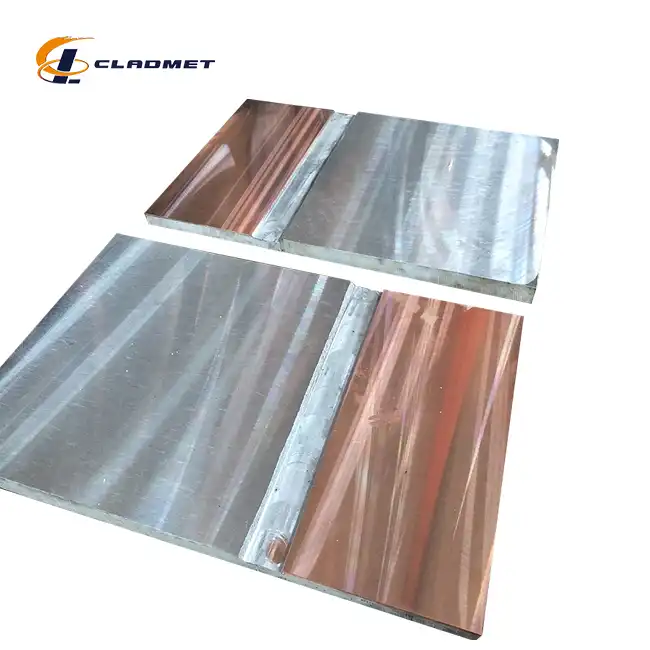
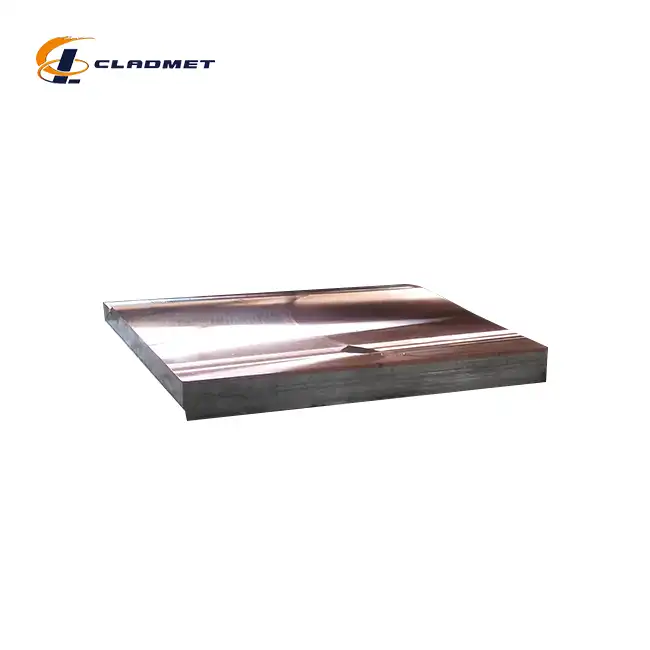
ASTM B898 Titanium Steel Clad Plate provides unparalleled chemical compatibility in storage applications through its titanium cladding layer, which serves as the primary barrier against corrosive media. The titanium layer demonstrates exceptional resistance to a wide range of chemicals including acids, bases, chlorides, and organic solvents commonly encountered in chemical storage facilities. Unlike conventional materials that may suffer from localized corrosion, pitting, or stress corrosion cracking, the ASTM B898 Titanium Steel Clad Plate maintains its integrity even when exposed to concentrated sulfuric acid, hydrochloric acid, and seawater environments. The metallurgical bond between the titanium layer and steel substrate, achieved through explosive welding or hot rolling processes, ensures that the protective properties remain consistent throughout the service life. This superior chemical compatibility translates directly into enhanced safety by preventing catastrophic failures that could result in chemical spills, environmental contamination, or personnel exposure to hazardous substances. The titanium layer thickness, typically ranging from 0.5mm to 10mm according to ASTM B898 specifications, can be customized based on specific chemical exposure requirements, providing tailored protection for different storage applications.
Long-Term Durability in Aggressive Chemical Environments
The durability of ASTM B898 Titanium Steel Clad Plate in aggressive chemical environments represents a significant advancement in storage tank safety technology. Chemical storage facilities often operate under continuous exposure to corrosive media, temperature fluctuations, and mechanical stress, conditions that rapidly degrade conventional materials and compromise storage integrity. The ASTM B898 Titanium Steel Clad Plate addresses these challenges through its unique composite structure, where the titanium layer provides long-term corrosion resistance while the steel substrate maintains structural integrity under mechanical loads. Laboratory testing demonstrates that these clad plates can withstand exposure to aggressive chemicals for decades without significant degradation, a performance characteristic that directly translates to enhanced operational safety. The explosive welding technology used in manufacturing creates an intermetallic bond with strength ranging from 150 to 200 MPa, ensuring that the protective titanium layer remains firmly attached even under thermal cycling and mechanical stress. This durability eliminates the need for frequent maintenance, reduces the risk of unexpected failures, and provides consistent protection throughout the storage system's operational life. The combination of titanium's inherent corrosion resistance and the robust bonding interface ensures that chemical storage systems maintain their safety margins even under the most demanding service conditions.
Preventing Contamination and Cross-Contamination Risks
Contamination prevention represents one of the most critical safety aspects in chemical storage applications, where ASTM B898 Titanium Steel Clad Plate excels through its non-reactive surface properties and excellent cleanability characteristics. Chemical storage facilities must maintain product purity while preventing cross-contamination between different chemicals, requirements that demand materials with exceptional surface stability and easy cleaning protocols. The titanium cladding layer on ASTM B898 plates provides an inert surface that does not react with stored chemicals, eliminating the risk of product contamination through material dissolution or chemical reaction. This non-reactive nature is particularly crucial in pharmaceutical, food-grade chemical storage, and high-purity chemical applications where even trace contamination can compromise product quality and safety. The smooth surface finish achievable with titanium cladding facilitates thorough cleaning and decontamination procedures, enabling storage systems to be safely transitioned between different chemical products without residual contamination risks. Additionally, the corrosion resistance of the titanium layer prevents the formation of corrosion products that could contaminate stored chemicals or create particulate matter that compromises product quality. This contamination prevention capability ensures that chemical storage systems maintain their safety certification and regulatory compliance throughout their operational life, protecting both product quality and public safety.
Structural Integrity and Pressure Vessel Safety Standards
Meeting ASME and ASTM Pressure Vessel Requirements
ASTM B898 Titanium Steel Clad Plate is specifically engineered to meet and exceed the stringent requirements of ASME and ASTM pressure vessel standards, ensuring maximum safety in chemical storage applications where internal pressure management is critical. The standard specification covers plate materials intended primarily for pressure vessel use, where the combination of mechanical strength and corrosion resistance is essential for safe operation. The steel substrate in ASTM B898 Titanium Steel Clad Plate provides the necessary mechanical properties to withstand internal pressures, with tensile strength typically exceeding 400 MPa, while the titanium cladding layer ensures corrosion resistance that maintains these mechanical properties over time. This dual-layer approach enables chemical storage vessels to operate safely at design pressures while providing a substantial safety margin against pressure-related failures. The manufacturing process ensures that the clad plate meets all relevant ASME Boiler and Pressure Vessel Code requirements, including those related to material properties, fabrication procedures, and quality control measures. Pressure vessel designers can confidently specify ASTM B898 Titanium Steel Clad Plate knowing that it provides both the immediate mechanical strength required for safe operation and the long-term corrosion resistance necessary to maintain that strength throughout the vessel's design life. The comprehensive testing requirements outlined in the ASTM B898 standard ensure that each plate meets specific tensile strength, bond strength, and corrosion resistance criteria before being approved for pressure vessel applications.
Advanced Manufacturing Technology for Optimal Bond Strength
The manufacturing technology employed in producing ASTM B898 Titanium Steel Clad Plate directly impacts the safety and reliability of chemical storage applications through the creation of superior metallurgical bonds between dissimilar metals. Explosive welding technology represents the pinnacle of clad plate manufacturing, creating bonds with strength levels that exceed those achievable through conventional joining methods. During the explosive welding process, controlled detonation creates intense pressure and temperature conditions that force the titanium and steel layers together at velocities exceeding 1000 meters per second, resulting in a metallurgical bond that is stronger than either base material. This manufacturing approach eliminates the interface weaknesses commonly associated with mechanically attached or adhesively bonded systems, ensuring that the protective titanium layer remains securely attached even under extreme service conditions. Hot rolling cladding technology offers an alternative manufacturing approach that produces uniform thickness and excellent surface quality while maintaining strong metallurgical bonds suitable for chemical storage applications. The bond strength achieved through these advanced manufacturing processes, typically ranging from 150 to 200 MPa, ensures that the composite plate functions as a monolithic structure rather than separate layers, eliminating delamination risks that could compromise storage vessel integrity. Quality control measures throughout the manufacturing process verify bond strength, dimensional accuracy, and surface quality, ensuring that each ASTM B898 Titanium Steel Clad Plate meets the demanding requirements of chemical storage applications.
Thermal Stability and Temperature Resistance
Thermal stability represents a crucial safety consideration in chemical storage applications where temperature variations can create thermal stress, material expansion, and potential failure modes that compromise storage system integrity. ASTM B898 Titanium Steel Clad Plate demonstrates exceptional thermal performance through the complementary properties of its titanium and steel layers, providing stable operation across wide temperature ranges commonly encountered in chemical storage facilities. The titanium cladding layer maintains its corrosion resistance properties from cryogenic temperatures to elevated service temperatures, while the steel substrate provides consistent mechanical strength across this same temperature range. This thermal stability ensures that chemical storage systems maintain their safety margins regardless of seasonal temperature variations, process heating requirements, or emergency cooling scenarios. The coefficient of thermal expansion compatibility between titanium and steel layers minimizes thermal stress at the bond interface, preventing delamination or cracking that could compromise the protective barrier. Advanced manufacturing techniques ensure that the metallurgical bond between layers accommodates thermal cycling without degradation, maintaining bond strength and corrosion protection throughout numerous heating and cooling cycles. Temperature resistance testing according to ASTM standards verifies that the clad plate maintains its protective properties and mechanical strength under both steady-state and cyclic temperature conditions, providing assurance that chemical storage systems will operate safely across their intended temperature range.
Cost-Effective Safety Solutions with Global Compliance
Economic Advantages Over Pure Titanium Systems
The economic advantages of ASTM B898 Titanium Steel Clad Plate over pure titanium systems represent a significant factor in implementing cost-effective safety solutions for chemical storage applications without compromising performance or reliability. Pure titanium systems, while offering excellent corrosion resistance, present substantial cost barriers that often make them economically unfeasible for large-scale chemical storage projects. ASTM B898 Titanium Steel Clad Plate addresses this economic challenge by utilizing titanium only where its corrosion resistance properties are needed most - at the surface interface with stored chemicals - while employing cost-effective steel substrate for structural strength requirements. This engineering approach typically reduces material costs by 40-60% compared to equivalent pure titanium systems while maintaining identical corrosion resistance performance at the critical chemical contact surface. The cost savings extend beyond initial material procurement to include fabrication, installation, and maintenance phases of chemical storage projects. Steel substrate compatibility with conventional fabrication techniques reduces manufacturing complexity and enables the use of standard welding, cutting, and forming equipment, minimizing specialized tooling requirements. Additionally, the proven long-term durability of the titanium-steel bond eliminates the maintenance costs associated with coating systems or corrosion allowances typically required with conventional materials. These economic advantages enable chemical storage facility operators to implement the highest safety standards while maintaining competitive project economics, making advanced corrosion protection accessible across a broader range of applications and industries.
International Standards Compliance and Certification
International standards compliance represents a fundamental requirement for chemical storage systems operating in global markets, where ASTM B898 Titanium Steel Clad Plate provides comprehensive certification coverage that ensures regulatory compliance across multiple jurisdictions. The ASTM B898 standard aligns with international codes and specifications including JIS, GB/GBT, and European standards, enabling chemical storage projects to meet local regulatory requirements regardless of geographic location. This broad standards compliance eliminates the complexity and cost associated with material qualification for international projects while ensuring consistent safety performance across different regulatory environments. Manufacturing facilities producing ASTM B898 Titanium Steel Clad Plate typically maintain certifications including ISO9001-2000 quality management systems, PED (Pressure Equipment Directive) compliance for European applications, and ABS (American Bureau of Shipping) certification for maritime and offshore applications. These certifications provide third-party verification that manufacturing processes, quality control procedures, and material properties meet international safety standards for chemical storage applications. The comprehensive documentation package accompanying certified ASTM B898 Titanium Steel Clad Plate includes material test reports, manufacturing records, and compliance certificates that facilitate regulatory approval processes and insurance underwriting for chemical storage projects. This certification coverage reduces project risk, accelerates approval timelines, and provides long-term assurance that chemical storage systems will maintain their regulatory compliance throughout their operational life.
Customization Capabilities for Specific Applications
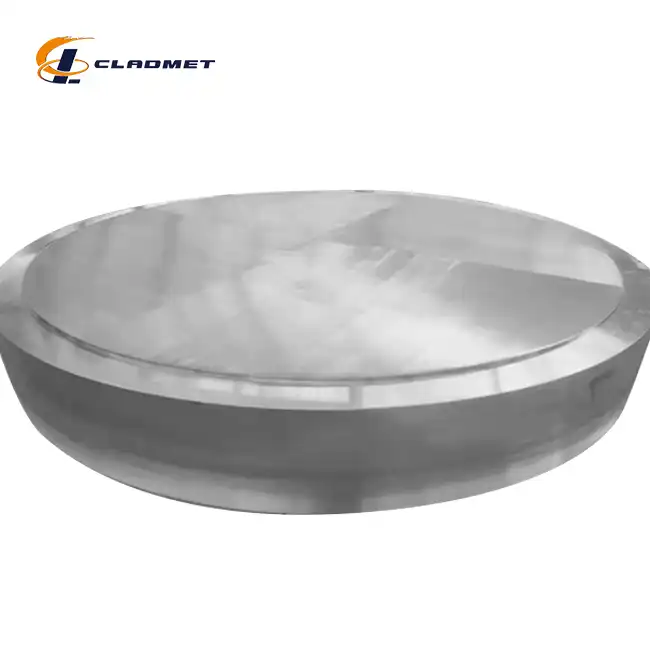
Customization capabilities represent a critical advantage of ASTM B898 Titanium Steel Clad Plate systems, enabling chemical storage designers to optimize safety performance for specific applications while maintaining cost-effectiveness and regulatory compliance. Chemical storage applications present diverse requirements in terms of chemical compatibility, pressure ratings, temperature conditions, and geometric configurations that demand flexible material solutions. ASTM B898 Titanium Steel Clad Plate manufacturers typically offer comprehensive customization options including variable titanium layer thickness from 0.5mm to 10mm, multiple steel substrate grades and thicknesses, and custom plate dimensions up to 2000mm x 6000mm or larger. This customization capability ensures that each chemical storage application receives optimal material properties without over-engineering or under-specification that could compromise safety or economics. Advanced manufacturing techniques enable the production of complex geometries including formed heads, transition pieces, and specialty configurations that integrate seamlessly with storage vessel designs. The ability to customize both titanium and steel layer compositions provides additional optimization opportunities for specific chemical environments, with options including various titanium grades (Gr1, Gr2) and steel substrates (Q235B, A516, 304, 316L) selected based on specific application requirements. Quality assurance programs ensure that customized ASTM B898 Titanium Steel Clad Plate maintains the same high standards as standard configurations, with comprehensive testing and documentation covering all custom specifications and performance requirements.
Conclusion
ASTM B898 Titanium Steel Clad Plate represents a breakthrough solution for chemical storage safety, combining superior corrosion resistance with structural integrity while maintaining economic viability. The advanced metallurgical bond ensures long-term reliability, while comprehensive international standards compliance provides regulatory confidence. This innovative material addresses critical safety challenges in chemical storage through proven technology, cost-effective design, and customizable solutions that meet diverse application requirements.
As a leading China ASTM B898 Titanium Steel Clad Plate manufacturer, Baoji JL Clad Metals Materials Co., Ltd. leverages advanced explosive bonding technology and international certifications to deliver High Quality ASTM B898 Titanium Steel Clad Plate solutions. Our position as a premier China ASTM B898 Titanium Steel Clad Plate supplier enables us to offer competitive ASTM B898 Titanium Steel Clad Plate price while maintaining superior quality standards. Whether you require China ASTM B898 Titanium Steel Clad Plate wholesale quantities or custom specifications, our comprehensive OEM services ensure your chemical storage applications receive optimal safety performance. Contact our experienced team at stephanie@cladmet.com to discover how our expertise as a trusted China ASTM B898 Titanium Steel Clad Plate factory can enhance your next chemical storage project with reliable ASTM B898 Titanium Steel Clad Plate for sale solutions.
References
1. "Standard Specification for Reactive and Refractory Metal Clad Plate" - ASTM International Committee B02 on Nonferrous Metals and Alloys
2. "Explosion Welding Technology for Clad Metal Production" - Materials Engineering Society, Industrial Processing Division
3. "Corrosion Resistance of Titanium Clad Materials in Chemical Processing Applications" - National Association of Corrosion Engineers, Chemical Processing Committee
4. "Pressure Vessel Design with Clad Metal Plates: Safety Standards and Applications" - American Society of Mechanical Engineers, Pressure Vessel Research Council