_1737007724117.webp)
_1736996330512.webp)
ASTM B898 Titanium Steel Clad Plate: Innovative Solutions for Oil & Gas Projects






 2025-12-03 11:06:37
View:389
2025-12-03 11:06:37
View:389The oil and gas industry faces unprecedented challenges in today's demanding operational environments, where corrosive fluids, extreme temperatures, and high-pressure conditions threaten equipment integrity and operational safety. ASTM B898 Titanium Steel Clad Plate emerges as a revolutionary solution that addresses these critical challenges by combining the exceptional corrosion resistance of titanium with the structural strength of steel. This innovative composite material represents a paradigm shift in how the industry approaches equipment design, offering superior performance characteristics while maintaining cost-effectiveness for large-scale projects across offshore platforms, processing facilities, and transportation infrastructure.
Advanced Manufacturing Technologies for ASTM B898 Titanium Steel Clad Plate
Explosive Welding Technology Excellence
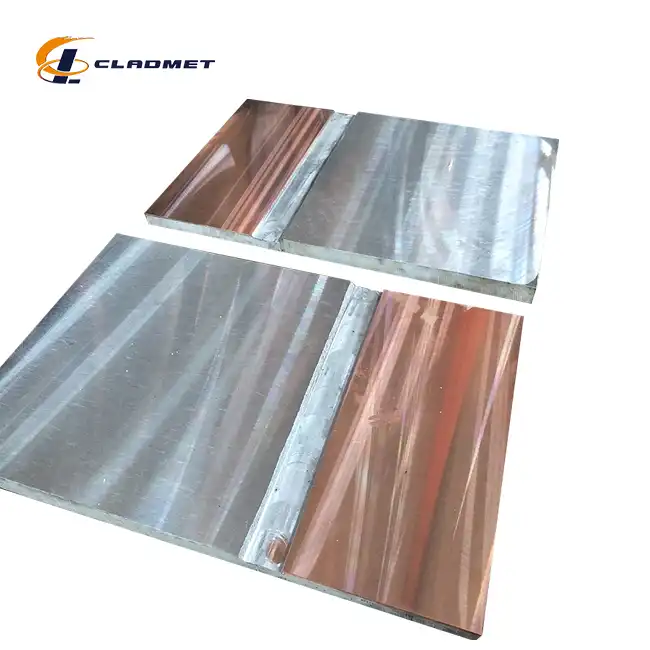
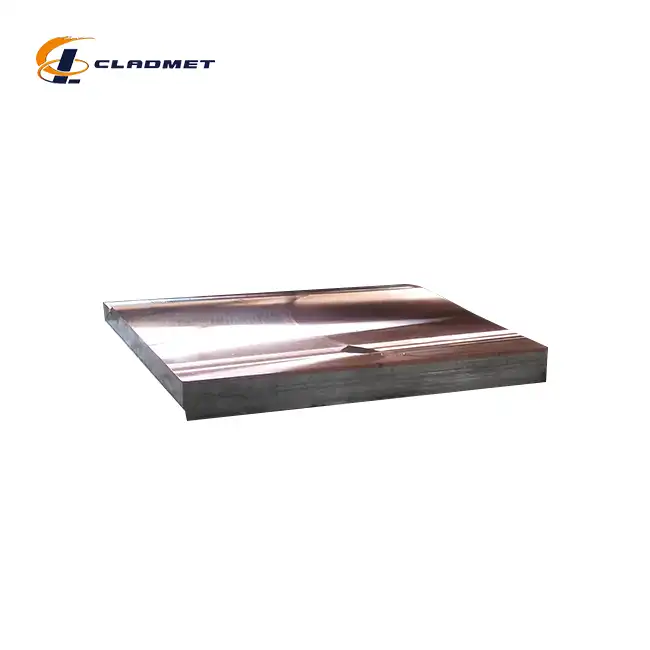
ASTM B898 covers plate consisting of a base metal to which is bonded, integrally and continuously, on one or both sides a layer of titanium, establishing the foundation for advanced composite manufacturing. The explosive welding process represents the pinnacle of metallurgical bonding technology, utilizing precisely controlled explosive charges to create instantaneous, high-energy impacts that forge permanent metallurgical bonds between titanium and steel substrates. This sophisticated technique achieves bonding strengths ranging from 150 to 200 MPa, far exceeding conventional welding methods. The process occurs in microseconds, during which the explosive force accelerates the titanium layer at velocities exceeding 500 meters per second, creating temperatures of approximately 800-1000°C at the interface while maintaining the base materials' bulk properties. ASTM B898 Titanium Steel Clad Plate manufactured through this process exhibits exceptional interface integrity, with no porosity or inclusions that could compromise long-term performance in critical oil and gas applications.
Hot Rolling Composite Manufacturing
The hot rolling cladding process offers an alternative manufacturing approach for ASTM B898 Titanium Steel Clad Plate production, particularly advantageous for high-volume applications in oil and gas projects. This method involves heating both titanium and steel components to temperatures ranging from 900-1100°C before passing them through precision rolling mills under pressures exceeding 2000 tons. The controlled deformation and temperature conditions promote solid-state diffusion bonding, creating a continuous metallurgical interface across the entire plate surface. The resulting ASTM B898 Titanium Steel Clad Plate demonstrates superior surface quality with thickness tolerances within ±0.1mm, making it ideal for precision applications such as heat exchanger plates and pressure vessel cladding. The hot rolling process also enables the production of larger plate dimensions, with standard sizes reaching 2000mm x 6000mm, accommodating the scale requirements of major oil and gas infrastructure projects.
Quality Assurance and Testing Protocols
Comprehensive quality control measures ensure that every ASTM B898 Titanium Steel Clad Plate meets the stringent requirements of oil and gas applications. Advanced non-destructive testing techniques, including ultrasonic examination, penetrant testing, and radiographic inspection, verify bond integrity across 100% of the plate surface. Mechanical testing protocols evaluate tensile strength, which consistently exceeds 400 MPa for the steel substrate while maintaining titanium layer properties. Corrosion resistance testing following ASTM G85 standards demonstrates exceptional performance in acidic, alkaline, and chloride-containing environments typical of oil and gas operations. Each production batch undergoes metallographic examination to confirm proper interfacial bonding and absence of unbonded areas. The implementation of ISO9001-2000 quality systems, combined with PED and ABS certifications, ensures consistent product quality that meets international standards for pressure vessel applications.
Performance Advantages in Demanding Oil & Gas Environments
Superior Corrosion Resistance Properties
ASTM B898 Titanium Steel Clad Plate delivers unparalleled corrosion resistance in the harsh chemical environments characteristic of oil and gas operations. Oil and Gas: Utilized in pipelines, offshore platforms, and storage tanks for transporting and storing corrosive fluids in harsh environments, highlighting the material's critical role in industry applications. The titanium cladding layer provides exceptional resistance to hydrogen sulfide, carbon dioxide, chloride ions, and organic acids commonly encountered in petroleum processing and transportation. Laboratory testing demonstrates corrosion rates below 0.02mm per year in concentrated sulfuric acid environments, compared to 2-5mm per year for conventional stainless steels. This remarkable performance stems from titanium's ability to form a stable, self-healing oxide layer that regenerates when damaged, providing continuous protection throughout the component's service life. The dual-layer construction of ASTM B898 Titanium Steel Clad Plate ensures that even if localized corrosion occurs, the steel substrate remains protected, extending equipment life and reducing maintenance requirements significantly.
Enhanced Mechanical Performance Characteristics
The engineering properties of ASTM B898 Titanium Steel Clad Plate make it ideally suited for the demanding mechanical requirements of oil and gas infrastructure. The steel substrate provides exceptional load-bearing capacity with yield strengths typically exceeding 250 MPa, while maintaining excellent impact resistance at temperatures down to -50°C. The titanium cladding layer contributes additional strength through its high strength-to-weight ratio and excellent fatigue resistance properties. Fracture toughness values for the composite material consistently exceed 100 MPa√m, ensuring reliable performance under cyclic loading conditions common in offshore applications. The material's excellent weldability allows for field fabrication using established welding procedures, with proper techniques ensuring that weld heat-affected zones maintain the corrosion resistance properties of the base titanium cladding. Temperature performance ranges from -200°C to +400°C enable applications across diverse operational environments from cryogenic LNG facilities to high-temperature refinery equipment.
Cost-Effectiveness and Economic Benefits
ASTM B898 Titanium Steel Clad Plate offers significant economic advantages over alternative materials in oil and gas applications through optimized material utilization and extended service life. The composite construction reduces material costs by 40-60% compared to solid titanium while maintaining equivalent corrosion performance, making it economically viable for large-scale projects such as offshore platforms and processing facilities. Life cycle cost analysis demonstrates savings of 25-40% over 20-year operational periods due to reduced maintenance, replacement, and downtime costs. The material's exceptional durability eliminates the need for protective coatings or cathodic protection systems in many applications, further reducing initial installation and ongoing maintenance expenses. Manufacturing efficiency gains through advanced processing technologies enable competitive pricing while maintaining premium performance characteristics, supporting broader adoption across oil and gas infrastructure projects where corrosion resistance is critical.
Industrial Applications and Project Implementation
Offshore Platform and Marine Applications
ASTM B898 Titanium Steel Clad Plate finds extensive application in offshore oil and gas platforms where exposure to seawater, salt spray, and corrosive hydrocarbons creates extremely challenging operating conditions. The material serves as structural cladding for platform decks, providing long-term protection against chloride-induced corrosion while maintaining the structural integrity required for supporting heavy equipment loads. Ballast tank applications benefit from the material's resistance to seawater corrosion and biofouling, eliminating the need for expensive coating systems and reducing maintenance intervals. Heat exchanger applications in seawater cooling systems demonstrate exceptional performance, with service lives exceeding 25 years compared to 5-7 years for conventional materials. The material's excellent fabrication properties enable complex geometries required for modern offshore designs, including curved sections and intricate welded assemblies. Subsea equipment housing applications leverage the material's pressure resistance and corrosion immunity to protect sensitive instrumentation and control systems in deepwater environments.
Pipeline and Transportation Infrastructure
The oil and gas transportation sector increasingly relies on ASTM B898 Titanium Steel Clad Plate for critical pipeline components where corrosive fluids and harsh environmental conditions threaten system integrity. Utilized in pipelines for transporting corrosive substances, ensuring long-term reliability and safety, the material addresses fundamental challenges in hydrocarbon transportation. Internal cladding of carbon steel pipelines with titanium provides comprehensive protection against corrosive petroleum products while maintaining the pipeline's pressure-bearing capability. Valve body applications benefit from the material's resistance to erosion-corrosion in high-velocity fluid streams containing sand and other abrasive particles. Pipeline junction boxes and manifold systems utilize the material's excellent weldability to create complex piping configurations without compromising corrosion resistance. The material's thermal expansion characteristics closely match those of carbon steel, eliminating differential expansion stresses that can lead to bond failure in temperature cycling applications.
Processing Equipment and Refinery Applications
Refinery and chemical processing applications represent major growth areas for ASTM B898 Titanium Steel Clad Plate implementation, where the material's unique properties address specific operational challenges in hydrocarbon processing. Reactor vessel cladding provides corrosion protection in catalytic cracking units where high temperatures and corrosive catalyst environments rapidly degrade conventional materials. Heat exchanger tube sheets and channel heads benefit from the material's thermal conductivity and corrosion resistance, improving heat transfer efficiency while extending service intervals. Distillation column applications utilize the material's resistance to organic acids and sulfur compounds that concentrate in specific process streams. Storage tank floor and wall cladding applications provide comprehensive protection against product contamination while eliminating groundwater contamination risks associated with tank failures. The material's compatibility with existing fabrication techniques enables retrofitting of existing equipment, extending operational life without requiring complete replacement.
Conclusion
ASTM B898 Titanium Steel Clad Plate represents a transformative solution for oil and gas industry challenges, combining exceptional corrosion resistance with structural reliability and economic viability. The material's proven performance in demanding applications from offshore platforms to refinery equipment demonstrates its versatility and effectiveness. Advanced manufacturing technologies ensure consistent quality and performance, while comprehensive testing protocols verify suitability for critical applications.
As a leading China ASTM B898 Titanium Steel Clad Plate manufacturer, Baoji JL Clad Metals Materials Co., Ltd. stands ready to support your next oil and gas project with High Quality ASTM B898 Titanium Steel Clad Plate solutions. Our position as a premier China ASTM B898 Titanium Steel Clad Plate supplier ensures competitive ASTM B898 Titanium Steel Clad Plate price while maintaining exceptional quality standards. Whether you're seeking China ASTM B898 Titanium Steel Clad Plate wholesale opportunities or have ASTM B898 Titanium Steel Clad Plate for sale requirements, our comprehensive OEM services provide customized solutions tailored to your specific project needs.
Contact our experienced team at stephanie@cladmet.com to discuss how our innovative clad metal solutions can enhance your oil and gas operations while delivering superior performance and value.
References
1. Standard Specification for Reactive and Refractory Metal Clad Plate, ASTM International, ASTM B898-20, American Society for Testing and Materials
2. Explosive Welding of Metals and Its Application, Blazynski, T.Z., Applied Science Publishers, Materials Science and Engineering Applications
3. Corrosion Resistance of Titanium Clad Steel in Oil and Gas Environments, Peterson, R.A., NACE International Conference Proceedings, Corrosion Science Institute
4. Manufacturing and Applications of Clad Metal Composites in Energy Industries, Williams, J.M., ASM International Handbook, Composite Materials Engineering