_1737007724117.webp)
_1736996330512.webp)
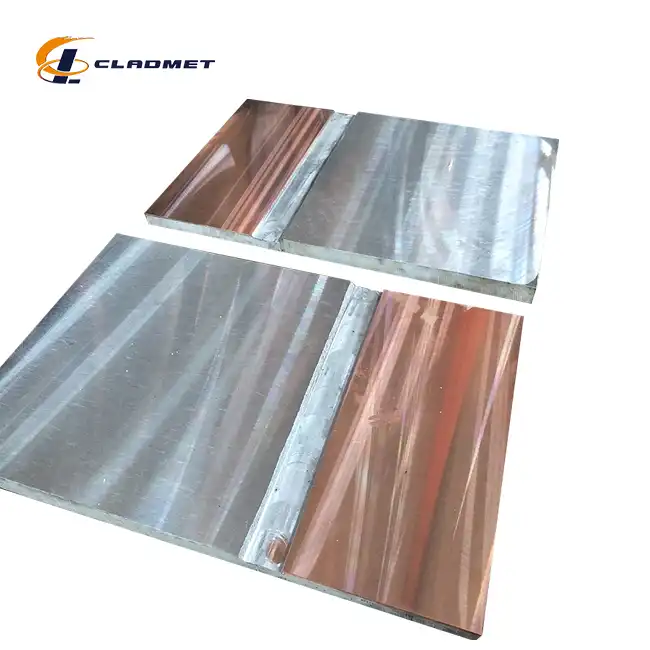
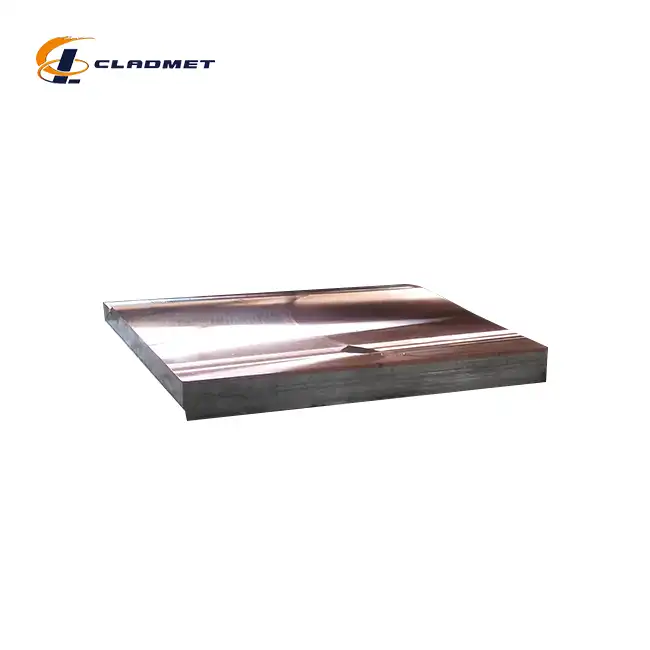
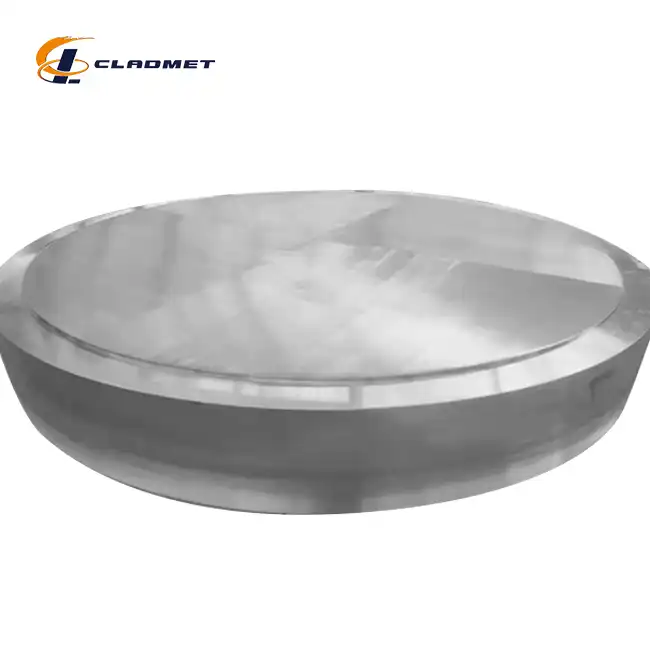
High Quality ASTM B898 Titanium- Cupronickel Explosion Clad Plates






 2025-12-03 11:06:33
View:389
2025-12-03 11:06:33
View:389In today's demanding industrial landscape, equipment failures due to corrosion and material degradation cost companies millions of dollars annually in downtime, repairs, and replacements. High Quality ASTM B898 Titanium-Cupronickel Explosion Clad Plates represent the ultimate solution for these critical challenges, combining titanium's exceptional corrosion resistance with cupronickel's superior thermal conductivity and marine environment performance. The ASTM B898 Titanium Clad Stainless Steel Plate standard ensures these composite materials meet the highest industry specifications for chemical processing, marine applications, and aerospace components where traditional materials simply cannot withstand the harsh operating conditions.
Understanding ASTM B898 Titanium Clad Stainless Steel Plate Specifications
The ASTM B898 standard defines the specific requirements for reactive and refractory metal clad plates, establishing comprehensive guidelines for materials that combine titanium with various base metals through advanced bonding processes. This specification covers plate consisting of a base metal to which is bonded, integrally and continuously, on one or both sides a layer of one of the following: titanium, zirconium, tantalum, niobium, and their alloys. The standard ensures that ASTM B898 Titanium Clad Stainless Steel Plate products meet rigorous quality control measures for dimensional accuracy, chemical composition, and mechanical properties. These specifications are critical for applications where the integrity of the bond between dissimilar metals must withstand extreme pressures, temperatures, and corrosive environments over extended operational periods.
-
Material Composition and Grade Requirements
ASTM B898 Titanium Clad Stainless Steel Plate configurations typically utilize commercially pure titanium grades or titanium alloys as the cladding material, bonded to various stainless steel substrates including 304, 316, and specialized high-performance grades. The titanium cladding layer thickness ranges from 1mm to 10mm depending on the application requirements, while the stainless steel base provides structural strength and cost-effectiveness. The material selection process considers factors such as operating temperature ranges, chemical exposure conditions, mechanical stress requirements, and long-term durability expectations to ensure optimal performance in specific industrial environments.
-
Quality Control and Testing Protocols
Manufacturing ASTM B898 Titanium Clad Stainless Steel Plate requires stringent quality control measures throughout the production process, including ultrasonic testing for bond integrity, chemical analysis for composition verification, and mechanical testing for strength characteristics. The testing protocols ensure that each plate meets the specified peel strength requirements, typically exceeding 140 MPa, while maintaining uniform thickness distribution and defect-free bonding interfaces. Advanced non-destructive testing methods identify potential delamination, inclusions, or other defects that could compromise performance in critical applications where material failure is not acceptable.
Advanced Explosion Bonding Technology for ASTM B898 Titanium Clad Stainless Steel Plate
Explosion bonding represents the most effective method for creating metallurgically sound joints between titanium and cupronickel materials, utilizing controlled explosive energy to forge permanent bonds at the atomic level. Product Parameter Base material Carbon steel, Stainless steel Clad material CP titanium, Titanium alloy Size Customization Standard ASTM B898 Technology Explosive welding, Explosive welding + Rolling This advanced manufacturing technique ensures that ASTM B898 Titanium Clad Stainless Steel Plate products achieve superior bond strength and durability compared to conventional joining methods. The explosion bonding process creates a wavy interface pattern that mechanically interlocks the materials while establishing metallurgical continuity across the bond zone, resulting in joints that often exceed the strength of the weaker base material.
-
Process Parameters and Control Systems
The explosion bonding process for manufacturing ASTM B898 Titanium Clad Stainless Steel Plate requires precise control of explosive charge distribution, standoff distance, and surface preparation conditions to achieve consistent results. The collision velocity during the bonding event typically ranges from 200 to 800 meters per second, creating the necessary conditions for jet formation and surface cleaning that enables intimate contact between the materials. Advanced computer modeling and process simulation help optimize the bonding parameters for different material combinations, ensuring reproducible results while minimizing material waste and production costs.
-
Quality Assurance in Explosion Bonding
Post-bonding quality verification for ASTM B898 Titanium Clad Stainless Steel Plate includes comprehensive inspection procedures using ultrasonic testing, radiographic examination, and mechanical property evaluation to confirm bond integrity throughout the entire plate area. The inspection criteria require 100% ultrasonic testing coverage with acceptance standards that ensure no unbonded areas exceed specified dimensions. Mechanical testing includes peel strength evaluation, bend testing, and tensile testing to verify that the bonded interface meets or exceeds the performance requirements for the intended application environment.
Applications and Performance Benefits of ASTM B898 Titanium Clad Stainless Steel Plate
Industrial applications for ASTM B898 Titanium Clad Stainless Steel Plate span multiple sectors including chemical processing, marine engineering, aerospace manufacturing, and power generation where the combination of corrosion resistance and mechanical strength provides significant operational advantages. The titanium and titanium alloy cladding make the metal plate more corrosion resistant, abrasive resistance and high temperature and pressure resistance. These applications benefit from the cost-effectiveness of using titanium only where corrosion protection is needed while maintaining the structural integrity provided by the stainless steel base material. The dual-material construction enables equipment designers to optimize material usage while achieving performance requirements that would be prohibitively expensive using solid titanium construction.
-
Chemical Processing Industry Applications
In chemical processing environments, ASTM B898 Titanium Clad Stainless Steel Plate provides exceptional resistance to aggressive chemicals including strong acids, chlorides, and oxidizing compounds that rapidly attack conventional stainless steels. The titanium cladding layer forms a stable oxide film that self-heals when damaged, providing long-term protection against pitting, crevice corrosion, and stress corrosion cracking. Process vessels, heat exchangers, and piping systems fabricated from these materials demonstrate significantly extended service life compared to traditional materials, reducing maintenance costs and improving process reliability in critical manufacturing operations.
-
Marine and Offshore Applications
Marine applications for ASTM B898 Titanium Clad Stainless Steel Plate include seawater desalination plants, offshore drilling platforms, and marine heat exchangers where resistance to chloride-induced corrosion is essential for long-term reliability. The cupronickel component provides excellent resistance to biofouling and maintains thermal conductivity in seawater environments, while the titanium cladding prevents galvanic corrosion and extends equipment service life. These materials enable the construction of lighter, more efficient systems with reduced maintenance requirements compared to traditional marine-grade materials.
Manufacturing Excellence and Custom Solutions
Baoji JL Clad Metals Materials Co., Ltd. employs advanced manufacturing processes and quality control systems to produce ASTM B898 Titanium Clad Stainless Steel Plate products that meet the most demanding industry requirements. The company's manufacturing facilities utilize state-of-the-art explosion bonding equipment, precision rolling mills, and comprehensive testing laboratories to ensure consistent product quality. Custom fabrication capabilities include specialized sizing, surface treatments, and mechanical forming operations to meet specific customer requirements while maintaining the integrity of the titanium-stainless steel bond.
-
Technical Support and Engineering Services
The engineering team at Baoji JL Clad Metals provides comprehensive technical support for ASTM B898 Titanium Clad Stainless Steel Plate selection, design optimization, and application-specific recommendations to ensure optimal material performance. Technical services include finite element analysis for stress distribution evaluation, corrosion modeling for service life prediction, and fabrication guidance for welding and forming operations. This technical expertise helps customers optimize their designs while avoiding common pitfalls that can compromise material performance in challenging service environments.
-
Quality Certification and Compliance
All ASTM B898 Titanium Clad Stainless Steel Plate products manufactured by Baoji JL Clad Metals comply with international quality standards including ISO 9001-2000, PED certification, and ABS qualification requirements established in 2024. The quality management system encompasses raw material procurement, manufacturing process control, final inspection procedures, and documentation requirements to ensure traceability and compliance with customer specifications. Third-party certification services verify material properties and manufacturing conformance, providing customers with confidence in product quality and regulatory compliance.
Cost-Effectiveness and Economic Benefits
The economic advantages of ASTM B898 Titanium Clad Stainless Steel Plate extend beyond initial material costs to include reduced maintenance expenses, extended equipment life, and improved operational reliability that translate to significant long-term savings. The composite construction enables the use of titanium's superior corrosion resistance only where needed while leveraging the structural properties and cost-effectiveness of stainless steel for the majority of the component thickness. This approach typically reduces material costs by 60-80% compared to solid titanium construction while maintaining equivalent corrosion performance in most industrial applications.
-
Lifecycle Cost Analysis
Lifecycle cost analysis for equipment fabricated from ASTM B898 Titanium Clad Stainless Steel Plate demonstrates substantial savings through reduced replacement frequency, lower maintenance requirements, and improved process efficiency compared to conventional materials. The extended service life of clad plate components often exceeds 20 years in aggressive chemical environments where traditional stainless steels require replacement every 3-5 years. These durability improvements, combined with reduced downtime for maintenance and repairs, provide return on investment that justifies the higher initial material costs within typical industrial payback periods.
-
Market Competitiveness
Companies utilizing ASTM B898 Titanium Clad Stainless Steel Plate in their manufacturing processes gain competitive advantages through improved product reliability, reduced warranty claims, and the ability to operate in more aggressive process conditions that enable higher productivity or product quality. The material's performance characteristics enable equipment designs that are lighter, more compact, and more efficient than those using conventional materials, supporting market differentiation strategies based on superior performance rather than lowest initial cost.
Conclusion
High Quality ASTM B898 Titanium-Cupronickel Explosion Clad Plates represent the pinnacle of advanced materials engineering, providing unmatched performance in demanding industrial applications where conventional materials fail to meet operational requirements.
Cooperate with Baoji JL Clad Metals Materials Co., Ltd.
As a leading China ASTM B898 Titanium Clad Stainless Steel Plate factory and trusted China ASTM B898 Titanium Clad Stainless Steel Plate supplier, Baoji JL Clad Metals Materials Co., Ltd. stands as your premier China ASTM B898 Titanium Clad Stainless Steel Plate manufacturer offering exceptional China ASTM B898 Titanium Clad Stainless Steel Plate wholesale solutions. Our ASTM B898 Titanium Clad Stainless Steel Plate for sale features competitive ASTM B898 Titanium Clad Stainless Steel Plate price while maintaining High Quality ASTM B898 Titanium Clad Stainless Steel Plate standards. Contact our experts at stephanie@cladmet.com for customized solutions and technical support.
FAQ
Q: What is the minimum thickness available for ASTM B898 Titanium-Cupronickel Explosion Clad Plates?
A: The minimum cladding thickness is typically 1mm for titanium layer, with total plate thickness starting from 3mm depending on application requirements.
Q: How does explosion bonding compare to other joining methods for titanium-cupronickel combinations?
A: Explosion bonding creates superior metallurgical bonds with higher strength and better corrosion resistance compared to roll bonding or diffusion bonding methods.
Q: What industries benefit most from ASTM B898 titanium-cupronickel clad plates?
A: Chemical processing, marine engineering, desalination plants, and offshore applications benefit most due to excellent corrosion resistance and thermal conductivity.
Q: What quality certifications are provided with ASTM B898 clad plate products?
A: Products include ISO 9001-2000, PED, and ABS certifications with complete material test certificates and traceability documentation.
References
1. "Standard Specification for Reactive and Refractory Metal Clad Plate" - ASTM International Committee B02
2. "Explosion Welding Technology and Applications in Clad Plate Manufacturing" - Welding Research Institute
3. "Corrosion Resistance of Titanium Clad Materials in Chemical Processing" - Materials Performance Journal
4. "Economic Analysis of Clad Plate Materials in Industrial Applications" - Industrial Materials Engineering Society