_1737007724117.webp)
_1736996330512.webp)
Titanium Clad Steel Plate & Its Application Fields






 2025-12-03 11:06:20
View:389
2025-12-03 11:06:20
View:389When industrial operations face the critical challenge of material failure in harsh environments—where traditional steel corrodes rapidly and pure titanium becomes prohibitively expensive—High Strength Titanium Clad Stainless Steel Plate emerges as the ultimate solution. This revolutionary composite material addresses the fundamental pain point of balancing superior performance with cost-effectiveness, providing industries with a material that delivers titanium's exceptional corrosion resistance while maintaining steel's structural integrity and economic viability. Understanding the comprehensive applications of titanium clad steel plates becomes essential for engineers and procurement professionals seeking optimal solutions for demanding industrial environments.
Understanding High Strength Titanium Clad Stainless Steel Plate Technology
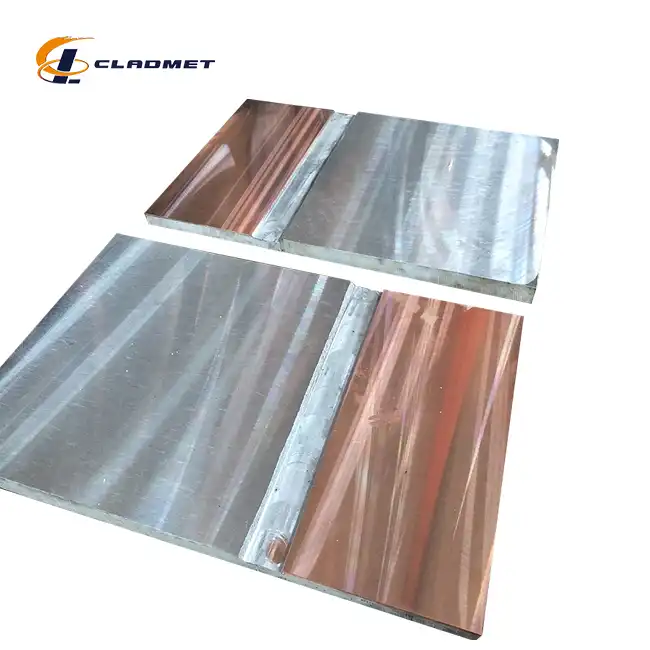
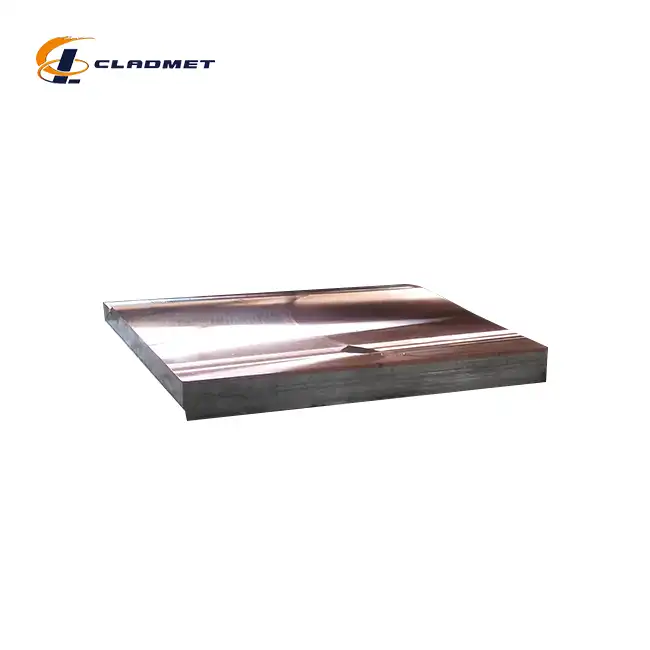
High Strength Titanium Clad Stainless Steel Plate represents a sophisticated metallurgical achievement that combines the best properties of two exceptional materials through advanced bonding techniques. The thickness of the titanium layer can vary depending on the specific application and requirements, allowing for customized solutions that meet specific industry demands. This composite material consists of a titanium surface layer metallurgically bonded to a stainless steel substrate, creating a unique combination that leverages titanium's superior corrosion resistance and stainless steel's mechanical strength and cost-effectiveness. The manufacturing process involves precise control of bonding parameters to ensure optimal adhesion between the titanium cladding and the stainless steel base material. High Strength Titanium Clad Stainless Steel Plate technology utilizes advanced explosive bonding or roll bonding techniques that create an atomic-level bond, ensuring the composite material performs as a unified structure rather than separate layers. This technological approach enables the production of plates with customized titanium layer thicknesses ranging from thin protective coatings to substantial structural layers, depending on the specific application requirements.
-
Manufacturing Excellence and Quality Standards
The production of High Strength Titanium Clad Stainless Steel Plate requires adherence to stringent international standards including ASME, ASTM, and JIS specifications. Advanced manufacturing facilities employ explosive bonding technology that creates controlled detonations to forge molecular-level bonds between the titanium and stainless steel layers. This process ensures exceptional bond integrity, eliminating the risk of delamination even under extreme operational conditions. Quality control measures include comprehensive testing for bond strength, corrosion resistance, and mechanical properties to guarantee consistent performance across all applications. Modern manufacturing processes also incorporate roll bonding techniques for specific applications requiring thinner clad plates or unique surface finishes. These methods provide flexibility in producing High Strength Titanium Clad Stainless Steel Plate configurations tailored to customer specifications while maintaining the highest quality standards. The manufacturing process includes rigorous inspection protocols, surface treatment options, and customized finishing processes to meet diverse industrial requirements.
Industrial Applications of Titanium Clad Materials
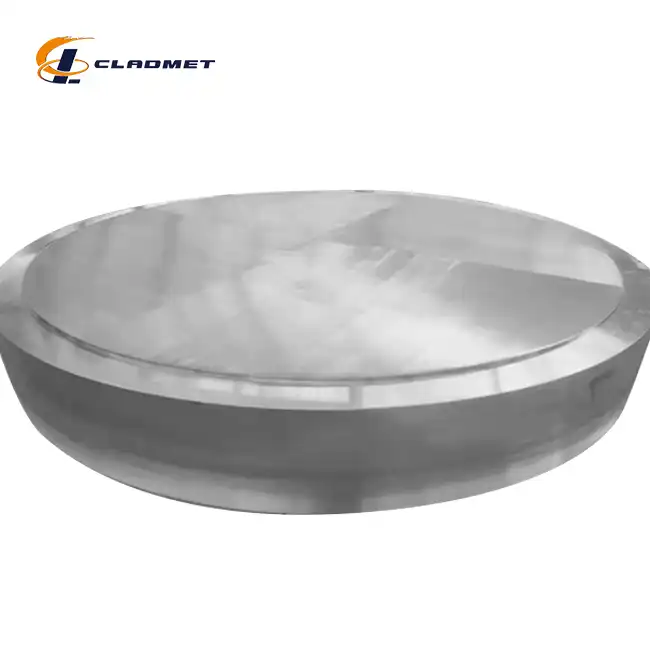
Titanium Clad Plates are used in many applications in the aerospace, defense, medical, industrial and oil and gas industries, heat exchangers, cryogenic engineering, ocean engineering, petrochemical industry, and metallurgical equipment, demonstrating the versatility and reliability of High Strength Titanium Clad Stainless Steel Plate technology across multiple sectors. The exceptional performance characteristics make these materials indispensable for applications where conventional materials fail to meet operational requirements. The petrochemical industry represents one of the largest application areas for High Strength Titanium Clad Stainless Steel Plate, where equipment must withstand highly corrosive chemicals, extreme temperatures, and high-pressure conditions. Pressure vessels, heat exchangers, and reaction chambers benefit from the titanium surface's resistance to chemical attack while the stainless steel substrate provides necessary structural strength and thermal conductivity. This combination proves particularly valuable in processing units handling aggressive chemicals such as sulfuric acid, hydrochloric acid, and various organic solvents.
-
Chemical Processing and Industrial Equipment
Chemical processing facilities require materials that can withstand exposure to aggressive chemicals while maintaining structural integrity over extended operational periods. High Strength Titanium Clad Stainless Steel Plate provides the ideal solution for reactor vessels, distillation columns, and heat exchange equipment used in chemical manufacturing processes. The titanium cladding offers superior resistance to chemical corrosion, while the stainless steel base provides mechanical strength and thermal conductivity necessary for efficient heat transfer operations. In the equipment field, the main applications include chemical equipment for phthalic acid manufacturing equipment, and titanium condenser tube plates for power plants, highlighting the critical role of these materials in specialized industrial processes. The unique properties of High Strength Titanium Clad Stainless Steel Plate make it particularly suitable for equipment operating in environments where traditional materials would experience rapid degradation, ensuring extended service life and reduced maintenance requirements.
-
Marine and Offshore Applications
Marine environments present unique challenges due to the highly corrosive nature of seawater and the mechanical stresses imposed by ocean conditions. Titanium and its alloys have excellent resistance to seawater, chloride solution corrosion and fluid corrosion resistance, making High Strength Titanium Clad Stainless Steel Plate an optimal choice for marine applications. Offshore platforms, desalination plants, and marine vessels utilize these materials for critical structural components, piping systems, and heat exchangers where failure could result in catastrophic consequences. The marine industry benefits significantly from the lightweight properties of titanium combined with the structural strength of stainless steel, creating materials that reduce overall system weight while providing superior corrosion resistance. High Strength Titanium Clad Stainless Steel Plate applications in marine environments include seawater intake systems, ballast tank linings, and specialized piping for offshore oil and gas operations where traditional materials would require frequent replacement due to corrosion-related failures.
Advanced Bonding Technologies and Manufacturing Processes
The production of High Strength Titanium Clad Stainless Steel Plate involves sophisticated bonding technologies that ensure optimal performance characteristics and long-term reliability. Explosive bonding represents the primary manufacturing method, utilizing carefully controlled explosive charges to create high-velocity impacts that forge metallurgical bonds at the atomic level. This process creates a wave-like interface between the titanium and stainless steel layers, maximizing bond strength and ensuring uniform adhesion across the entire plate surface. The explosive bonding process begins with meticulous surface preparation of both the titanium cladding and stainless steel substrate to remove any contaminants that could compromise bond quality. Precise positioning and controlled explosive charges create the high-velocity collision necessary to achieve metallurgical bonding without compromising the material properties of either component. This technology enables the production of High Strength Titanium Clad Stainless Steel Plate with exceptional bond integrity that withstands extreme operational conditions.
-
Cold Rolling and Hot Isostatic Pressing Techniques
Alternative manufacturing methods include cold rolling processes that utilize mechanical pressure to achieve bonding between titanium and stainless steel layers. This technique proves particularly effective for producing thinner High Strength Titanium Clad Stainless Steel Plate configurations used in specialized applications requiring specific dimensional tolerances. The cold rolling process involves multiple passes through precision rollers under controlled pressure conditions to ensure complete bonding while maintaining material properties. Hot Isostatic Pressing (HIP) technology provides another advanced manufacturing option for producing High Strength Titanium Clad Stainless Steel Plate with exceptional bonding characteristics. This process utilizes high temperature and isostatic pressure in controlled atmosphere conditions to achieve atomic diffusion bonding between the materials. HIP technology proves particularly valuable for producing complex geometries or specialized configurations that require precise dimensional control and superior bonding integrity.
Quality Control and Certification Standards
High Strength Titanium Clad Stainless Steel Plate manufacturing requires comprehensive quality control measures to ensure consistent performance and reliability across all applications. International standards including ASME, ASTM, and JIS provide the framework for manufacturing processes, material specifications, and testing protocols that guarantee product quality. ISO9001-2000 certification demonstrates commitment to quality management systems, while PED and ABS certifications validate compliance with pressure equipment and marine industry standards respectively. Testing protocols for High Strength Titanium Clad Stainless Steel Plate include bond strength verification, corrosion resistance evaluation, and mechanical property assessment to ensure materials meet or exceed specified requirements. Non-destructive testing methods such as ultrasonic inspection verify bond integrity throughout the plate, while accelerated corrosion testing validates long-term performance characteristics. These comprehensive quality control measures ensure that every High Strength Titanium Clad Stainless Steel Plate meets stringent performance standards required for critical applications.
-
Customization and OEM Services
Modern manufacturing capabilities enable extensive customization of High Strength Titanium Clad Stainless Steel Plate to meet specific application requirements. Custom sizing, specialized surface treatments, and unique titanium/stainless steel combinations provide flexibility in addressing diverse industrial needs. OEM services include engineering consultation, design optimization, and specialized manufacturing processes tailored to customer specifications while maintaining the highest quality standards. Advanced manufacturing facilities offer comprehensive customization options including titanium grade selection (Grade 1, Grade 2, Grade 5), stainless steel substrate options (304, 316, and specialized alloys), and custom surface treatments. These capabilities enable the production of High Strength Titanium Clad Stainless Steel Plate solutions optimized for specific operating conditions, chemical environments, and performance requirements while ensuring cost-effective manufacturing and delivery schedules.
Economic Benefits and Performance Advantages
High Strength Titanium Clad Stainless Steel Plate provides significant economic advantages compared to solid titanium construction while delivering superior performance characteristics compared to conventional stainless steel materials. The composite construction reduces material costs substantially by utilizing expensive titanium only where needed for corrosion protection while relying on cost-effective stainless steel for structural strength. This approach typically reduces material costs by 40-60% compared to solid titanium construction while maintaining equivalent performance characteristics. The extended service life of High Strength Titanium Clad Stainless Steel Plate reduces long-term operating costs through decreased maintenance requirements and extended replacement intervals. Equipment utilizing these materials experiences significantly reduced downtime due to corrosion-related failures, resulting in improved operational efficiency and reduced total cost of ownership. The combination of reduced initial material costs and extended service life creates compelling economic advantages for industrial applications requiring superior corrosion resistance.
-
Long-Term Value and Sustainability
With the rapid development of equipment manufacturing technology, the application fields of titanium clad steel plates will continue to expand, indicating growing recognition of the long-term value proposition offered by High Strength Titanium Clad Stainless Steel Plate technology. The sustainability benefits include reduced material consumption through extended service life, decreased maintenance requirements, and improved operational efficiency that reduces overall environmental impact. The recyclability of both titanium and stainless steel components ensures that High Strength Titanium Clad Stainless Steel Plate maintains value throughout its entire lifecycle, supporting sustainable manufacturing practices and responsible resource utilization. Advanced manufacturing processes minimize waste generation while producing materials that contribute to improved energy efficiency in industrial applications through enhanced heat transfer characteristics and reduced system weight.
Conclusion
High Strength Titanium Clad Stainless Steel Plate represents a transformative solution for industries requiring superior corrosion resistance combined with structural integrity and economic viability. The comprehensive applications across chemical processing, marine environments, and specialized industrial equipment demonstrate the versatility and reliability of this advanced composite material technology.
Cooperate with Baoji JL Clad Metals Materials Co., Ltd.
Baoji JL Clad Metals Materials Co., Ltd. stands as a leading China High Strength Titanium Clad Stainless Steel Plate manufacturer, offering comprehensive solutions from a trusted China High Strength Titanium Clad Stainless Steel Plate supplier with extensive experience in advanced metallurgical technologies. Our position as a premier China High Strength Titanium Clad Stainless Steel Plate factory enables us to provide competitive China High Strength Titanium Clad Stainless Steel Plate wholesale pricing while maintaining the highest quality standards. Whether you're seeking High Strength Titanium Clad Stainless Steel Plate for sale or need detailed High Strength Titanium Clad Stainless Steel Plate price information, our High Quality High Strength Titanium Clad Stainless Steel Plate products deliver exceptional value. Contact our expert team at stephanie@cladmet.com to discover how our innovative solutions can transform your industrial applications.
FAQ
Q: What industries benefit most from titanium clad steel plates?
A: Petrochemical, marine, aerospace, chemical processing, and power generation industries utilize these materials for their superior corrosion resistance and structural strength.
Q: How does explosive bonding ensure reliable titanium-steel adhesion?
A: Controlled explosive forces create high-velocity impacts that forge metallurgical bonds at the atomic level, ensuring permanent adhesion without compromising material properties.
Q: What thickness ranges are available for titanium cladding layers?
A: Titanium cladding thickness typically ranges from 1mm to several millimeters, customized based on specific application requirements and corrosion protection needs.
Q: Can titanium clad steel plates withstand extreme temperature conditions?
A: Yes, these composite materials maintain structural integrity and corrosion resistance across wide temperature ranges, making them suitable for high-temperature industrial applications.
References
1. "Titanium and Titanium Alloys: Fundamentals and Applications" by Christoph Leyens and Manfred Peters
2. "Clad Metals: Manufacturing and Applications" by American Society for Metals International
3. "Corrosion Resistance of Titanium Alloys in Industrial Environments" by Materials Science and Engineering Research
4. "Explosive Welding Technology and Applications" by International Institute of Welding Publications