_1737007724117.webp)
_1736996330512.webp)
Choosing Between Titanium Clad Stainless Steel Plate and Stainless Steel Clad Plate: A Comprehensive Guide






 2025-12-03 11:06:23
View:389
2025-12-03 11:06:23
View:389Selecting the right material for industrial applications can be a critical decision that impacts both project performance and long-term costs. When facing corrosive environments, extreme temperatures, or demanding mechanical requirements, engineers often find themselves debating between titanium clad stainless steel plates and traditional stainless steel clad plates. This comprehensive guide addresses this common dilemma by exploring the unique properties, applications, and performance characteristics of High Strength Titanium Clad Stainless Steel Plate versus conventional alternatives. Whether you're designing chemical processing equipment, marine structures, or aerospace components, understanding these material differences will help you make informed decisions that optimize both performance and budget considerations.
Understanding High Strength Titanium Clad Stainless Steel Plate Technology
-
Material Composition and Structure
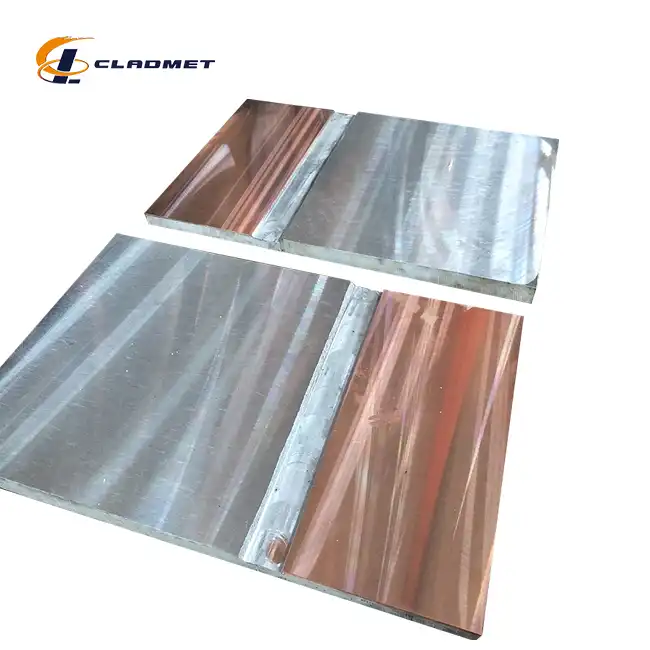
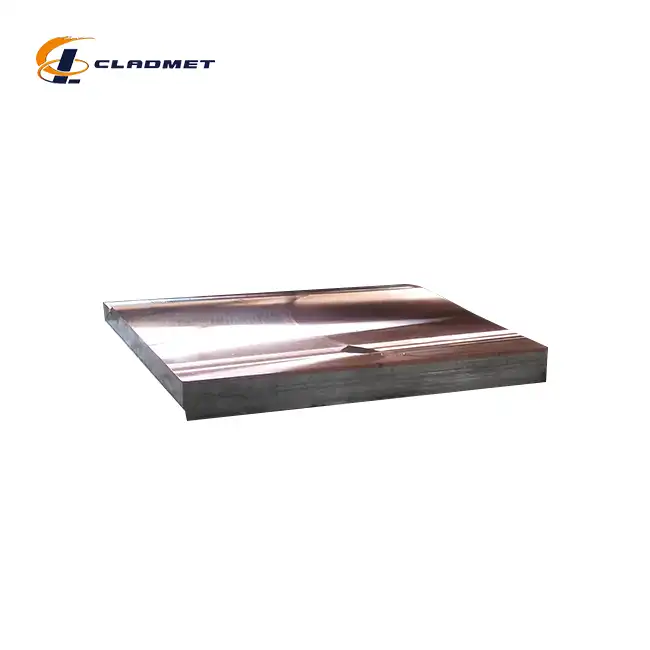
High Strength Titanium Clad Stainless Steel Plate represents a revolutionary approach to combining the best properties of two exceptional materials. The composite structure consists of a titanium layer metallurgically bonded to a stainless steel substrate, creating a hybrid material that delivers superior performance in demanding applications. The titanium cladding typically utilizes Grade 1, Grade 2, or Grade 5 titanium, while the base material commonly employs 304 or 316 stainless steel grades. The manufacturing process involves sophisticated bonding techniques that ensure complete integration between the materials. Explosive bonding, the most widely used method, creates an atomic-level bond through controlled detonation energy, resulting in a seamless interface that maintains the structural integrity of both materials. This process eliminates the risk of delamination that can occur with mechanical joining methods, ensuring long-term reliability in critical applications.
-
Advanced Manufacturing Techniques
The production of High Strength Titanium Clad Stainless Steel Plate involves several cutting-edge manufacturing processes. Explosive bonding remains the primary technique, utilizing precisely calculated explosive charges to create high-velocity impacts between the titanium and stainless steel layers. This process generates temperatures exceeding 1000°C instantaneously, causing the materials to bond at the molecular level without compromising their individual properties. Cold rolling processes offer an alternative manufacturing approach for specific applications requiring thinner profiles. This mechanical bonding method applies tremendous pressure through specialized rollers, achieving solid-state welding between the materials. Hot isostatic pressing (HIP) represents another advanced technique, utilizing high temperature and uniform pressure in controlled atmospheres to create diffusion bonds ideal for aerospace and critical applications.
Comparative Analysis of Material Properties
-
Corrosion Resistance and Environmental Performance
High Strength Titanium Clad Stainless Steel Plate excels in corrosive environments where traditional materials fail. The titanium cladding provides exceptional resistance to chloride-induced corrosion, making it ideal for marine and chemical processing applications. Unlike standard stainless steel, which can experience pitting and crevice corrosion in aggressive environments, the titanium surface maintains its integrity even in concentrated acid solutions and high-temperature oxidizing conditions. The material demonstrates superior performance in seawater applications, where conventional stainless steel may suffer from chloride stress corrosion cracking. The titanium cladding acts as a protective barrier, preventing corrosive agents from reaching the underlying steel substrate while maintaining the structural strength required for demanding applications. This dual-layer protection system significantly extends service life and reduces maintenance requirements in harsh industrial environments.
-
Mechanical Strength and Structural Performance
The mechanical properties of High Strength Titanium Clad Stainless Steel Plate surpass those of individual materials through synergistic effects. The stainless steel substrate provides excellent tensile strength and impact resistance, while the titanium cladding contributes superior fatigue resistance and elastic properties. This combination results in a material capable of withstanding extreme mechanical stresses while maintaining dimensional stability under varying load conditions. Thermal expansion characteristics play a crucial role in material selection for high-temperature applications. The engineered interface between titanium and stainless steel accommodates differential thermal expansion, preventing internal stress concentrations that could lead to failure. This thermal compatibility ensures reliable performance across wide temperature ranges, making the material suitable for applications involving thermal cycling and extreme temperature gradients.
Application-Specific Selection Criteria
-
Chemical Processing and Petrochemical Industries
In chemical processing environments, High Strength Titanium Clad Stainless Steel Plate offers unmatched performance for pressure vessels, heat exchangers, and reaction equipment. The titanium cladding provides chemical inertness against aggressive media while the stainless steel base delivers the mechanical strength required for high-pressure applications. This combination proves particularly valuable in processes involving halogenated compounds, organic acids, and oxidizing environments where traditional materials experience rapid degradation. The material's ability to maintain surface integrity in contaminated environments makes it essential for pharmaceutical manufacturing, where product purity requirements are stringent. Unlike conventional stainless steel, which may require frequent replacement due to corrosion-induced contamination, High Strength Titanium Clad Stainless Steel Plate maintains its surface quality throughout extended service periods, ensuring consistent product quality and reducing downtime.
-
Marine and Offshore Applications
Marine environments present unique challenges requiring materials capable of withstanding saltwater corrosion, biofouling, and mechanical stresses from wave action. High Strength Titanium Clad Stainless Steel Plate addresses these challenges through its exceptional seawater corrosion resistance and anti-fouling properties. The titanium surface naturally forms a protective oxide layer that prevents marine organism adhesion while maintaining structural integrity under dynamic loading conditions. Offshore platform construction and submarine applications benefit significantly from the material's lightweight characteristics combined with superior strength. The reduced weight compared to solid titanium construction enables more efficient designs while maintaining the corrosion resistance required for decades of service in marine environments. This weight advantage translates to reduced transportation costs and simplified installation procedures for large-scale marine structures.
Cost-Effectiveness and Economic Considerations
-
Initial Investment versus Long-Term Value
While High Strength Titanium Clad Stainless Steel Plate requires higher initial investment compared to conventional stainless steel, the long-term economic benefits often justify the additional cost. The extended service life, reduced maintenance requirements, and elimination of premature replacements contribute to lower total cost of ownership over the material's operational lifetime. Industries experiencing frequent equipment failures due to corrosion find the investment particularly attractive when considering downtime costs and replacement expenses. The material's customizable thickness options allow engineers to optimize designs for specific applications, potentially reducing overall material usage while maintaining required performance standards. Custom sizing capabilities eliminate waste associated with standard plate cutting, further improving project economics. The availability of various surface treatments and finishes enables optimization for specific service conditions without compromising cost-effectiveness.
-
Manufacturing Efficiency and Processing Advantages
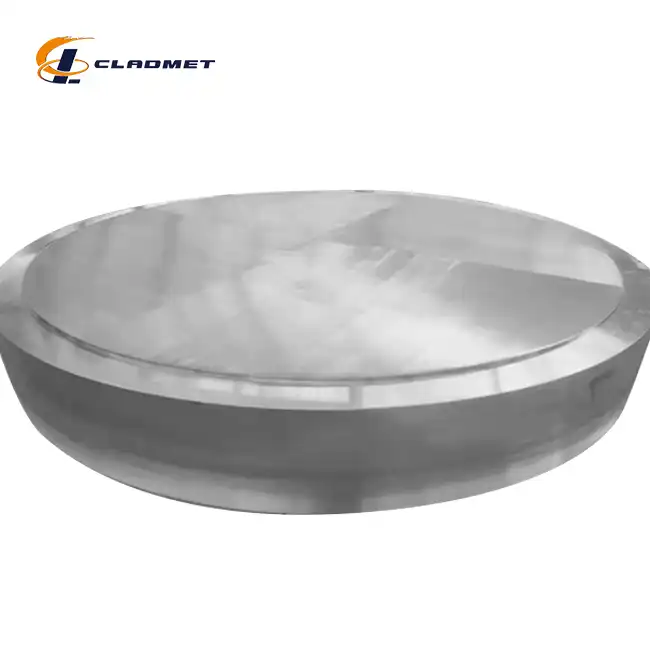
High Stength Titarnium Clad Stainless Steel Plate offers significant manufacturing advantages through its weldability and machinability characteristics. The stainless steel substrate provides familiar welding properties while the titanium cladding maintains its protective qualities through proper welding techniques. This compatibility with standard fabrication practices reduces manufacturing complexity and associated costs compared to solid titanium construction. The material's availability in large dimensions up to 12,000mm length and 3,000mm width enables efficient fabrication of large components without multiple joints. This dimensional flexibility reduces welding requirements and associated inspection costs while improving structural integrity. The ability to specify exact dimensions eliminates material waste and reduces processing time, contributing to overall project efficiency and cost control.
Quality Standards and Certification Requirements
-
International Standards Compliance
High Strength Titanium Clad Stainless Steel Plate manufacturing adheres to rigorous international standards including GB/GBT, ASME/ASTM, and JIS specifications. These standards ensure consistent quality, dimensional accuracy, and performance characteristics across different suppliers and applications. Compliance with these standards provides confidence in material properties and enables seamless integration into projects requiring certified materials. The material's qualification under pressure equipment directives (PED) and classification society standards (ABS) demonstrates its suitability for critical applications where safety and reliability are paramount. These certifications require extensive testing and documentation, providing users with comprehensive material property data and performance validation. The ISO9001-2000 quality system certification ensures consistent manufacturing processes and product quality control throughout production.
-
Testing and Quality Assurance Protocols
Comprehensive testing protocols verify the integrity of the bond between titanium and stainless steel layers. Ultrasonic testing, shear strength evaluation, and metallographic examination ensure complete bonding without defects that could compromise performance. These quality assurance measures provide confidence in material reliability and long-term performance characteristics. Advanced testing techniques including thermal cycling, corrosion testing, and mechanical property evaluation simulate service conditions to validate material performance. These tests generate comprehensive data supporting material selection decisions and design calculations. The availability of certified test reports and material traceability documentation supports quality control requirements in regulated industries.
Conclusion
The choice between High Strength Titanium Clad Stainless Steel Plate and conventional stainless steel clad alternatives depends on specific application requirements, environmental conditions, and economic considerations. While initial costs may be higher, the superior performance characteristics often justify the investment through extended service life and reduced maintenance requirements.
Cooperate with Baoji JL Clad Metals Materials Co., Ltd.
As a leading China High Strength Titanium Clad Stainless Steel Plate manufacturer and China High Strength Titanium Clad Stainless Steel Plate supplier, Baoji JL Clad Metals Materials Co., Ltd. offers comprehensive solutions for demanding industrial applications. Our expertise in explosive bonding technology, combined with strict adherence to international standards, ensures High Quality High Strength Titanium Clad Stainless Steel Plate that meets the most stringent requirements. Whether you need China High Strength Titanium Clad Stainless Steel Plate wholesale quantities or custom specifications, our team provides competitive High Strength Titanium Clad Stainless Steel Plate price and reliable delivery worldwide. Contact us at stephanie@cladmet.com for High Strength Titanium Clad Stainless Steel Plate for sale and personalized consultation.
FAQ
Q: What are the main advantages of titanium clad stainless steel plates over pure stainless steel plates?
A: Titanium clad plates offer superior corrosion resistance, reduced weight, and enhanced durability while maintaining the structural strength of stainless steel at a more cost-effective price than solid titanium.
Q: How do I determine the correct thickness for my specific application?
A: Thickness selection depends on pressure requirements, corrosive environment, and mechanical loads. Our engineers can assist with calculations based on your specific operating conditions and industry standards.
Q: What bonding methods ensure the strongest connection between titanium and stainless steel layers?
A: Explosive bonding provides the strongest metallurgical bond, creating atomic-level adhesion that eliminates delamination risks and ensures long-term reliability in demanding applications.
Q: Are titanium clad stainless steel plates suitable for food processing equipment?
A: Yes, these plates meet food-grade requirements with proper surface treatments and certifications, offering excellent hygiene properties and resistance to cleaning chemicals used in food processing.
References
1. "Titanium and Titanium Alloys: Fundamentals and Applications" by Leyens, Christoph and Peters, Manfred
2. "Stainless Steel: Properties and Applications" by Smith, William F. and Hashemi, Javad
3. "Explosive Welding: Processes and Structures" by Blazynski, Tadeusz Z.
4. "Corrosion Resistance of Clad Materials in Chemical Processing" by Jones, Russell H.