_1737007724117.webp)
_1736996330512.webp)
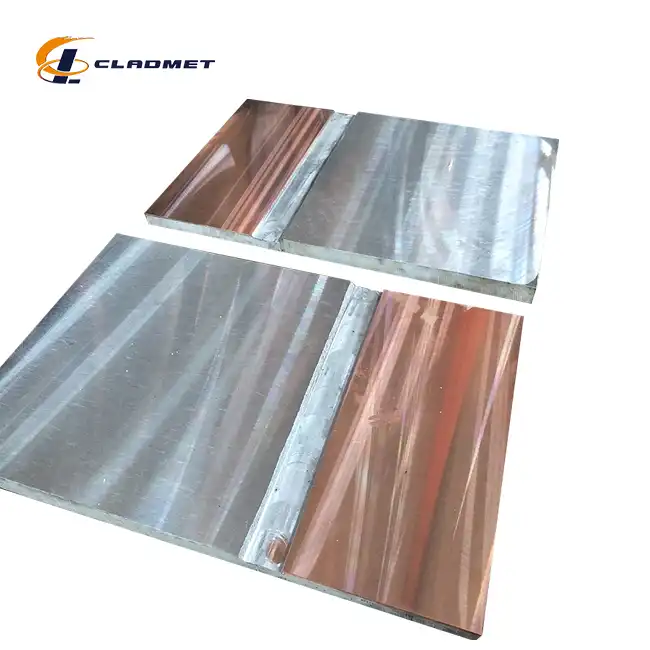
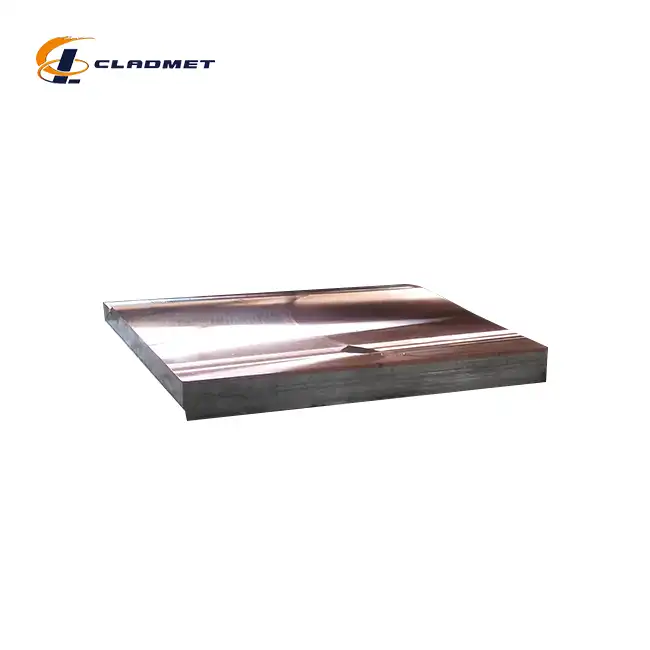
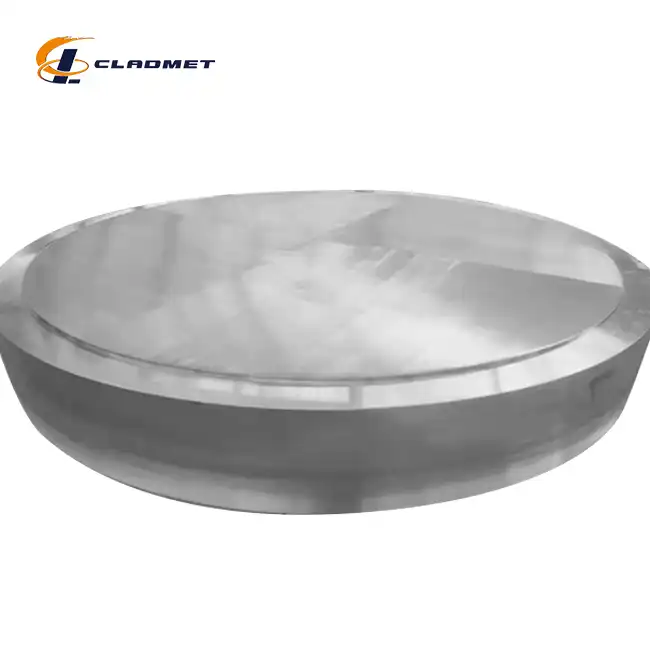
The Microstructure and Property of a Titanium-Carbon Steel Clad Plate Prepared Using Explosive Welding






 2025-12-03 11:06:26
View:389
2025-12-03 11:06:26
View:389In today's demanding industrial landscape, engineers and manufacturers face critical challenges when selecting materials that must withstand extreme corrosive environments while maintaining structural integrity and cost-effectiveness. The revolutionary development of titanium-carbon steel clad plates through explosive welding technology addresses these pain points directly, offering unparalleled performance that combines titanium's exceptional corrosion resistance with carbon steel's mechanical strength. This comprehensive analysis explores the microstructural characteristics and properties of ASTM B898 Titanium Clad Stainless Steel Plates, providing essential insights for industries seeking superior material solutions that deliver both performance and economic value in the most challenging applications.
Fundamental Principles of Explosive Welding for ASTM B898 Titanium Clad Stainless Steel Plates
The explosive welding process represents a revolutionary solid-state joining technique that creates metallurgical bonds between dissimilar metals through controlled detonation energy. When applied to ASTM B898 Titanium Clad Stainless Steel Plates, this process generates extreme pressures and velocities that enable atomic-level bonding without the thermal complications associated with traditional fusion welding methods. The fundamental mechanism involves accelerating one metal plate toward another at velocities exceeding 200 meters per second, creating impact conditions that result in plastic deformation and intimate contact between the materials at the molecular level. The explosive welding process for titanium-carbon steel combinations requires precise control of multiple parameters, including explosive type, standoff distance, and detonation velocity. The collision angle and impact velocity must be optimized to achieve the characteristic wavy interface morphology that enhances bonding strength. During the explosive welding of ASTM B898 Titanium Clad Stainless Steel Plates, the extreme pressure conditions cause surface oxides and contaminants to be expelled from the interface through a phenomenon known as "jetting," ensuring clean metal-to-metal contact that facilitates strong metallurgical bonding.
-
Interface Formation Mechanisms
The formation of the bonding interface in explosively welded titanium-carbon steel plates involves complex metallurgical phenomena that occur within microseconds of detonation. The collision between titanium and carbon steel surfaces creates localized temperature spikes that can reach up to 800°C, although the bulk material temperature remains relatively low due to the extremely short duration of the process. This thermal condition is crucial for ASTM B898 Titanium Clad Stainless Steel Plates as it prevents the formation of extensive brittle intermetallic layers that could compromise bond integrity. The characteristic wavy interface pattern observed in explosively welded titanium-carbon steel plates results from the Kelvin-Helmholtz instability phenomenon that occurs at the collision front. This wavy morphology significantly enhances the shear strength of the bond by increasing the effective bonding area and creating mechanical interlocking between the materials. The wavelength and amplitude of these waves depend on the explosive welding parameters and directly influence the mechanical properties of the final ASTM B898 Titanium Clad Stainless Steel Plate product.
Microstructural Analysis and Characterization of Titanium-Carbon Steel Interfaces
Advanced microstructural analysis techniques reveal the complex nature of the bonding zone in explosively welded titanium-carbon steel plates. Optical microscopy examination shows the distinct wavy interface morphology characteristic of successful explosive welding, with alternating regions of direct metal-to-metal contact and localized mixing zones. The microstructure of ASTM B898 Titanium Clad Stainless Steel Plates exhibits three distinct regions: the titanium parent material, the carbon steel substrate, and the narrow interfacial zone where limited interdiffusion occurs. Scanning electron microscopy analysis provides detailed insights into the interfacial microstructure, revealing the presence of isolated mixing zones where elemental titanium and iron undergo limited alloying. These mixing zones typically contain Fe-Ti intermetallic compounds, primarily Fe₂Ti and FeTi phases, which form due to the localized heating and rapid cooling experienced during the explosive welding process. The formation of these intermetallics in ASTM B898 Titanium Clad Stainless Steel Plates must be carefully controlled to maintain optimal mechanical properties while avoiding excessive brittleness.
-
Compositional Variations Across the Interface
Energy-dispersive X-ray spectroscopy mapping reveals the compositional variations across the titanium-carbon steel interface in explosively welded plates. The analysis shows sharp compositional transitions in most areas of the interface, with limited diffusion zones typically measuring less than 10 micrometers in width. This narrow diffusion zone is advantageous for ASTM B898 Titanium Clad Stainless Steel Plates as it minimizes the formation of brittle intermetallic phases while maintaining strong metallurgical bonding. The distribution of alloying elements across the interface varies depending on the specific grades of titanium and carbon steel used in the explosive welding process. In commercial applications, the titanium layer typically consists of commercially pure titanium grades 1 or 2, while the carbon steel substrate may range from low-carbon structural steels to higher-strength grades depending on the intended application of the ASTM B898 Titanium Clad Stainless Steel Plate.
Mechanical Properties and Performance Characteristics
The mechanical properties of explosively welded titanium-carbon steel plates depend on the quality of the interfacial bond and the individual properties of the constituent materials. Tensile testing of ASTM B898 Titanium Clad Stainless Steel Plates typically reveals bond strengths exceeding 200 MPa, which is sufficient for most industrial applications. The failure mode during tensile testing often occurs in the titanium layer rather than at the interface, indicating the effectiveness of the explosive welding process in creating strong metallurgical bonds. Shear testing provides critical information about the interfacial strength of explosively welded plates, which is particularly important for applications involving complex loading conditions. The shear strength of properly welded titanium-carbon steel interfaces typically ranges from 150 to 300 MPa, depending on the explosive welding parameters and post-weld processing conditions. The wavy interface morphology contributes significantly to the shear strength by providing mechanical interlocking that supplements the metallurgical bond in ASTM B898 Titanium Clad Stainless Steel Plates.
-
Fatigue and Dynamic Loading Behavior
The fatigue performance of explosively welded titanium-carbon steel plates is crucial for applications involving cyclic loading conditions. Research indicates that the interfacial bond in properly executed explosive welds exhibits excellent fatigue resistance, with crack propagation typically occurring in the parent materials rather than along the interface. This behavior is particularly important for ASTM B898 Titanium Clad Stainless Steel Plates used in pressure vessel applications where cyclic pressure loading is common. The dynamic loading response of explosively welded plates demonstrates the resilience of the interfacial bond under impact conditions. The wavy interface morphology provides enhanced resistance to delamination under dynamic loading, making these materials suitable for applications involving shock loading or vibration. The combination of titanium's high strength-to-weight ratio and carbon steel's toughness creates a composite material with superior dynamic properties compared to either constituent material alone.
Corrosion Resistance and Chemical Properties
One of the primary advantages of titanium-carbon steel clad plates is the exceptional corrosion resistance provided by the titanium cladding layer. The titanium surface forms a stable, protective oxide film that provides excellent resistance to most chemical environments, including acidic, alkaline, and chloride-containing solutions. This corrosion resistance is particularly valuable in ASTM B898 Titanium Clad Stainless Steel Plates used in chemical processing, marine, and offshore applications where traditional materials would suffer rapid degradation. The corrosion behavior of explosively welded titanium-carbon steel plates differs slightly from that of solid titanium due to the potential for galvanic coupling between the dissimilar metals. However, proper design and application practices can minimize these effects, ensuring that the corrosion resistance of ASTM B898 Titanium Clad Stainless Steel Plates approaches that of solid titanium in most practical applications.
-
Electrochemical Behavior and Protective Mechanisms
Potentiodynamic polarization studies reveal that the electrochemical behavior of titanium-clad steel plates is dominated by the titanium surface layer. The passive current density of the titanium cladding remains extremely low across a wide range of pH values and chemical compositions, providing effective protection for the underlying carbon steel substrate. The protective mechanism relies on the formation of a stable TiO₂ passive film that self-heals when damaged, ensuring long-term corrosion protection for ASTM B898 Titanium Clad Stainless Steel Plates in service. The potential difference between titanium and carbon steel can lead to galvanic corrosion at exposed edges or areas where the titanium cladding is damaged. Proper edge sealing and surface protection measures are essential to prevent this type of corrosion and maintain the integrity of ASTM B898 Titanium Clad Stainless Steel Plates throughout their service life.
Industrial Applications and Manufacturing Considerations
The unique combination of properties offered by explosively welded titanium-carbon steel plates makes them ideal for numerous industrial applications. Chemical processing equipment represents one of the largest application areas, where the corrosion resistance of titanium combined with the structural properties of carbon steel provides an economical solution for reactors, heat exchangers, and pressure vessels. ASTM B898 Titanium Clad Stainless Steel Plates are particularly valuable in applications involving aggressive chemicals where solid titanium would be prohibitively expensive. The aerospace industry utilizes titanium-clad steel plates for applications requiring high strength-to-weight ratios combined with corrosion resistance. The explosive welding process enables the production of large, complex shapes that would be difficult or impossible to achieve with other joining methods. The reliability and quality of the explosive welding process make ASTM B898 Titanium Clad Stainless Steel Plates suitable for critical aerospace applications where safety and performance are paramount.
-
Manufacturing Process Optimization
The production of high-quality titanium-carbon steel clad plates requires careful optimization of explosive welding parameters. Factors such as explosive type, loading density, standoff distance, and surface preparation all influence the final product quality. Advanced manufacturing facilities utilize sophisticated process controls and quality assurance procedures to ensure consistent production of ASTM B898 Titanium Clad Stainless Steel Plates that meet stringent industry standards. Quality control procedures for explosively welded plates include ultrasonic testing to verify bond integrity, metallographic examination of interface quality, and mechanical testing to confirm strength requirements. Non-destructive testing methods such as C-scan ultrasonic inspection provide comprehensive evaluation of bond quality across the entire plate surface, ensuring that ASTM B898 Titanium Clad Stainless Steel Plates meet the demanding requirements of critical applications.
Heat Treatment Effects and Microstructural Evolution
Post-weld heat treatment of explosively welded titanium-carbon steel plates can significantly influence their microstructural characteristics and mechanical properties. Controlled heat treatment at temperatures between 500-600°C promotes limited diffusion across the interface, potentially improving bond strength while avoiding excessive intermetallic formation. The heat treatment of ASTM B898 Titanium Clad Stainless Steel Plates must be carefully controlled to maintain the beneficial properties of both constituent materials while optimizing interfacial bonding. The thermal stability of explosively welded interfaces is crucial for applications involving elevated temperature service conditions. Research indicates that properly welded titanium-carbon steel interfaces remain stable at temperatures up to 400°C for extended periods, making them suitable for moderate temperature applications in chemical processing and power generation industries. The thermal expansion mismatch between titanium and carbon steel must be considered in high-temperature applications to prevent thermal stress-induced debonding of ASTM B898 Titanium Clad Stainless Steel Plates.
Conclusion
The explosive welding process successfully creates titanium-carbon steel clad plates with exceptional mechanical properties and superior corrosion resistance. The wavy interface morphology characteristic of explosive welding provides strong metallurgical bonding while minimizing brittle intermetallic formation. ASTM B898 Titanium Clad Stainless Steel Plates manufactured through this process offer an economical solution for demanding industrial applications requiring both structural integrity and chemical resistance.
Cooperate with Baoji JL Clad Metals Materials Co., Ltd.
As a leading China ASTM B898 Titanium Clad Stainless Steel Plate manufacturer and China ASTM B898 Titanium Clad Stainless Steel Plate supplier, Baoji JL Clad Metals Materials Co., Ltd. offers comprehensive solutions for your clad metal requirements. Our company specializes in manufacturing high-quality ASTM B898 Titanium Clad Stainless Steel Plate for sale through advanced explosive welding technology, ensuring superior bond integrity and performance. With ISO9001-2000, PED, and ABS certifications achieved in 2024, we guarantee High Quality ASTM B898 Titanium Clad Stainless Steel Plate products that meet international standards. As your trusted China ASTM B898 Titanium Clad Stainless Steel Plate wholesale partner, we provide competitive ASTM B898 Titanium Clad Stainless Steel Plate price and comprehensive OEM services. Contact us at stephanie@cladmet.com for inquiries.
FAQ
Q: What is the typical thickness range for titanium cladding on carbon steel plates?
A: Titanium cladding thickness typically ranges from 1mm to 10mm, depending on application requirements and corrosion protection needs.
Q: How does explosive welding compare to roll bonding for titanium-steel plates?
A: Explosive welding creates stronger metallurgical bonds with characteristic wavy interfaces, while roll bonding is more suitable for thinner plates with lower bond strength requirements.
Q: What are the main advantages of titanium-clad steel over solid titanium?
A: Titanium-clad steel offers significant cost savings while providing similar corrosion resistance, combining titanium's properties with steel's structural strength and economy.
Q: Can explosively welded titanium-steel plates be welded or machined?
A: Yes, these plates can be machined and welded using appropriate techniques, though special considerations are needed for the titanium-steel interface region.
References
1. "The Microstructure and Property of a Titanium-Carbon Steel Clad Plate Prepared Using Explosive Welding" by Zhang, L., Chen, G., Liu, Q., et al., Metals Journal
2. "Interfacial Investigation of Explosion-Welded Titanium/Steel Bimetallic Plates" by Mousavi, S.A.A.A., Al-Hassani, S.T.S., Journal of Materials Engineering and Performance
3. "The Effect of Heat Treatment on the Microstructure and Properties of Explosively Welded Titanium-Steel Plates" by Szachogluchowicz, I., Sniezek, L., Hutsaylyuk, V., Journal of Materials Engineering and Performance
4. "Joining of Titanium/Stainless Steel by Explosive Welding and Effect on Interface" by Kahraman, N., Gulenc, B., Findik, F., Journal of Materials Processing Technology