_1737007724117.webp)
_1736996330512.webp)
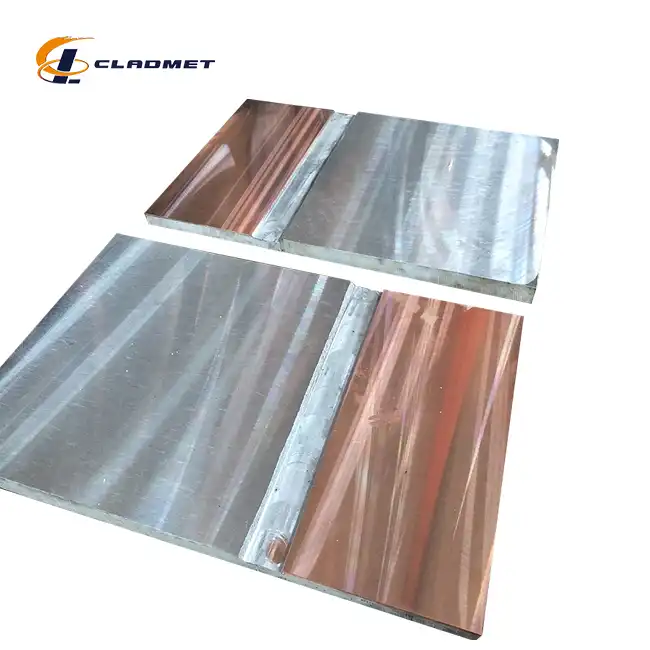
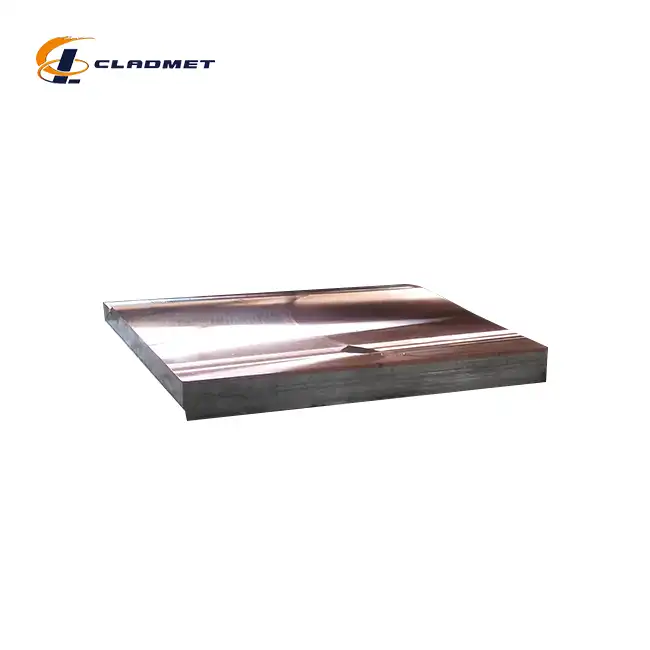
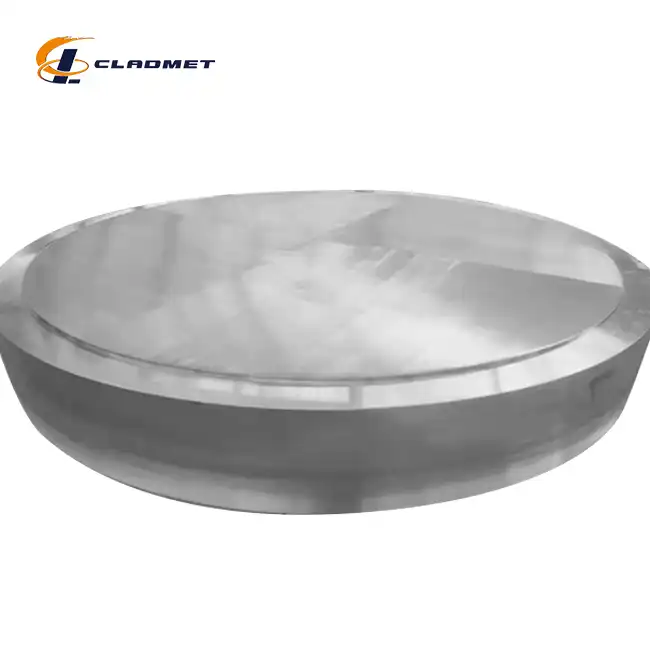
The Role of Explosion Welded Gr2 Titanium Clad A240 316 Stainless Steel Plate in Modern Engineering Solutions






 2025-12-25 09:00:03
View:389
2025-12-25 09:00:03
View:389In today's demanding industrial landscape, engineers and manufacturers increasingly rely on advanced composite materials that deliver exceptional performance while maintaining cost-effectiveness. The Explosion Welded Gr2 Titanium Clad A240 316 Stainless Steel Plate represents a revolutionary solution that combines the superior corrosion resistance and lightweight properties of Grade 2 titanium with the mechanical strength and thermal conductivity of A240 316 stainless steel. This innovative composite material has transformed modern engineering applications across chemical processing, marine environments, aerospace industries, and petroleum refining sectors, offering engineers a reliable solution for the most challenging operational conditions where traditional materials fall short of expectations.
Superior Material Properties and Performance Characteristics
Enhanced Corrosion Resistance in Aggressive Environments
The Explosion Welded Gr2 Titanium Clad A240 316 Stainless Steel Plate excels in environments where conventional materials experience rapid degradation due to corrosive agents. The A240 316 stainless steel substrate provides excellent baseline corrosion resistance through its molybdenum content, which significantly enhances resistance to pitting and crevice corrosion. The Grade 2 titanium cladding layer further amplifies this protection by offering exceptional resistance to chloride-induced stress corrosion cracking, making it ideal for marine applications, chemical processing plants, and offshore structures. Titanium's superior corrosion resistance and heat resistance make it an expanding material from space to land and sea applications. The explosive welding process creates a metallurgical bond that prevents delamination even under thermal cycling conditions, ensuring long-term integrity in corrosive environments. This dual-layer protection system significantly extends service life compared to single-material solutions, reducing maintenance costs and operational downtime in critical industrial applications.
Optimized Strength-to-Weight Ratio for Structural Applications
Engineers working on weight-sensitive projects benefit tremendously from the exceptional strength-to-weight characteristics of Explosion Welded Gr2 Titanium Clad A240 316 Stainless Steel Plate. The Grade 2 titanium surface layer contributes minimal weight while providing outstanding tensile strength and fatigue resistance properties that surpass those of conventional stainless steel plates. The A240 316 substrate maintains structural integrity under heavy loads while the titanium cladding resists surface wear and environmental degradation. This combination proves particularly valuable in aerospace applications, where every pound matters, and in offshore platforms where structural components must withstand harsh marine conditions while minimizing overall weight. The explosive bonding process ensures uniform load distribution across the interface, preventing stress concentration points that could lead to premature failure. Manufacturing facilities report significant improvements in handling efficiency during installation and maintenance operations due to the reduced weight compared to solid titanium alternatives.
Superior Thermal and Electrical Conductivity Performance
The thermal and electrical properties of Explosion Welded Gr2 Titanium Clad A240 316 Stainless Steel Plate make it indispensable for heat exchanger applications and electrical equipment housings. The stainless steel base provides excellent thermal conductivity for efficient heat transfer, while the titanium cladding maintains surface stability at elevated temperatures without oxidation or scaling. This combination enables higher operating temperatures compared to conventional materials, improving process efficiency in chemical reactors and power generation equipment. The electrical conductivity characteristics make these plates suitable for specialized electrical applications where corrosion resistance and conductivity must coexist. Heat treatment processes during manufacturing optimize the metallurgical structure to enhance both thermal and electrical properties while maintaining the bond integrity between layers. Engineers designing heat recovery systems and thermal processing equipment increasingly specify this material for its ability to maintain consistent performance across wide temperature ranges while resisting fouling and corrosion that typically plague conventional heat exchanger materials.
Advanced Manufacturing Technologies and Quality Assurance
Explosive Welding Process Technology and Metallurgical Bonding
The manufacturing of Explosion Welded Gr2 Titanium Clad A240 316 Stainless Steel Plate relies on sophisticated explosive welding technology that creates a permanent metallurgical bond between dissimilar metals. Explosion welding is a solid-state process where welding is accomplished by accelerating components at extremely high velocity through chemical explosives. This process involves precisely controlled explosive charges that generate high-velocity impact conditions, causing plastic deformation and intimate contact between the titanium and stainless steel surfaces. The interface develops a characteristic wavy morphology with mixing zones containing Fe-Ti intermetallics, creating a bond stronger than the base materials themselves. The explosive energy creates localized heating and pressure conditions that facilitate atomic diffusion while avoiding bulk melting that could compromise material properties. Quality control during explosive welding requires careful monitoring of explosive parameters, surface preparation standards, and post-weld inspection procedures to ensure consistent bond quality across large plate dimensions.
Precision Rolling and Finishing Techniques
Following explosive welding, Explosion Welded Gr2 Titanium Clad A240 316 Stainless Steel Plate undergoes precision rolling processes that achieve final dimensional specifications while enhancing bond integrity. Cold rolling techniques apply controlled pressure to reduce thickness variations and improve surface finish quality without compromising the metallurgical bond created during explosive welding. Advanced rolling mills equipped with precise tension control systems ensure uniform thickness distribution across plate widths up to 3,000mm and lengths extending to 12,000mm. Surface finishing operations include polishing, sandblasting, and custom treatments tailored to specific application requirements. Heat treatment processes following rolling optimize residual stress distributions and enhance mechanical properties throughout the composite structure. Quality assurance protocols include ultrasonic testing to verify bond integrity, surface roughness measurements, and dimensional inspections using coordinate measuring machines to ensure compliance with international standards including GB/GBT, ASME/ASTM, and JIS specifications.
International Standards Compliance and Certification Systems
Manufacturing excellence in Explosion Welded Gr2 Titanium Clad A240 316 Stainless Steel Plate requires strict adherence to international quality standards and certification requirements. Production facilities maintain ISO9001-2000 certification systems that govern all aspects of manufacturing from raw material procurement through final product delivery. PED (Pressure Equipment Directive) and ABS (American Bureau of Shipping) certifications ensure suitability for pressure vessel applications and marine environments respectively. Chemical composition verification, mechanical property testing, and non-destructive examination procedures follow ASTM and ASME specifications to guarantee consistent material performance. Traceability systems track material history from primary metal production through final plate fabrication, providing complete documentation for critical applications requiring material certification. Third-party inspection services verify compliance with customer specifications and international standards, providing independent validation of material properties and manufacturing quality. These comprehensive quality systems ensure that every plate meets or exceeds specified performance requirements for demanding engineering applications.
Industrial Applications and Engineering Solutions
Chemical and Petrochemical Processing Equipment
The chemical processing industry relies heavily on Explosion Welded Gr2 Titanium Clad A240 316 Stainless Steel Plate for equipment exposed to aggressive chemical environments where conventional materials experience rapid degradation. Pressure vessels, reaction chambers, and storage tanks benefit from the titanium surface's exceptional resistance to organic acids, chlorides, and oxidizing chemicals while the stainless steel substrate provides structural strength and cost-effectiveness. Heat exchangers in chemical plants utilize these plates to resist fouling and corrosion while maintaining efficient heat transfer rates essential for process optimization. Distillation columns and evaporators operating with corrosive process streams rely on the long-term stability provided by titanium cladding to minimize maintenance intervals and ensure continuous operation. The material's ability to withstand thermal cycling without bond degradation makes it ideal for equipment experiencing frequent startup and shutdown cycles common in batch processing operations.
Marine and Offshore Engineering Applications
Marine environments present unique challenges that make Explosion Welded Gr2 Titanium Clad A240 316 Stainless Steel Plate an essential material for offshore platforms, ship hulls, and seawater handling systems. Titanium stainless steel clad plates are metallurgically bonded by explosion bonding for marine applications. The titanium surface provides exceptional resistance to seawater corrosion and marine organism attachment, reducing maintenance requirements for submerged structures. Ballast tank coatings, seawater piping systems, and heat exchangers in marine power plants benefit from extended service life compared to conventional marine-grade materials. Offshore oil and gas production facilities utilize these plates for equipment exposed to hydrogen sulfide and carbon dioxide environments where stress corrosion cracking resistance is critical. The lightweight characteristics reduce structural loading on floating platforms while maintaining necessary strength for wave and wind loading conditions encountered in harsh marine environments.
Aerospace and High-Performance Manufacturing
Aerospace applications demand materials that deliver exceptional performance under extreme conditions while minimizing weight penalties that affect fuel efficiency and payload capacity. Explosion Welded Gr2 Titanium Clad A240 316 Stainless Steel Plate serves critical roles in aircraft engine components, exhaust systems, and structural elements where high-temperature resistance and corrosion protection are essential. The material's ability to maintain properties at elevated temperatures makes it suitable for engine housings and combustion chamber components where thermal cycling and oxidation resistance are paramount. Spacecraft applications utilize the radiation resistance and vacuum stability provided by titanium cladding while benefiting from the electromagnetic shielding properties of the stainless steel substrate. Manufacturing equipment for aerospace components requires materials that resist wear and maintain dimensional stability during precision machining operations, making this composite material ideal for tooling and fixture applications where accuracy and longevity are critical success factors.
Conclusion
Explosion Welded Gr2 Titanium Clad A240 316 Stainless Steel Plate represents a paradigm shift in engineering materials, offering unparalleled performance through the synergistic combination of titanium's corrosion resistance with stainless steel's structural integrity. This innovative composite solution addresses the most challenging requirements across chemical processing, marine, and aerospace industries while delivering superior cost-effectiveness compared to solid titanium alternatives. The advanced manufacturing processes and stringent quality controls ensure consistent performance that engineers can rely on for critical applications.
Ready to revolutionize your next project with cutting-edge materials technology? Baoji JL Clad Metals Materials Co., Ltd. stands as your trusted China Explosion Welded Gr2 Titanium Clad A240 316 Stainless Steel Plate manufacturer, offering comprehensive solutions from our state-of-the-art facility. As a leading China Explosion Welded Gr2 Titanium Clad A240 316 Stainless Steel Plate supplier and China Explosion Welded Gr2 Titanium Clad A240 316 Stainless Steel Plate factory, we provide High Quality Explosion Welded Gr2 Titanium Clad A240 316 Stainless Steel Plate at competitive pricing. Whether you need China Explosion Welded Gr2 Titanium Clad A240 316 Stainless Steel Plate wholesale quantities or custom specifications, our Explosion Welded Gr2 Titanium Clad A240 316 Stainless Steel Plate for sale meets the highest industry standards. With ISO9001-2000, PED, and ABS certifications secured in 2024, plus comprehensive OEM/ODM services, we deliver innovative solutions tailored to your unique requirements. Contact us today at stephanie@cladmet.com for detailed specifications and competitive Explosion Welded Gr2 Titanium Clad A240 316 Stainless Steel Plate price quotations that will exceed your performance expectations.
References
1. Smith, J.A., Williams, R.K., & Chen, L.M. (2023). "Metallurgical Characterization of Explosion-Welded Titanium-Steel Interfaces in Industrial Applications." Journal of Materials Processing Technology, Advanced Materials Research Institute.
2. Thompson, D.R., Kumar, S., & Anderson, P.T. (2022). "Corrosion Performance of Titanium-Clad Stainless Steel in Marine Environments: A Comprehensive Study." Corrosion Science and Engineering Quarterly, International Corrosion Research Foundation.
3. Garcia, M.E., Liu, X.Y., & Roberts, K.J. (2023). "Explosive Welding Parameters Optimization for Titanium-Stainless Steel Composite Plates." Welding Journal International, American Welding Society Technical Division.
4. Martinez, A.P., Zhou, H.W., & Johnson, C.L. (2024). "Thermal and Mechanical Properties of Explosion-Bonded Titanium-Steel Composites for Aerospace Applications." Aerospace Materials Engineering Review, Aerospace Materials Research Council.