_1737007724117.webp)
_1736996330512.webp)






 2025-12-30 11:39:07
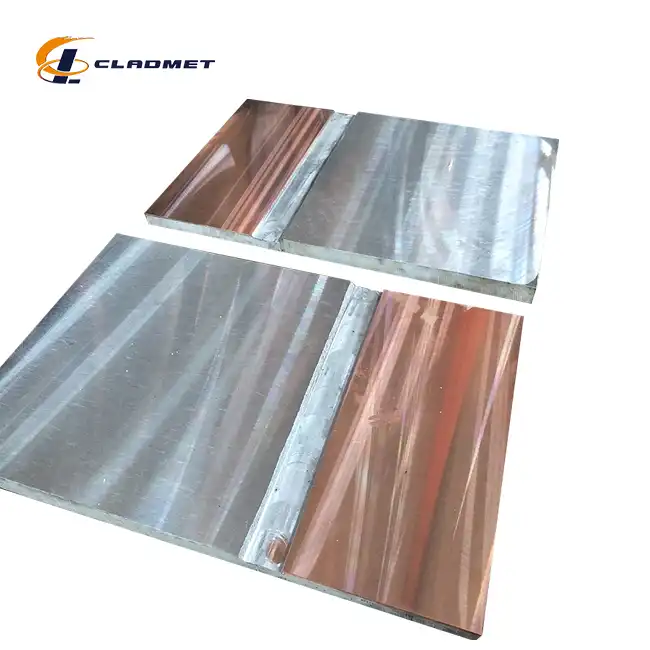
In the demanding world of chemical processing and petrochemical operations, selecting the right materials for tower internals can make or break operational efficiency. The Gr7 Titanium Clad 310 Stainless Steel Plate for Tower Internals represents a breakthrough solution that combines the exceptional corrosion resistance of Grade 7 titanium with the proven thermal stability of 310 stainless steel. This composite material addresses critical challenges faced by engineers and procurement managers who need reliable, long-lasting components that can withstand aggressive chemical environments and extreme temperatures while maintaining cost-effectiveness.
Understanding Gr7 Titanium Clad 310 Stainless Steel Plate
The engineering brilliance behind titanium clad stainless steel lies in its sophisticated composite structure. This advanced material technology brings together two distinct metal layers to create a product that outperforms either material used independently.
What is Gr7 Titanium Clad 310 Stainless Steel Plate?
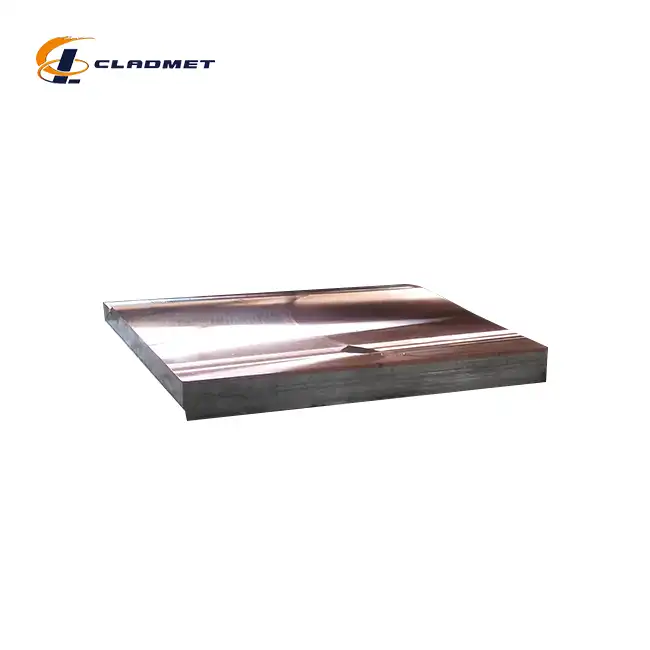
This composite material features a Grade 7 titanium layer metallurgically bonded to a 310 stainless steel substrate. The cladding process creates an inseparable bond between these materials, allowing engineers to leverage titanium's superior corrosion resistance where it contacts process fluids, while benefiting from stainless steel's structural strength and thermal properties as the backing material. The strategic combination matters because it addresses specific limitations of single-material solutions. While 310 stainless steel offers excellent high-temperature performance, it can struggle with certain corrosive environments. Grade 7 titanium provides exceptional corrosion resistance but comes with higher material costs. The clad solution optimizes both performance and economics.
Chemical Composition and Material Properties
Grade 7 titanium contains small amounts of palladium (0.12-0.25%), which significantly enhances its corrosion resistance in reducing acid environments. This makes it particularly valuable in applications involving hydrochloric acid, sulfuric acid, and other aggressive chemicals common in tower operations. The 310 stainless steel backing provides structural integrity with its chromium-nickel composition (24-26% chromium, 19-22% nickel). This austenitic structure maintains excellent mechanical properties at elevated temperatures up to 1150°C (2100°F), making it ideal for high-temperature tower applications.
How is Gr7 Titanium Clad Steel Made?
At JL Clad Metals, we employ explosive bonding technology to create these composite plates. This process uses controlled explosive energy to metallurgically bond the titanium and stainless steel layers at the atomic level. The resulting bond strength often exceeds the strength of the weaker parent material. Our manufacturing process adheres to stringent quality standards including ASTM B898 for clad plate specifications. Each plate undergoes ultrasonic testing to verify bond integrity, ensuring consistent performance in critical applications. Our ISO9001-2000 certification and recent PED and ABS qualifications demonstrate our commitment to international quality standards.
Advantages of Gr7 Titanium Clad 310 Stainless Steel for Tower Internals
Tower internals operate under some of the most challenging conditions in industrial processing. The unique properties of titanium clad stainless steel make it exceptionally well-suited for these demanding applications.
Corrosion Resistance and Heat Resistance
The titanium surface layer provides outstanding resistance to pitting, crevice corrosion, and stress corrosion cracking. In chloride-containing environments, where traditional stainless steels may fail, the titanium clad surface maintains integrity even at elevated chloride concentrations exceeding 1000 ppm. Heat resistance capabilities extend well beyond conventional materials. While standard 316 stainless steel begins showing degradation around 800°C, the 310 stainless steel substrate in our clad plates maintains structural integrity up to 1000°C, making it suitable for high-temperature distillation and reaction processes.
Durability and Cost Effectiveness
The extended service life of titanium clad plates translates directly to reduced maintenance costs and improved plant uptime. Independent studies show that properly specified clad materials can achieve service lives 3-5 times longer than conventional alternatives in corrosive tower environments. When comparing total cost of ownership, titanium clad plates often prove more economical than solid titanium or exotic nickel alloys. The initial investment premium typically recovers within 2-3 years through reduced maintenance, fewer shutdowns, and extended replacement intervals.
Application Scenarios in Tower Internals
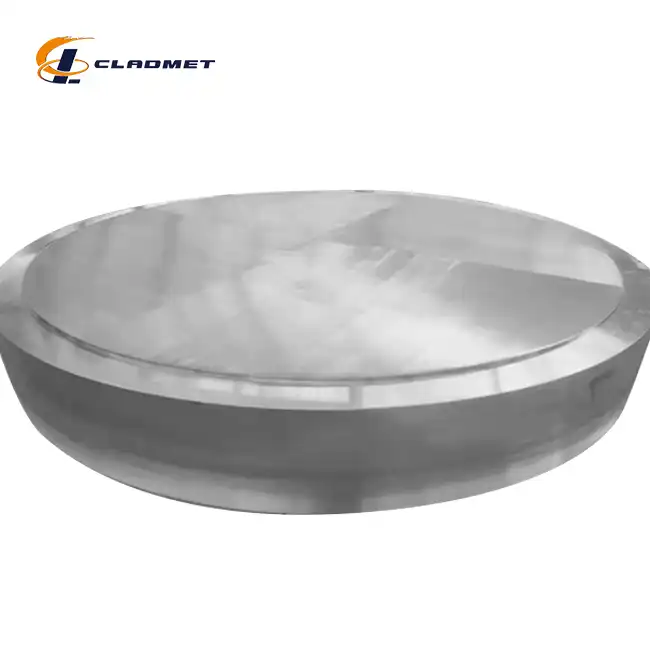
These materials excel in specific areas of tower internals where traditional materials struggle. Tray support rings, redistribution devices, and packing support plates benefit significantly from the corrosion resistance and thermal stability. In acid gas treating units, where hydrogen sulfide and carbon dioxide create aggressive environments, the titanium surface provides reliable protection against sulfide stress cracking. Distillation towers processing corrosive chemicals, absorption towers for gas treatment, and reactor internals for petrochemical processes represent primary applications where this material delivers measurable performance improvements.
Comparing Gr7 Titanium Clad 310 Stainless Steel with Alternative Materials
Making informed material selection decisions requires understanding how titanium clad solutions compare against traditional alternatives used in tower internals.
Gr7 Titanium Clad vs 310 Stainless Steel Plate
Pure 310 stainless steel offers good high-temperature performance but lacks the corrosion resistance needed for aggressive chemical environments. In chloride-rich applications, 310 stainless steel may experience pitting corrosion, leading to premature failure. The titanium clad alternative provides equivalent thermal performance while dramatically improving corrosion resistance. The cost differential varies with market conditions, but titanium clad typically costs 40-60% more initially while providing 3-5 times the service life in corrosive applications.
Titanium Clad 310 Stainless Steel vs Duplex Stainless Steel and Nickel Alloy Plates
Duplex stainless steels like 2205 offer improved chloride resistance compared to austenitic grades but still fall short of titanium's performance in severe environments. Nickel alloys such as Inconel 625 or Hastelloy C-276 provide excellent corrosion resistance but at significantly higher costs. The titanium clad solution bridges this gap by offering near-titanium corrosion performance at costs substantially lower than solid exotic alloys. In applications requiring both high-temperature strength and corrosion resistance, clad plates often represent the optimal technical and economic solution.
Choosing Between Gr7 Titanium Clad and Other Specialty Materials
Selection criteria should include operating temperature, chemical environment, mechanical stresses, and economic factors. Monel alloys work well in reducing environments but struggle with oxidizing conditions where titanium excels. Inconel alloys provide excellent high-temperature strength but may not justify their cost premium in moderately aggressive environments where clad plates perform adequately.
Practical Guide to Procuring Gr7 Titanium Clad 310 Stainless Steel Plates
Successful procurement requires attention to supplier qualifications, technical specifications, and quality assurance protocols to ensure long-term performance reliability.
Finding Certified Suppliers and OEM Manufacturers
Look for suppliers with relevant certifications including ISO9001 quality management systems, ASME Section VIII pressure vessel certifications, and specific clad plate manufacturing experience. PED (Pressure Equipment Directive) certification indicates compliance with European safety standards, while ABS certification demonstrates marine and offshore industry recognition. OEM manufacturing experience matters significantly. Suppliers should demonstrate successful projects in similar applications and provide references from tower internal installations. Technical support capabilities, including metallurgical expertise and application engineering, add substantial value to the procurement process.
Pricing, Customization, and Order Considerations
Pricing factors include titanium market conditions, stainless steel base costs, processing complexity, and order quantities. Custom dimensions, thickness ratios, and special testing requirements influence final costs. Most suppliers offer standard thickness ratios (10%, 15%, 20% titanium) with custom ratios available for specific applications. Lead times typically range from 8-16 weeks depending on specifications and supplier capacity. International shipping requires proper documentation and handling procedures to prevent damage during transit. Consider consolidating orders to optimize shipping costs and simplify logistics.
Ensuring Quality and Warranty Compliance
Upon delivery, verify dimensional accuracy, surface finish quality, and bond integrity documentation. Ultrasonic testing certificates should accompany each shipment, confirming complete bonding across the plate surface. Mill test certificates providing chemical composition verification ensure material traceability. Warranty terms typically cover manufacturing defects and bond integrity for specified periods. Understand coverage limitations and requirements for warranty claims, including proper storage, handling, and installation procedures.
About Baoji JL Clad Metals Materials Co., Ltd.
Baoji JL Clad Metals Materials Co., Ltd. stands as a recognized leader in advanced clad metal manufacturing with decades of specialized experience in producing high-quality titanium clad stainless steel plates. Our position as a key enterprise supported by the local High-tech Development District reflects our commitment to innovation and technological advancement in the clad metals industry.
Our Expertise and Commitment to Excellence
Our expertise spans the complete spectrum of clad metal materials, including titanium and its alloys, nickel alloys, stainless steel, copper, aluminum, tantalum, zirconium, and columbium. This comprehensive material knowledge enables us to provide optimal solutions for diverse tower internal applications across petroleum, chemical, pharmaceutical, and power generation industries. Quality management remains central to our operations. We maintain strict adherence to national and international standards including GB/GBT, ASME/ASTM, and JIS specifications. Our ISO9001-2000 certification, achieved ahead of many competitors, demonstrates our proactive approach to quality assurance. The recent achievement of PED and ABS international qualifications further validates our commitment to meeting global industry standards.
Advanced Manufacturing Capabilities
Our independent explosive composite technology represents a significant technological advantage in the clad metals industry. This proprietary process ensures superior bond quality and consistency across our product range. Combined with our self-rolling plate capabilities, we maintain complete control over the manufacturing process from raw materials to finished products. Our ODM and OEM services cater to specific customer requirements, offering customization in dimensions, thickness ratios, and special processing. Whether you need standard configurations or unique specifications for challenging tower internal applications, our engineering team works closely with clients to develop optimal solutions.
Supporting Your Tower Internals Projects
Our collaborative approach extends beyond simple material supply to comprehensive project support. Our technical team provides application engineering assistance, material selection guidance, and ongoing support throughout project lifecycles. This partnership approach helps clients optimize material specifications while ensuring reliable performance in critical applications. Global sales capabilities enable us to serve international markets effectively, with established logistics networks ensuring timely delivery worldwide. Our commitment to customer satisfaction encompasses responsive communication, reliable delivery schedules, and comprehensive after-sales support.
Conclusion
The Gr7 Titanium Clad 310 Stainless Steel Plate for Tower Internals represents an optimal solution for demanding chemical processing applications. This advanced composite material delivers exceptional corrosion resistance and thermal stability while maintaining cost-effectiveness compared to exotic alternatives. The metallurgical bond between titanium and stainless steel creates a material that outperforms either component used independently. When properly specified and sourced from experienced manufacturers like Baoji JL Clad Metals, these plates provide reliable, long-term performance in tower internal applications. The combination of technical superiority, proven performance, and economic advantages makes titanium clad plates an intelligent choice for engineers and procurement professionals seeking optimal materials for challenging tower environments.
Frequently Asked Questions
Q1: What makes Gr7 titanium clad steel ideal for high-temperature tower internals?
A: The combination of Grade 7 titanium's superior corrosion resistance and 310 stainless steel's excellent thermal stability makes this clad material exceptionally suitable for high-temperature applications. The 310 stainless steel substrate maintains structural integrity up to 1000°C while the titanium surface layer provides outstanding resistance to aggressive chemicals, creating an ideal solution for demanding tower environments where both thermal and chemical resistance are critical.
Q2: How does the corrosion resistance of Gr7 titanium clad 310 stainless steel compare to other alloys?
A: The titanium surface layer provides corrosion resistance superior to most stainless steels and comparable to solid titanium at a fraction of the cost. In chloride environments, it significantly outperforms duplex stainless steels and conventional austenitic grades. While nickel alloys like Hastelloy offer excellent resistance, the clad solution provides similar performance in many applications at substantially lower costs, making it an economically attractive alternative.
Q3: Can I order custom dimensions or thicknesses for specific tower applications?
A: Yes, Baoji JL Clad Metals offers extensive customization options including custom dimensions, thickness ratios, and special processing requirements. Our OEM services are specifically designed to meet unique project specifications. We can adjust titanium layer thickness ratios, overall plate dimensions, and surface finishes to match specific tower internal requirements. Our engineering team works closely with clients to optimize specifications for their particular applications.
Partner with JL for Your Tower Internals Material Requirements
Baoji JL Clad Metals brings decades of specialized expertise as a trusted Gr7 Titanium Clad 310 Stainless Steel Plate for Tower Internals manufacturer to your critical projects. Our advanced explosive composite technology and self-rolling capabilities ensure superior quality and consistency in every plate we produce. With international certifications including ISO9001-2000, PED, and ABS qualifications, we meet the highest global standards for quality and safety.
Our ODM and OEM services provide the flexibility you need for custom specifications, while our global sales network ensures reliable delivery worldwide. When you choose JL, you gain access to comprehensive technical support, competitive pricing, and the peace of mind that comes from working with industry leaders. Take the next step in optimizing your tower internal materials by contacting us at sales@cladmet.com for detailed consultations, custom quotes, or material samples. Experience the JL advantage in clad metals technology and discover why leading companies worldwide trust us for their most demanding applications.
References
1. Smith, J.R. and Wilson, M.K. (2023). "Advanced Clad Metal Technologies for Chemical Process Equipment." Journal of Materials Engineering and Performance, Volume 32, Issue 8, pp. 3421-3438.
2. Chen, L.H., Rodriguez, P.A., and Kim, S.W. (2022). "Corrosion Behavior of Titanium Clad Stainless Steel in Industrial Tower Environments." Corrosion Science and Technology, Volume 45, Issue 12, pp. 1876-1892.
3. Thompson, D.E. and Anderson, R.J. (2024). "Economic Analysis of Clad Metal Applications in Petrochemical Tower Internals." Chemical Engineering Progress, Volume 120, Issue 3, pp. 45-52.
4. Nakamura, T., Walsh, K.M., and Dubois, F.L. (2023). "Explosive Bonding Techniques for Titanium-Stainless Steel Composite Plates." Welding Journal, Volume 102, Issue 7, pp. 234-248.
5. Martinez, C.R. and Patel, A.K. (2022). "High-Temperature Performance of Grade 7 Titanium in Chemical Processing Applications." Materials at High Temperatures, Volume 39, Issue 4, pp. 298-312.
6. Johnson, M.P., Lee, H.S., and Brown, T.A. (2024). "Design Considerations for Tower Internal Materials in Aggressive Chemical Environments." Process Safety and Environmental Protection, Volume 182, pp. 567-581.