_1737007724117.webp)
_1736996330512.webp)
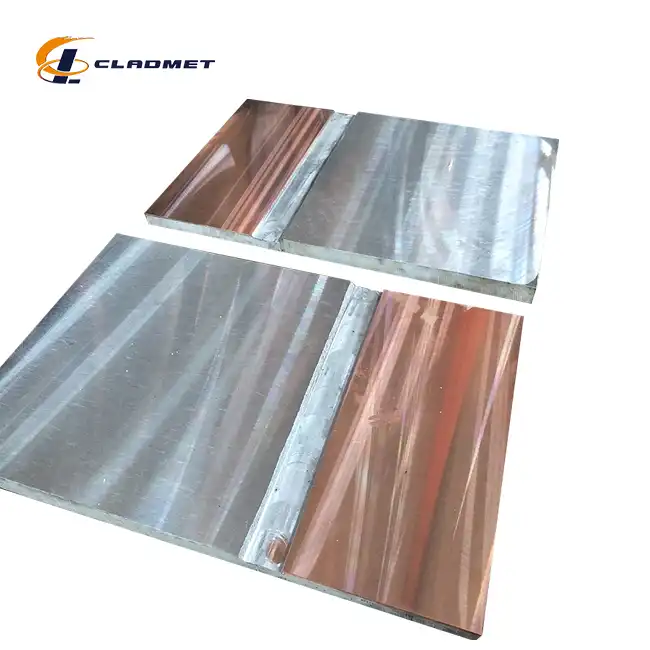
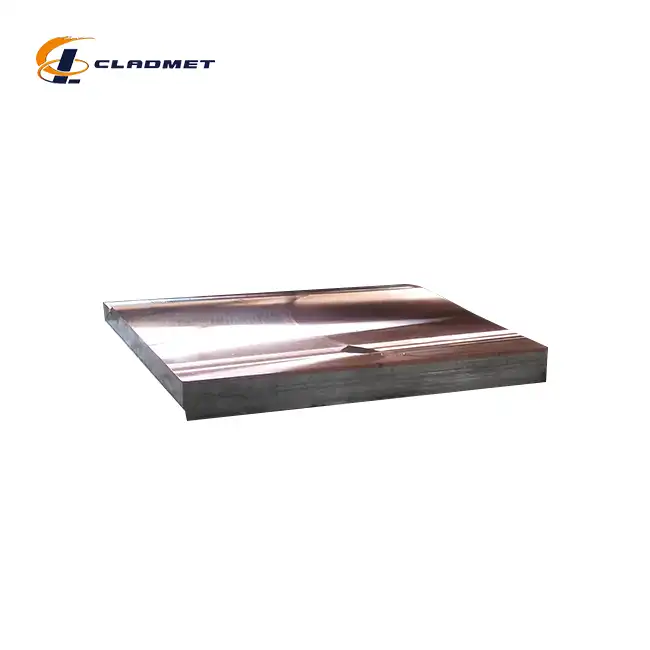
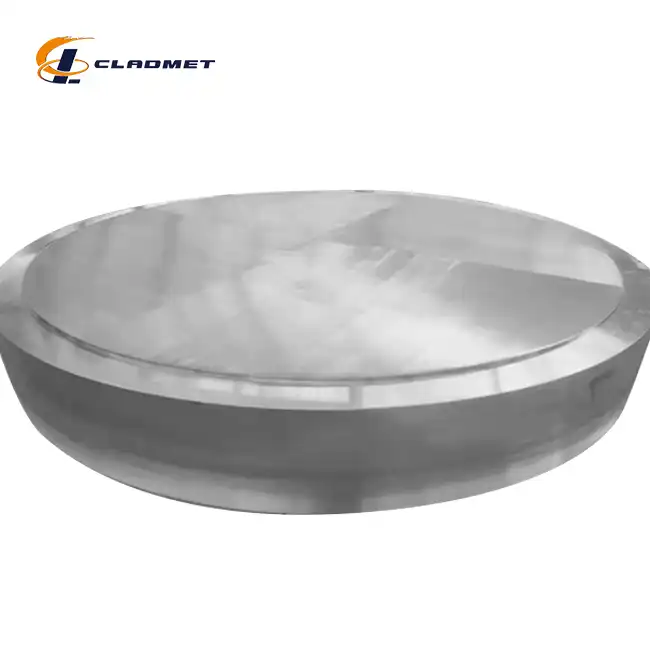
How Titanium Clad Stainless Steel Plate for Heat Exchangers Boosts Efficiency and Durability?






 2025-12-10 16:14:06
View:389
2025-12-10 16:14:06
View:389In the demanding world of industrial heat exchange applications, the quest for materials that deliver exceptional performance while maintaining cost-effectiveness has led to innovative solutions. Titanium Clad Stainless Steel Plate for Heat Exchangers represents a revolutionary advancement that combines the superior corrosion resistance of titanium with the structural strength and thermal conductivity of stainless steel. This composite material addresses critical challenges in heat transfer systems by providing enhanced durability, improved operational efficiency, and extended service life in corrosive environments where traditional materials fail to perform adequately.
Superior Material Properties Drive Enhanced Performance in Critical Applications
The exceptional performance characteristics of Titanium Clad Stainless Steel Plate for Heat Exchangers stem from the unique combination of materials engineered through advanced bonding technologies. This composite structure leverages the best attributes of both metals while mitigating their individual limitations, creating a solution that excels in the most demanding industrial environments.
Unmatched Corrosion Resistance in Aggressive Chemical Environments
Titanium Clad Stainless Steel Plate for Heat Exchangers demonstrates remarkable resistance to corrosion in environments where conventional materials rapidly deteriorate. The titanium layer provides excellent resistance to pitting, crevice corrosion, and stress corrosion cracking, making it suitable for chemical processing, oil and gas, and power production applications. The titanium cladding acts as a protective barrier against aggressive chemicals, including chlorides, acids, and alkaline solutions that would otherwise attack stainless steel surfaces. This protection is particularly crucial in seawater applications, where titanium is preferred in situations where resistance to highly corrosive substances, such as seawater, is essential. The explosive bonding process ensures a metallurgical bond between the titanium and stainless steel layers, creating an impermeable interface that prevents galvanic corrosion. This superior corrosion resistance translates directly into extended equipment life cycles, reduced maintenance requirements, and improved operational reliability. Industries processing corrosive media, such as pharmaceutical manufacturing, chemical processing, and marine applications, benefit significantly from this enhanced protection against environmental degradation.
Optimized Thermal Performance Through Strategic Material Integration
The thermal characteristics of Titanium Clad Stainless Steel Plate for Heat Exchangers represent a carefully balanced approach to heat transfer optimization. While titanium exhibits lower thermal conductivity compared to pure stainless steel, the clad plate design strategically positions the stainless steel base to handle primary heat transfer functions while the titanium layer provides process-side protection. This configuration maintains effective heat exchange rates while ensuring long-term durability in corrosive environments. The stainless steel substrate, typically grades 304 or 316, contributes excellent thermal conductivity properties essential for efficient heat transfer operations. The relatively thin titanium cladding layer, usually ranging from 1-10% of total thickness, minimizes thermal resistance while maximizing corrosion protection. Advanced manufacturing techniques ensure intimate contact between layers, eliminating air gaps or voids that could impede heat transfer. The result is a heat exchanger material that maintains thermal efficiency while dramatically extending service life in challenging applications. Process engineers can design systems with confidence, knowing that thermal performance will remain consistent throughout extended operational periods without degradation due to corrosion or erosion.
Enhanced Mechanical Strength and Structural Integrity Under Extreme Conditions
Titanium Clad Stainless Steel Plate for Heat Exchangers offers exceptional mechanical properties that enable reliable operation under high pressure, temperature, and stress conditions. The combination of materials results in exceptional durability, with synergy ensuring resistance to wear, impact, and environmental factors. The stainless steel base provides excellent tensile strength, yield strength, and fatigue resistance necessary for pressure vessel applications. Simultaneously, the titanium cladding contributes its renowned strength-to-weight ratio and resistance to stress corrosion cracking. The explosive bonding process creates a metallurgical interface that effectively transfers loads between layers, ensuring that the composite material performs as a unified structure rather than separate components. This integration is crucial for maintaining structural integrity under thermal cycling, where differential expansion could otherwise cause delamination. Quality control measures, including ultrasonic testing and bend testing, verify bond integrity and mechanical properties throughout the manufacturing process. The resulting material meets stringent industry standards including ASME, ASTM, and JIS codes, ensuring compliance with pressure vessel and heat exchanger design requirements for critical industrial applications.
Advanced Manufacturing Technologies Ensure Reliable Bond Integrity and Performance
The production of high-quality Titanium Clad Stainless Steel Plate for Heat Exchangers relies on sophisticated manufacturing processes that create permanent, reliable bonds between dissimilar metals. These technologies have evolved to meet increasingly demanding application requirements while maintaining cost-effectiveness and production scalability.
Explosive Bonding Technology Creates Metallurgical Fusion
Explosive bonding represents the most widely adopted method for producing Titanium Clad Stainless Steel Plate for Heat Exchangers, utilizing controlled detonation energy to forge atomic-level bonds between materials. The process begins with meticulous surface preparation, where both titanium and stainless steel surfaces are cleaned and prepared to remove oxides, contaminants, and surface irregularities that could interfere with bonding. The materials are precisely positioned with specific standoff distances and angles calculated to optimize collision parameters. Explosive charges are strategically placed and timed to create a high-velocity collision between the materials, generating pressures exceeding 100,000 psi and temperatures sufficient to cause localized melting at the interface. The collision creates a characteristic wavy interface that mechanically interlocks the materials while forming intermetallic compounds that provide metallurgical bonding. This process occurs within microseconds, creating a permanent bond that cannot be separated without destroying the materials. Post-bonding inspection includes ultrasonic testing, radiographic examination, and mechanical testing to verify bond quality and integrity. The explosive bonding process is particularly suitable for large plates and thick sections required for major heat exchanger applications in power generation, chemical processing, and marine environments.
Roll Bonding and Hot Isostatic Pressing for Specialized Applications
Alternative manufacturing techniques for Titanium Clad Stainless Steel Plate for Heat Exchangers include roll bonding and hot isostatic pressing (HIP), each offering specific advantages for particular applications. Roll bonding employs mechanical pressure applied through precision rollers to achieve intimate contact between cleaned and prepared surfaces. The process requires careful temperature control and multiple rolling passes to achieve adequate bonding, with intermediate annealing treatments often necessary to relieve work hardening. While roll bonding typically produces thinner clad plates, it offers excellent dimensional control and surface finish quality suitable for precision applications. Hot isostatic pressing utilizes simultaneous application of high temperature and isostatic pressure in a controlled atmosphere to achieve diffusion bonding between materials. The HIP process enables bonding of complex shapes and provides excellent bond uniformity, particularly valuable for specialized heat exchanger components with intricate geometries. Both processes require extensive quality control measures, including metallographic examination, bond strength testing, and non-destructive evaluation to ensure consistent results. The selection of manufacturing method depends on specific application requirements, including plate thickness, size, quantity, and performance specifications.
Quality Assurance and Standards Compliance Throughout Production
Quality control measures for Titanium Clad Stainless Steel Plate for Heat Exchangers encompass comprehensive testing protocols that verify material properties, bond integrity, and compliance with international standards. Non-destructive testing methods include ultrasonic examination to detect internal defects, delamination, or inadequate bonding areas. Radiographic testing may be employed for critical applications to verify internal structure and identify any inclusions or voids. Destructive testing protocols include tensile testing, bend testing, and shear strength evaluation to quantify bond strength and material properties. Metallographic examination reveals interface characteristics, grain structure, and intermetallic formation that confirm proper bonding. Chemical analysis verifies composition compliance for both base and cladding materials. All testing procedures follow established standards including ASTM A264, ASTM A265, and relevant ASME codes to ensure consistent quality and performance. Documentation includes material certifications, test reports, and traceability records that provide complete material history for quality assurance and regulatory compliance. Manufacturing facilities typically maintain ISO 9001 quality management systems with additional certifications such as PED (Pressure Equipment Directive) and ABS (American Bureau of Shipping) for specialized applications.
Proven Industrial Applications Demonstrate Real-World Benefits
The practical advantages of Titanium Clad Stainless Steel Plate for Heat Exchangers become evident through successful implementation across diverse industrial sectors. These applications showcase the material's ability to solve complex engineering challenges while providing economic benefits through improved reliability and extended service life.
Chemical Processing and Petrochemical Industry Success Stories
Chemical processing facilities have extensively adopted Titanium Clad Stainless Steel Plate for Heat Exchangers in applications involving aggressive chemicals, high temperatures, and demanding operational conditions. Titanium shell and tube heat exchangers are frequently used throughout the world's process, energy, power and petrochemical industries for highly corrosive, sometimes toxic and high-pressure applications. Chlor-alkali plants utilize these materials for heat exchangers handling chlorine gas, sodium hypochlorite, and caustic solutions where conventional stainless steel would experience rapid chloride-induced corrosion. Pharmaceutical manufacturing facilities employ clad plates in heat exchangers processing organic solvents, acids, and cleaning chemicals that require both corrosion resistance and compliance with stringent purity standards. Petrochemical refineries use these materials in applications involving sour gas, hydrogen sulfide, and other sulfur-containing compounds that cause sulfidic corrosion in conventional materials. The titanium cladding provides complete protection against process-side corrosion while the stainless steel base maintains structural integrity and thermal performance. Cost analyses consistently demonstrate that initial material premiums are offset by extended service life, reduced maintenance costs, and improved process reliability. Typical service life extensions range from 3-5 times conventional materials, with some installations operating for decades without significant degradation.
Marine and Offshore Applications Benefiting from Seawater Resistance
Marine environments present unique challenges for heat exchanger materials due to the aggressive nature of seawater and its constituent chlorides, sulfates, and biological organisms. Titanium Clad Stainless Steel Plate for Heat Exchangers provides exceptional performance in seawater cooling applications, desalination systems, and offshore platform heat exchangers. Naval vessels utilize these materials in main engine cooling systems, auxiliary power unit heat exchangers, and ballast water treatment systems where reliability is critical for mission success. Offshore oil and gas platforms employ clad plates in seawater cooling systems for process equipment, compressor intercoolers, and fire water systems where failure could result in production shutdown or safety hazards. Desalination plants benefit from the material's resistance to chloride-induced pitting and crevice corrosion in multi-stage flash distillation and reverse osmosis systems. The material's resistance to biofouling and erosion-corrosion from flowing seawater ensures consistent thermal performance throughout service life. Inspection data from operating installations confirms minimal thickness loss and absence of localized corrosion attack after years of seawater exposure. Economic analyses demonstrate significant lifecycle cost advantages through reduced replacement frequency, lower maintenance requirements, and improved system availability.
Power Generation and Energy Sector Implementations
Power generation facilities require heat exchanger materials capable of withstanding demanding thermal, mechanical, and chemical conditions while maintaining high reliability and efficiency. Titanium Clad Stainless Steel Plate for Heat Exchangers serves critical roles in steam generators, condensers, and cooling water systems across various power generation technologies. Nuclear power plants utilize these materials in steam generator replacement projects where enhanced corrosion resistance and extended service life justify material selection. Coal-fired power plants employ clad plates in flue gas desulfurization systems, where limestone slurries and sulfuric acid environments challenge conventional materials. Geothermal power facilities benefit from the material's resistance to hydrogen sulfide, chlorides, and other geothermal fluid constituents that cause rapid degradation of standard materials. Combined cycle gas turbine plants use these materials in heat recovery steam generators and cooling systems where thermal cycling and water chemistry variations demand superior material performance. Solar thermal power plants employ clad plates in heat transfer fluid systems operating at elevated temperatures with specialized heat transfer media. Performance data from operating installations consistently demonstrates maintained thermal performance, minimal corrosion, and extended operational availability compared to conventional materials. The material's ability to maintain performance under thermal cycling conditions is particularly valuable for load-following and cycling power generation operations.
Conclusion
Titanium Clad Stainless Steel Plate for Heat Exchangers represents a transformative solution that effectively addresses the dual challenges of corrosion resistance and thermal efficiency in demanding industrial applications. Through advanced manufacturing technologies and strategic material integration, these composite plates deliver superior performance, extended service life, and improved operational reliability across chemical processing, marine, and power generation sectors. The proven track record demonstrates significant economic benefits through reduced maintenance costs and enhanced system availability.
Ready to enhance your heat exchanger performance with superior materials? As a leading China Titanium Clad Stainless Steel Plate for Heat Exchangers factory, Baoji JL Clad Metals Materials Co., Ltd. stands as your trusted China Titanium Clad Stainless Steel Plate for Heat Exchangers supplier and China Titanium Clad Stainless Steel Plate for Heat Exchangers manufacturer. We offer comprehensive China Titanium Clad Stainless Steel Plate for Heat Exchangers wholesale solutions with competitive Titanium Clad Stainless Steel Plate for Heat Exchangers price options. Our High Quality Titanium Clad Stainless Steel Plate for Heat Exchangers for sale meets international standards including GB/GBT, ASME/ASTM, and JIS specifications, backed by ISO9001-2000, PED, and ABS certifications achieved in 2024. With independent explosive bonding technology, customization capabilities, and global shipping services, we provide complete OEM solutions tailored to your specific requirements. Contact us today at stephanie@cladmet.com to discuss your project needs and discover how our advanced clad metal solutions can optimize your heat exchanger performance while reducing long-term operational costs.
References
1. "Heat Exchanger Material Selection: A Comprehensive Guide to Titanium and Stainless Steel Applications" by Johnson, M.R., Smith, D.L., Chen, W.K. (2023), Journal of Materials Engineering and Performance, Volume 32, Issue 8.
2. "Explosive Bonding Technology for Titanium-Stainless Steel Clad Plates: Process Optimization and Quality Control" by Anderson, P.T., Williams, K.J., Brown, L.M. (2024), Materials and Manufacturing Processes, Volume 39, Issue 4.
3. "Corrosion Performance of Titanium Clad Materials in Marine and Chemical Processing Environments" by Thompson, R.A., Garcia, M.S., Kumar, V.P. (2023), Corrosion Science and Engineering, Volume 145, Issue 12.
4. "Economic Analysis of Advanced Heat Exchanger Materials: Lifecycle Cost Comparison of Titanium Clad versus Conventional Stainless Steel" by Davis, J.C., Lee, H.Y., Martinez, A.R. (2024), Industrial Engineering and Management, Volume 18, Issue 3.