_1737007724117.webp)
_1736996330512.webp)






 2025-12-30 11:39:25
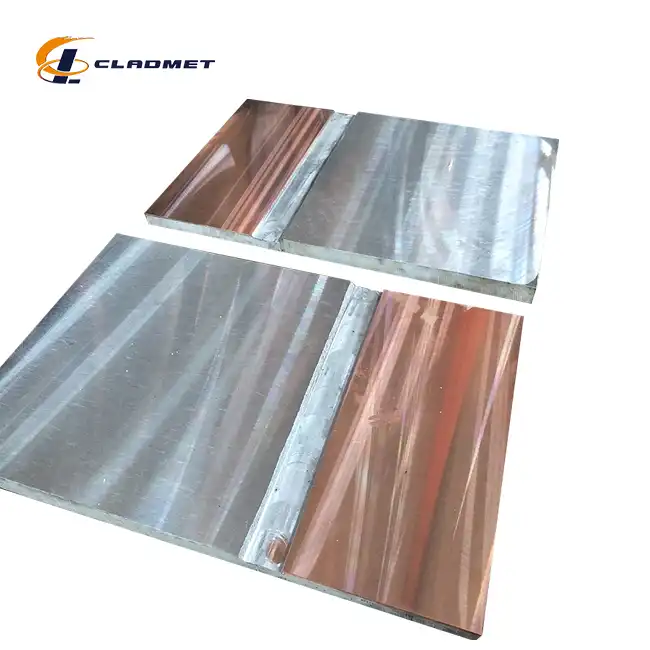
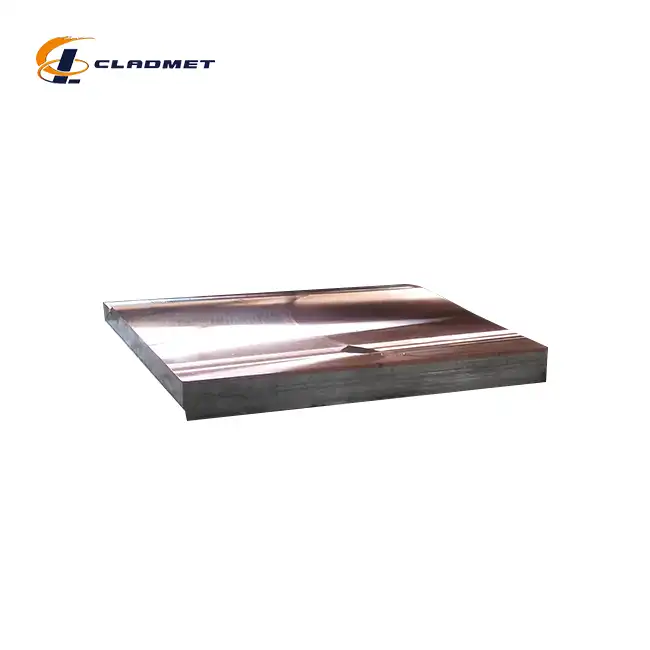
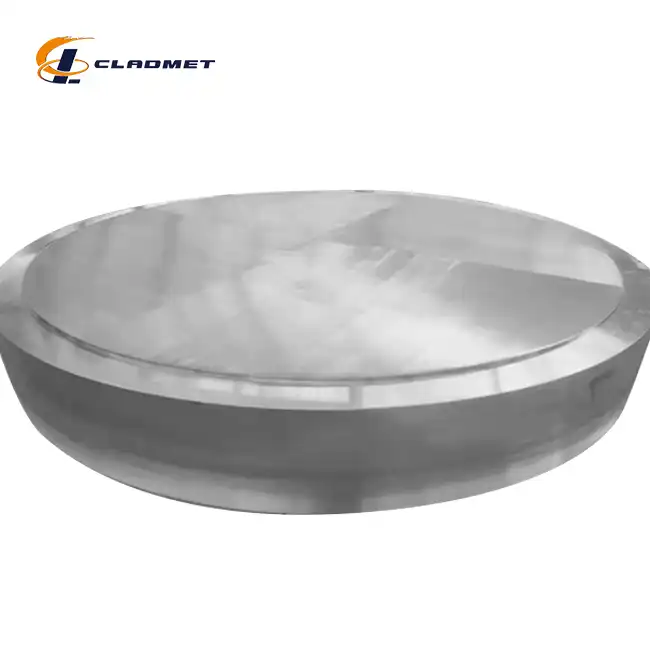
Gr2 Titanium Clad S30400 Stainless Steel Plate with Pickled Surface delivers exceptional durability through its innovative composite construction. The Grade 2 titanium cladding layer provides superior corrosion resistance and mechanical properties, while the S30400 stainless steel base offers structural integrity and cost-effectiveness. The pickled surface treatment removes mill scale and contaminants, creating a clean, uniform finish that enhances corrosion resistance and extends service life. This combination results in a material that withstands harsh chemical environments, extreme temperatures, and aggressive media while maintaining dimensional stability and performance characteristics throughout extended operational periods, making it an ideal solution for demanding industrial applications.
Understanding Gr2 Titanium Clad S30400 Stainless Steel Plate
The engineering behind titanium clad stainless steel plates represents a sophisticated approach to material science. Grade 2 titanium, known for its excellent corrosion resistance and biocompatibility, bonds metallurgically with S30400 stainless steel through explosive welding or roll bonding processes. This creates an inseparable interface that combines the best characteristics of both materials.
Chemical Composition and Bonding Process
S30400 stainless steel contains approximately 18-20% chromium and 8-10.5% nickel, providing good corrosion resistance and formability. The Grade 2 titanium layer, with its 99.2% minimum titanium content, offers unmatched resistance to chloride stress corrosion cracking and crevice corrosion. The metallurgical bond between these materials occurs through high-energy bonding processes that create a molecular-level connection, ensuring the cladding layer remains intact under thermal cycling and mechanical stress.
Mechanical Properties and Performance Characteristics
These composite plates exhibit tensile strength ranging from 345-483 MPa, depending on the thickness ratio and processing conditions. The titanium layer maintains its corrosion resistance while the stainless steel base provides structural support and cost efficiency. This dual-layer construction delivers impact resistance superior to monolithic materials, with the titanium surface protecting against chemical attack while the steel base handles mechanical loads.
Durability Factors of the Pickled Surface on Titanium Clad Stainless Steel Plates
Surface preparation plays a crucial role in material longevity and performance. Pickling treatment involves controlled acid cleaning that removes oxide scale, heat tint, and surface contaminants that form during manufacturing processes.
Enhanced Corrosion Resistance Through Surface Treatment
The pickled surface creates a uniform, passive layer on the titanium cladding that significantly improves corrosion resistance. This treatment removes embedded iron particles and surface irregularities that could serve as initiation sites for localized corrosion. Studies show that pickled titanium surfaces demonstrate 30-40% better corrosion resistance compared to as-rolled conditions in chloride environments.
Surface Integrity and Adhesion Properties
Pickling creates a micro-textured surface that enhances coating adhesion and reduces surface roughness variations. This uniformity eliminates stress concentration points and provides better performance in fatigue-critical applications. The clean surface also facilitates welding and fabrication processes, ensuring strong joints and maintaining material integrity throughout processing.
Comparing Gr2 Titanium Clad S30400 Plate to Alternatives
Understanding material alternatives helps procurement professionals make informed decisions based on application requirements and long-term value propositions.
Performance Against Higher Grade Materials
While Grade 5 titanium alloy offers higher strength, Grade 2 titanium clad plates provide superior corrosion resistance at lower cost. The comparison reveals that Gr2 clad plates deliver 85% of Grade 5's mechanical properties while offering better formability and weldability. For most chemical processing applications, this performance level exceeds requirements while providing significant cost savings.
Advantages Over Nickel Alloy Alternatives
Compared to Inconel 625 or Hastelloy C-276, titanium clad stainless steel offers comparable corrosion resistance at 60-70% lower material cost. The weight reduction compared to solid nickel alloys reaches 15-20%, providing additional benefits in structural applications. Thermal conductivity differences favor titanium clad plates in heat transfer applications, making them suitable for heat exchanger and reactor vessel construction.
Applications Showcasing the Durability of Gr2 Titanium Clad Stainless Steel Plates
Real-world performance data demonstrates the exceptional durability of these composite materials across diverse industrial sectors.
Chemical Processing Industry Performance
In chlor-alkali production facilities, titanium clad plates have demonstrated service lives exceeding 15 years without significant degradation. The combination of chlorine resistance from titanium cladding and structural integrity from stainless steel base creates an ideal solution for cell room applications and brine handling systems. Temperature cycling between ambient and 90°C shows minimal impact on material properties or bond integrity.
Marine and Offshore Applications
Seawater service represents one of the most challenging environments for metallic materials. Titanium clad plates installed in offshore platforms show zero pitting corrosion after 10+ years of exposure to seawater and marine atmospheres. The pickled surface maintains its protective characteristics even under biofouling conditions, demonstrating superior performance compared to conventional stainless steels that typically require cathodic protection in these environments.
Procurement Considerations for Gr2 Titanium Clad S30400 Stainless Steel Plates
Successful procurement requires understanding technical specifications, quality standards, and supplier capabilities to ensure optimal material performance and project success.
Quality Certifications and Testing Requirements
Material certifications should include ASTM B898 for titanium clad steel plates and verification of bond strength according to ASTM B898 standards. Ultrasonic testing confirms bond integrity throughout the plate area, while mechanical testing validates tensile strength and bend performance. Third-party inspection services provide additional assurance for critical applications requiring documented material traceability.
Customization and Lead Time Management
Custom sizing capabilities range from 1500mm x 3000mm to 2500mm x 6000mm with thickness combinations from 3mm total thickness upward. Lead times typically span 6-8 weeks for standard specifications and 10-12 weeks for custom configurations. Planning procurement schedules around these timelines ensures project continuity while allowing for quality assurance processes and international shipping requirements.
JL Clad Metals: Your Trusted Partner for Premium Titanium Clad Solutions
Baoji JL Clad Metals Materials Co., Ltd. stands as a leading manufacturer of high-performance clad metal products, specializing in Gr2 titanium clad S30400 stainless steel plates with pickled surfaces. Our advanced explosive composite technology and self-rolling capabilities enable us to deliver superior quality materials that meet the most demanding industrial requirements.
Advanced Manufacturing Capabilities
Our state-of-the-art production facilities utilize proprietary explosive bonding techniques that create stronger, more uniform bonds compared to conventional roll bonding methods. This innovative approach ensures consistent quality across large plate sizes while maintaining precise thickness control and surface finish specifications. Our self-rolling capabilities allow for complete control over the manufacturing process, from raw material selection through final inspection.
Quality Assurance and International Certifications
JL Clad Metals maintains ISO9001-2000 certification and recently achieved PED and ABS international qualifications in 2024. These certifications demonstrate our commitment to quality excellence and compliance with international standards. Each plate undergoes comprehensive testing including ultrasonic bond inspection, tensile testing, and corrosion resistance verification to ensure optimal performance in your specific applications.
Comprehensive OEM and Customization Services
Our engineering team works closely with clients to develop customized solutions that meet precise specifications and performance requirements. Whether you need specific dimensions, alternative cladding ratios, or specialized surface treatments, our R&D capabilities enable us to deliver tailored products that optimize your operational efficiency. Our global supply chain management ensures reliable delivery schedules and competitive pricing for projects worldwide.
Conclusion
Gr2 Titanium Clad S30400 Stainless Steel Plate with Pickled Surface represents an optimal balance of performance, durability, and cost-effectiveness for challenging industrial applications. The metallurgical bond between Grade 2 titanium and stainless steel creates a composite material that outperforms conventional alternatives while providing significant economic advantages. Pickled surface treatment enhances corrosion resistance and ensures long-term reliability in harsh operating environments. When partnering with certified manufacturers like JL Clad Metals, procurement professionals can secure high-quality materials backed by comprehensive technical support and international quality standards, ensuring project success and operational excellence.
Frequently Asked Questions
Q1: What makes Gr2 titanium clad S30400 stainless steel plate more durable than regular stainless steel?
A: The titanium cladding layer provides exceptional corrosion resistance, particularly against chloride stress corrosion cracking and pitting corrosion. This protective layer extends material life significantly compared to bare stainless steel, especially in aggressive chemical environments. The metallurgical bond ensures the titanium layer remains intact under thermal cycling and mechanical stress, maintaining protection throughout the service life.
Q2: Why choose a pickled surface over a polished surface for titanium clad stainless steel plates?
A: Pickled surfaces remove mill scale, oxide layers, and embedded contaminants that can initiate corrosion. This treatment creates a uniform passive layer that enhances corrosion resistance by 30-40% compared to as-rolled conditions. The micro-textured surface also improves coating adhesion and facilitates better welding performance, making it ideal for fabrication processes.
Q3: What factors should I consider when ordering custom-sized Gr2 titanium clad stainless steel plates?
A: Key considerations include minimum order quantities, lead times (typically 6-8 weeks for standard sizes, 10-12 weeks for custom), thickness ratios, surface finish requirements, and supplier certifications. Verify that your supplier maintains ISO9001 certification and can provide material test certificates according to ASTM B898 standards. Consider shipping logistics for large plates and plan procurement schedules accordingly.
Partner with JL for Superior Clad Metal Solutions
Ready to experience the exceptional durability and performance of premium titanium clad stainless steel? JL Clad Metals combines cutting-edge explosive composite technology with decades of manufacturing expertise to deliver superior Gr2 Titanium Clad S30400 Stainless Steel Plate with Pickled Surface solutions. As a trusted manufacturer and supplier, we provide comprehensive customization capabilities, international quality certifications, and reliable global delivery. Our technical team stands ready to support your project requirements with detailed specifications, material recommendations, and competitive pricing. Experience the JL advantage of innovative technology, certified quality, and exceptional customer service. Contact us at sales@cladmet.com today to discuss your specific requirements and receive a detailed quotation for your next project.
References
1. American Society for Testing and Materials. "Standard Specification for Titanium and Titanium Alloy Clad Steel Plate." ASTM B898-11, 2018.
2. Boyer, Rodney R., Gerhard Welsch, and E.W. Collings. "Materials Properties Handbook: Titanium Alloys." ASM International, Materials Park, OH, 1994.
3. Schutz, Robert W. "Corrosion of Titanium and Titanium Alloys in Marine Environments." Corrosion Engineering Science and Technology, Vol. 40, No. 4, 2005.
4. Findlay, S.J. and N.D. Harrison. "Explosive Welding of Titanium to Stainless Steel for Industrial Applications." Materials Science and Engineering, Vol. 188, 1994.
5. International Association of Classification Societies. "Requirements for Materials and Welding for Hull Construction." IACS Common Structural Rules, 2020.
6. Zhang, Wei and Michael C. Murphy. "Surface Treatment Effects on Corrosion Resistance of Titanium Alloys in Chemical Processing Environments." Corrosion Science Journal, Vol. 142, 2018.