_1737007724117.webp)
_1736996330512.webp)
How Difficult is it to Weld Titanium Compared to Steel?






 2025-12-01 11:13:16
View:389
2025-12-01 11:13:16
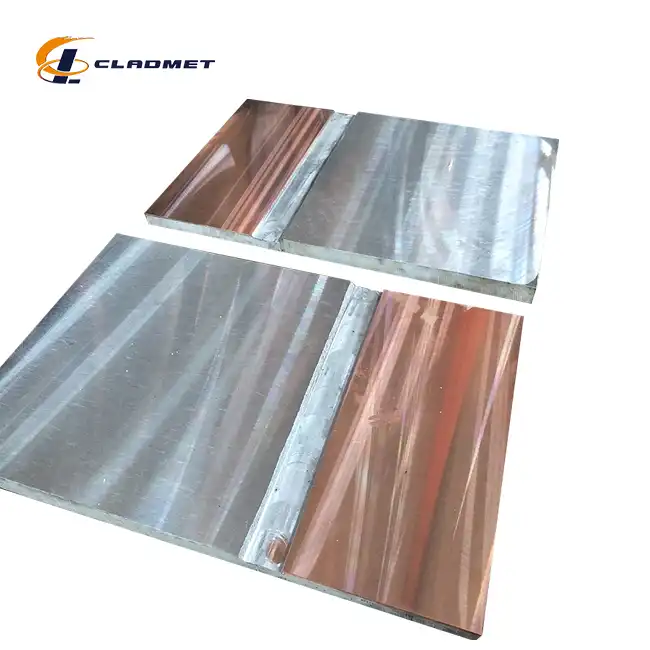
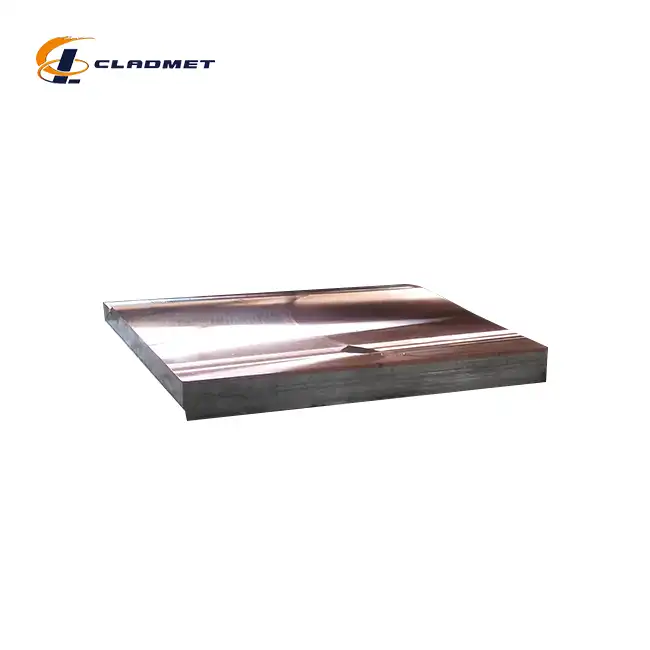
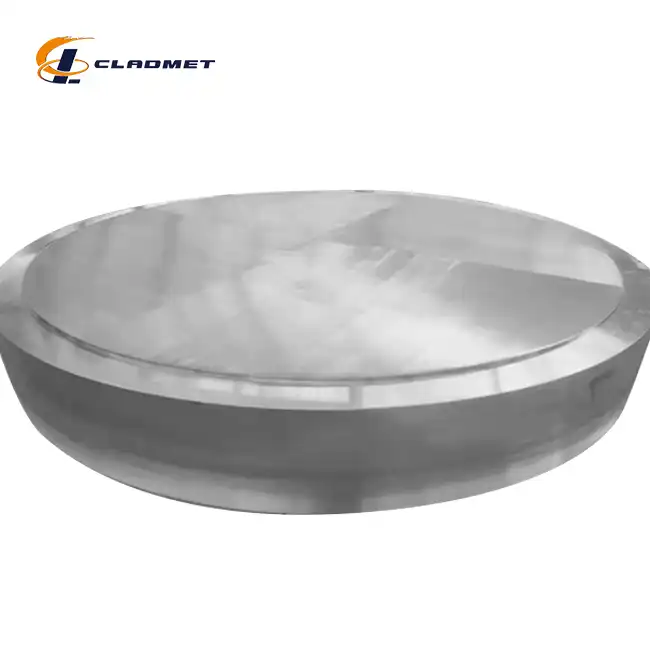
View:389Welding professionals often encounter the challenging scenario of working with titanium, which demands extraordinary precision compared to conventional steel welding. The complexity arises from titanium's extreme reactivity to atmospheric contamination, requiring meticulous shielding protocols that far exceed standard steel welding requirements. While steel tolerates minor oxygen exposure with only cosmetic defects, the same contamination can catastrophically compromise titanium welds, making Explosion Welding Titanium Clad Stainless Steel Plate manufacturing a specialized field requiring advanced expertise and controlled environments.
Understanding Titanium's Welding Complexities Versus Steel
-
Chemical Reactivity and Atmospheric Sensitivity
The fundamental difference between welding titanium and steel lies in their respective chemical reactivities. Steel, primarily composed of iron and carbon, demonstrates remarkable tolerance to atmospheric exposure during welding processes. Minor oxygen contamination typically results in superficial oxidation that can be easily removed through post-weld cleaning procedures. Titanium, however, presents an entirely different challenge due to its exceptional affinity for atmospheric gases at elevated temperatures. When titanium reaches welding temperatures, it becomes extraordinarily reactive with oxygen, nitrogen, and hydrogen present in the atmosphere. This reactivity is approximately ten times greater than that of steel, creating a scenario where even microscopic amounts of contamination can result in catastrophic weld failure. The formation of titanium oxides and nitrides creates brittle intermetallic compounds that compromise the mechanical properties of the joint, making proper shielding absolutely critical for successful Explosion Welding Titanium Clad Stainless Steel Plate production.
-
Temperature Control and Heat Management
Temperature control represents another significant challenge when comparing titanium and steel welding. Steel exhibits a relatively forgiving thermal characteristic, allowing welders considerable flexibility in heat input without causing severe metallurgical changes. The material can withstand temporary overheating and still maintain acceptable mechanical properties after cooling. Titanium demonstrates exceptional sensitivity to thermal cycling and requires precise heat management throughout the welding process. Excessive heat input can cause grain growth, phase transformations, and mechanical property degradation that cannot be reversed through subsequent treatment. This sensitivity necessitates lower heat input rates, precise travel speeds, and controlled interpass temperatures during Explosion Welding Titanium Clad Stainless Steel Plate fabrication, making the process significantly more demanding than conventional steel welding operations.
Explosion Welding Technology for Titanium Clad Stainless Steel Applications
-
Advanced Bonding Mechanisms in Explosive Welding
Explosion welding technology provides a revolutionary solution to the challenges associated with joining titanium and stainless steel materials. This process utilizes controlled explosive energy to create metallurgical bonds without the thermal complications inherent in traditional fusion welding methods. The explosive impact creates extreme pressure and velocity conditions that enable atomic-level bonding between dissimilar materials, eliminating the atmospheric contamination concerns that plague conventional titanium welding. The explosion welding process begins with precise surface preparation of both titanium and stainless steel components, ensuring optimal cleanliness and surface geometry. The explosive charge is strategically positioned to create a controlled collision between the materials, generating pressures exceeding 1000 MPa and velocities approaching 500 m/s. These extreme conditions enable the formation of wave-like interfaces that provide exceptional mechanical interlocking and metallurgical bonding, resulting in Explosion Welding Titanium Clad Stainless Steel Plate products with superior strength and corrosion resistance characteristics.
-
Quality Advantages of Explosion Welding Over Traditional Methods
Traditional fusion welding methods for joining titanium and steel face significant challenges due to the formation of brittle intermetallic compounds at the interface. These compounds, such as Fe₂Ti and FeTi, create weak points that can lead to premature failure under mechanical or thermal stress. Explosion welding eliminates these concerns by avoiding the molten state entirely, preventing the diffusion and chemical reactions that cause intermetallic formation. The explosion welding process produces Explosion Welding Titanium Clad Stainless Steel Plate products with bond strengths typically exceeding those of the weaker base material. The wave-like interface created during the explosive bonding process provides mechanical interlocking that complements the metallurgical bond, resulting in exceptional shear and tensile strength characteristics. This superior bonding quality makes explosion-welded titanium clad plates ideal for demanding applications in chemical processing, marine environments, and aerospace industries where both corrosion resistance and mechanical performance are critical requirements.
Metallurgical Considerations and Material Properties
-
Microstructural Differences Between Titanium and Steel
The microstructural characteristics of titanium and steel create fundamentally different welding behaviors that must be understood for successful fabrication. Steel's body-centered cubic or face-centered cubic crystal structures provide relatively straightforward metallurgical behavior during thermal cycling. The material exhibits predictable grain growth patterns and phase transformations that are well-documented and easily managed through established welding procedures. Titanium's hexagonal close-packed crystal structure creates more complex metallurgical behavior during thermal processing. The material undergoes alpha-beta phase transformations at approximately 882°C, with different cooling rates producing varying microstructural characteristics. Rapid cooling can create martensitic structures with increased hardness but reduced ductility, while slower cooling produces equilibrium structures with better toughness characteristics. These considerations are crucial when developing Explosion Welding Titanium Clad Stainless Steel Plate manufacturing procedures that optimize both bonding quality and final material properties.
-
Corrosion Resistance and Environmental Performance
The superior corrosion resistance of titanium compared to steel represents one of the primary drivers for Explosion Welding Titanium Clad Stainless Steel Plate applications. Titanium forms a stable, adherent oxide layer that provides exceptional protection against a wide range of corrosive environments, including chloride-containing solutions, acidic conditions, and high-temperature oxidizing atmospheres. This passive layer regenerates spontaneously when damaged, providing self-healing corrosion protection. Steel, even high-grade stainless steel, cannot match titanium's corrosion resistance in many aggressive environments. The combination of titanium's surface corrosion resistance with stainless steel's structural strength and cost-effectiveness creates an optimal material solution through explosion welding technology. The resulting Explosion Welding Titanium Clad Stainless Steel Plate products provide titanium's corrosion performance at a fraction of the cost of solid titanium construction, making them economically viable for large-scale industrial applications.
Industrial Applications and Manufacturing Excellence
-
Specialized Applications for Explosion Welded Titanium Clad Materials
The unique properties of Explosion Welding Titanium Clad Stainless Steel Plate materials make them indispensable for numerous industrial applications where both corrosion resistance and structural integrity are paramount. Chemical processing industries utilize these materials for heat exchangers, pressure vessels, and reactor components that must withstand highly corrosive process streams while maintaining mechanical reliability under pressure and temperature cycling. Marine and offshore applications represent another critical market for explosion welded titanium clad materials. The combination of seawater corrosion resistance from the titanium surface and structural strength from the stainless steel backing provides exceptional service life in harsh marine environments. Offshore oil and gas platforms, desalination plants, and marine propulsion systems benefit significantly from the superior performance characteristics of Explosion Welding Titanium Clad Stainless Steel Plate components compared to conventional materials.
-
Manufacturing Standards and Quality Assurance
The production of high-quality Explosion Welding Titanium Clad Stainless Steel Plate materials requires strict adherence to international manufacturing standards and comprehensive quality control procedures. Manufacturers must comply with ASME, ASTM, and JIS specifications while maintaining ISO9001-2000 quality management systems to ensure consistent product performance. Advanced manufacturers have achieved additional certifications such as PED and ABS qualifications, demonstrating their capability to produce materials for the most demanding applications. Quality control procedures for explosion welded materials include ultrasonic bond testing, mechanical property verification, and corrosion resistance validation. These testing protocols ensure that each Explosion Welding Titanium Clad Stainless Steel Plate meets specified performance criteria before delivery to customers. The combination of advanced manufacturing technology and comprehensive quality assurance provides confidence in material performance for critical applications across multiple industries.
Conclusion
Welding titanium compared to steel presents significant challenges due to titanium's extreme atmospheric sensitivity and precise temperature control requirements. Explosion welding technology provides an innovative solution that eliminates traditional fusion welding complications while creating superior metallurgical bonds between titanium and stainless steel materials.
Cooperate with Baoji JL Clad Metals Materials Co., Ltd.
Baoji JL Clad Metals Materials Co., Ltd. stands as a premier China Explosion Welding Titanium Clad Stainless Steel Plate manufacturer, combining cutting-edge explosion bonding technology with comprehensive quality management systems. As a leading China Explosion Welding Titanium Clad Stainless Steel Plate supplier, the company offers extensive OEM/ODM customization capabilities, enabling tailored solutions for diverse industrial applications. Our position as a trusted China Explosion Welding Titanium Clad Stainless Steel Plate factory ensures competitive pricing for High Quality Explosion Welding Titanium Clad Stainless Steel Plate products. Whether you need China Explosion Welding Titanium Clad Stainless Steel Plate wholesale quantities or specialized Explosion Welding Titanium Clad Stainless Steel Plate for sale, contact stephanie@cladmet.com for expert consultation and competitive Explosion Welding Titanium Clad Stainless Steel Plate price quotations.
FAQ
Q: What makes titanium welding more difficult than steel welding?
A: Titanium is extremely reactive to atmospheric gases at welding temperatures, requiring extensive shielding, while steel tolerates minor contamination with only cosmetic effects.
Q: Can titanium be directly welded to stainless steel?
A: Direct fusion welding creates brittle intermetallic compounds. Explosion welding avoids this issue by bonding materials without melting.
Q: What are the main advantages of explosion welding for titanium-steel combinations?
A: Explosion welding eliminates atmospheric contamination concerns, prevents intermetallic formation, and creates superior bond strength without thermal damage.
Q: What industries benefit most from titanium clad stainless steel plates?
A: Chemical processing, marine, aerospace, and oil & gas industries utilize these materials for corrosive environments requiring structural integrity.
References
1. "Welding of Titanium and Titanium Alloys" - American Welding Society Technical Committee
2. "Explosive Welding: Fundamentals and Applications" - T.Z. Blazynski, Applied Science Publishers
3. "Corrosion Resistance of Titanium in Industrial Environments" - Materials Performance Institute
4. "Metallurgy and Fabrication of Titanium Clad Steel" - International Journal of Advanced Manufacturing Technology