_1737007724117.webp)
_1736996330512.webp)






 2026-01-23 09:00:04
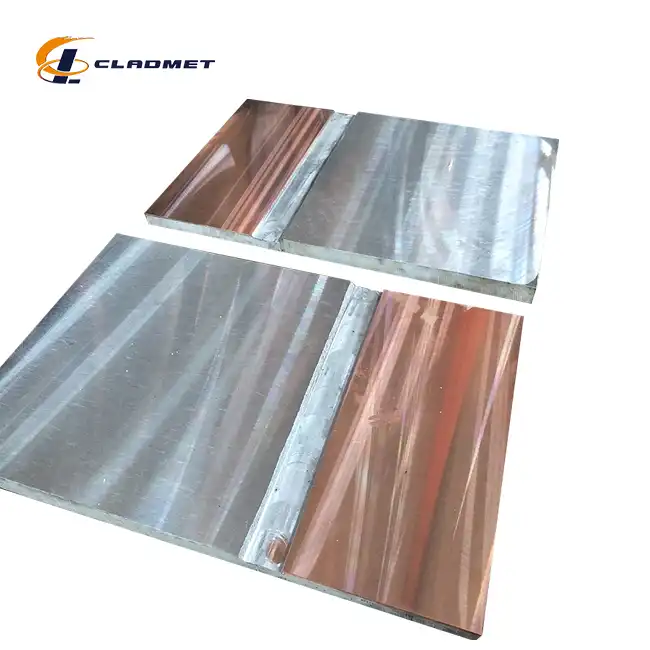
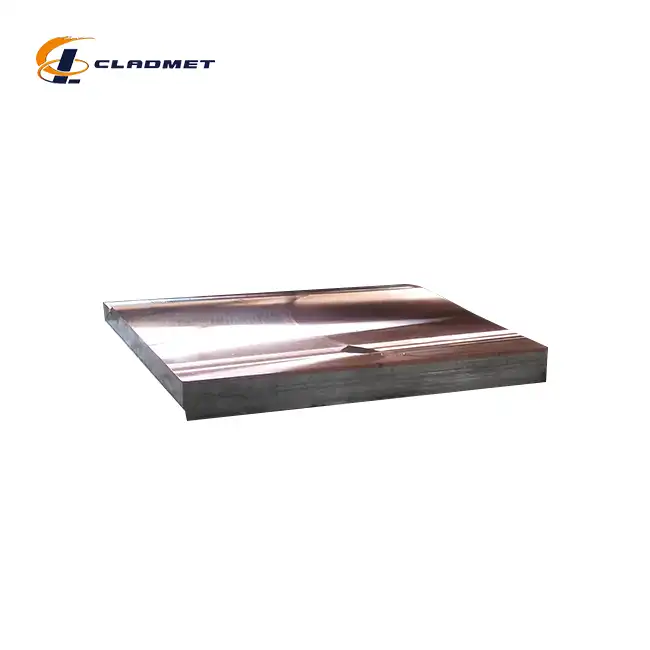
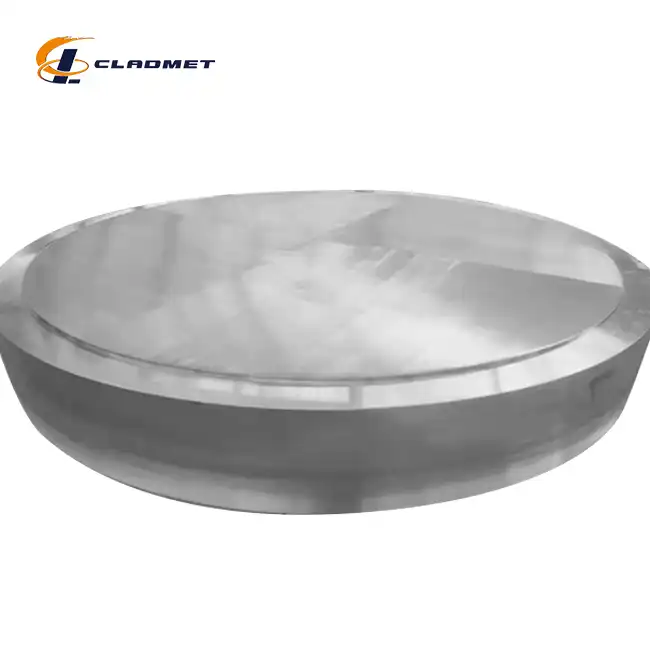
Gr1 Titanium Clad A240 316L Stainless Steel Plate for High-Temp Process Vessels represents a revolutionary advancement in industrial materials technology. These innovative composite plates combine the exceptional corrosion resistance of commercially pure Grade 1 titanium with the mechanical strength and cost-effectiveness of ASTM A240 316L stainless steel. The Gr1 Titanium Clad A240 316L Stainless Steel Plate for Process Vessels serves as an optimal solution for demanding applications in chemical processing, pharmaceutical manufacturing, and other high-temperature industrial environments where traditional materials fall short.
Understanding Gr1 Titanium Clad A240 316L Stainless Steel Plates
Gr1 Titanium Clad A240 316L stainless steel plates combine the chemical inertness and corrosion resistance of Grade 1 commercially pure titanium with the mechanical strength and affordability of A240 316L stainless steel. This composite material is engineered for high-temperature, corrosive environments commonly found in chemical processing and other demanding industries. Titanium's exceptional resistance to acidic and chloride solutions complements the durable stainless steel core, making these clad plates versatile for process vessels requiring both longevity and cost efficiency.
What is Gr1 Titanium Clad A240 316L Stainless Steel Plate?
These specialized composite plates feature a thin layer of Grade 1 titanium metallurgically bonded to an A240 316L stainless steel substrate. The titanium cladding typically ranges from 1mm to 5mm in thickness, providing superior chemical resistance while the stainless steel base delivers structural integrity. This configuration delivers 90% of solid titanium's corrosion resistance at approximately 60% of the cost, making it an economically viable solution for process vessel construction.
Key Properties and Benefits of Titanium Cladding on Stainless Steel
The unique properties of this clad material make it exceptional for demanding applications. Key advantages include outstanding corrosion resistance in chloride environments, excellent performance in temperatures up to 350°C, superior resistance to stress corrosion cracking, and enhanced resistance to pitting and crevice corrosion. The titanium surface maintains its passive oxide layer even under aggressive chemical exposure, while the stainless steel core provides mechanical strength equivalent to standard 316L material.
How is A240 316L Stainless Steel Clad with Gr1 Titanium?
The cladding process involves explosive bonding or roll bonding techniques that create a permanent metallurgical bond between the titanium and stainless steel layers. During explosive bonding, controlled detonation creates high-pressure waves that forge the materials together at the atomic level. This process ensures complete adhesion without compromising the individual properties of either material, resulting in a composite plate that performs as a unified structure.
Comparing Titanium Clad A240 316L Stainless Steel with Alternatives
When choosing materials for process vessels, comparing Gr1 titanium clad plates against solid titanium, 316L stainless steel, and other alloys helps optimize cost-performance ratios. Titanium clad plates offer a compelling balance by providing corrosion resistance close to solid titanium at a lower price point due to the stainless steel base. Compared to standard 316L stainless steel, cladding greatly extends lifespan and chemical compatibility in harsh environments.
Titanium Clad vs. Solid Titanium Plates for Process Vessels
Solid titanium plates offer maximum corrosion resistance but come with significant cost implications. Titanium clad alternatives provide 85-95% of the corrosion performance at 40-50% less cost. The stainless steel backing also provides better thermal conductivity and easier fabrication compared to solid titanium, making clad plates more practical for large vessel construction.
Gr1 Titanium Clad A240 vs. 316L Stainless Steel Plates
Standard 316L stainless steel performs adequately in mild corrosive environments but struggles with chloride attack and high-temperature oxidation. Titanium clad plates extend service life by 3-5 times in aggressive chemical environments while maintaining the fabrication characteristics familiar to stainless steel fabricators. This combination reduces maintenance costs and extends operational uptime significantly.
Other Relevant Comparisons
Compared to duplex stainless steels and super-austenitic grades, titanium clad plates offer superior performance in chloride environments and acidic solutions. While specialty stainless steels may cost less initially, the extended service life and reduced maintenance requirements of clad plates often result in lower total ownership costs over the vessel's operational lifetime.
Application and Performance in Process Vessel Environments
Gr1 titanium clad A240 316L stainless steel plates are widely used across sectors such as chemical processing, pharmaceuticals, food & beverage, and oil & gas. Their superior resistance to corrosion, especially in acidic and saline conditions, ensures long-term vessel integrity under high-temperature operations. Standards compliance and certified corrosion resistance enhance reliability.
Uses of Titanium Clad A240 316L Stainless Steel Plates in Process Vessels
These materials excel in reactor vessels handling corrosive chemicals, heat exchangers in chloride-rich environments, storage tanks for acidic solutions, and distillation columns in chemical plants. The pharmaceutical industry particularly benefits from the material's cleanability and resistance to cleaning agents, while the food processing sector values its FDA-compliant titanium surface.
Corrosion Resistance and Chemical Compatibility
The titanium cladding provides exceptional resistance to organic acids, inorganic acids below certain concentrations, and chloride solutions up to elevated temperatures. Testing shows corrosion rates below 0.1mm per year in most industrial environments, significantly outperforming standard stainless steels. This performance is maintained even in high-temperature operations up to 300°C.
Fabrication Techniques and Considerations
Welding requires specialized procedures to prevent contamination of the titanium surface. Argon shielding gas and proper heat input control are essential to maintain clad integrity. Forming operations must consider the different mechanical properties of the two materials to prevent delamination. Proper fabrication techniques ensure the finished vessel maintains the corrosion resistance properties of both materials.
Procurement Guide: What Buyers Need to Know
Effective procurement of Gr1 titanium clad A240 316L stainless steel plates hinges on understanding supplier credibility, material certifications, MOQ thresholds, and delivery timelines. Cost factors vary depending on cladding thickness and custom dimensions, with bulk orders providing leverage for price negotiation.
How to Buy Gr1 Titanium Clad A240 316L Stainless Steel Plates
Successful procurement begins with clearly defining technical specifications including cladding thickness, base material grade, dimensional requirements, and applicable standards. Request material test certificates, ultrasonic bond testing results, and compliance documentation. Establish delivery schedules that accommodate manufacturing lead times, which typically range from 6-12 weeks depending on order complexity.
Price and Cost Considerations
Pricing depends on several factors including titanium thickness, plate dimensions, quantity ordered, and delivery timeline. While initial costs exceed standard stainless steel by 2-3 times, the total cost of ownership often favors clad plates due to extended service life and reduced maintenance. Request detailed quotations that include shipping, handling, and any required certifications.
Trusted Suppliers and Brand Selection
Choose suppliers with ISO 9001 certification, PED compliance, and proven track records in clad metal production. Verify manufacturing capabilities including explosive bonding equipment, quality testing facilities, and technical support services. Established suppliers typically offer comprehensive documentation, material traceability, and post-delivery support services.
Company Introduction, Product, and Service Information
Baoji JL Clad Metals Materials Co., Ltd. specializes in delivering high-quality titanium clad materials with cutting-edge explosive composite technology. Our company stands as a leading manufacturer in China's High-tech Development District, offering innovative solutions for global process vessel requirements.
About Our Company
JL Clad Metals brings decades of expertise in clad metal manufacturing with ISO9001-2000 certification and recent PED and ABS international qualifications achieved in 2024. Our independent explosive composite technology and self-rolling plate capabilities set us apart in the industry. We maintain strict adherence to GB/GBT, ASME/ASTM, and JIS standards throughout our manufacturing processes.
Product and Service Offerings
Our product range includes various titanium alloys, nickel alloys, stainless steel, aluminum, tantalum, zirconium, and columbium clad materials. We offer comprehensive OEM/ODM customization services, allowing clients to specify exact dimensions, cladding thickness, and specialized processing requirements. Our R&D capabilities enable us to develop innovative solutions tailored to unique application challenges.
How We Support Your Procurement Needs
We provide end-to-end procurement support including technical consultation, custom fabrication, quality documentation, and global logistics coordination. Our commitment to quality includes rigorous testing at every production stage, complete material traceability, and comprehensive certification packages. We work closely with clients to ensure seamless integration into their supply chains and project timelines.
Frequently Asked Questions
Q1: What makes Gr1 titanium an ideal cladding material for process vessels?
A: Grade 1 titanium offers exceptional corrosion resistance with excellent formability and weldability. Its commercially pure composition provides superior chemical inertness while maintaining mechanical properties suitable for cladding applications. The material's passive oxide layer regenerates automatically when damaged, ensuring long-term protection.
Q2: Can titanium clad stainless steel plates be welded easily during vessel fabrication?
A: Yes, with proper procedures. Welding requires argon shielding, controlled heat input, and specialized techniques to prevent titanium contamination. Experienced fabricators can achieve high-quality joints that maintain both structural integrity and corrosion resistance of the clad system.
Q3: What standards govern the quality of titanium clad A240 316L stainless steel plates?
A: Multiple standards apply including ASTM B898 for titanium clad plates, ASME Section VIII for pressure vessels, and various international codes like PED for European markets. Material specifications follow ASTM A240 for stainless steel and ASTM B265 for titanium components.
Q4: How does the corrosion resistance of titanium clad plates compare to solid titanium or stainless steel?
A: Titanium clad plates provide 85-95% of solid titanium's corrosion resistance while offering significantly better performance than stainless steel alone. In chloride environments, clad plates outperform 316L stainless steel by factors of 10-100 in terms of corrosion rate reduction.
Conclusion
Gr1 titanium clad A240 316L stainless steel plates represent an optimal balance of performance, cost-effectiveness, and reliability for high-temperature process vessels. The combination of titanium's superior corrosion resistance with stainless steel's mechanical strength creates a material solution that addresses the most challenging industrial applications. Understanding the properties, applications, and procurement considerations enables informed decision-making for process vessel construction projects requiring long-term reliability in aggressive environments.
Partner with JL for Superior Titanium Clad Solutions
Transform your process vessel performance with our advanced Gr1 Titanium Clad A240 316L Stainless Steel Plate for Process Vessels. As a trusted manufacturer with innovative explosive composite technology and international certifications, JL delivers customized solutions that meet your exact specifications. Our comprehensive OEM services, rigorous quality control, and global logistics support ensure seamless project execution from initial consultation to final delivery. Experience the advantages of working with a certified Gr1 Titanium Clad A240 316L Stainless Steel Plate for Process Vessels supplier committed to excellence. Contact us at sales@cladmet.com to discuss your requirements and discover how our expertise can enhance your operational success.
References
1. American Society of Mechanical Engineers. "ASME Boiler and Pressure Vessel Code, Section VIII, Division 1: Rules for Construction of Pressure Vessels." ASME International, 2021.
2. ASTM International. "ASTM B898-11: Standard Specification for Reactive and Refractory Metal Clad Plate." ASTM International, 2018.
3. Boyer, Rodney R. "An Overview on the Use of Titanium in the Aerospace Industry." Materials Science and Engineering: A, vol. 213, no. 1-2, 1996, pp. 103-114.
4. Crossland, Ian G. "Explosive Welding of Metals and its Application." Oxford University Press, 1982.
5. Findlay, Steve J. and Harrison, Neil D. "Why Aircraft Fail." Materials Today, vol. 5, no. 11, 2002, pp. 18-25.
6. Schutz, R.W. and Thomas, D.E. "Corrosion of Titanium and Titanium Alloys." ASM Handbook Volume 13B: Corrosion: Materials, ASM International, 2005, pp. 252-299.