_1737007724117.webp)
_1736996330512.webp)
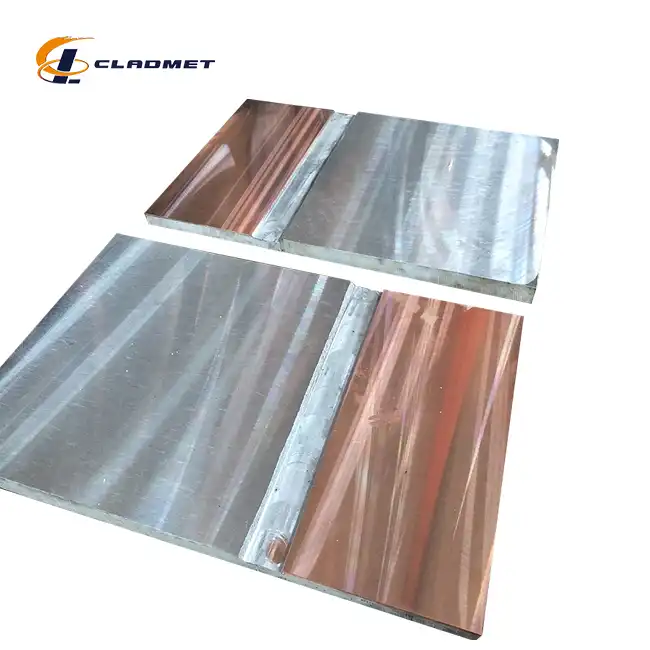
Explosive Welding of Titanium/Stainless Steel by Controlling Energetic Conditions






 2025-11-27 17:51:50
View:389
2025-11-27 17:51:50
View:389In today's demanding industrial landscape, engineers face the critical challenge of joining dissimilar metals like titanium and stainless steel without compromising their individual properties. Traditional welding methods often fail when attempting to bond these metallurgically incompatible materials, leading to weak joints, intermetallic formation, and costly project failures. The revolutionary solution lies in explosive welding technology, specifically through controlling energetic conditions to achieve superior Explosion Welding Titanium Clad Stainless Steel Plate bonds that meet the most stringent industrial requirements.
Understanding the Fundamentals of Explosion Welding Titanium Clad Stainless Steel Plate Technology
-
The Science Behind Controlled Energetic Conditions
Explosive welding technology operates by controlling the energy deposited at the welding interface through precise manipulation of stand-off distances between flyer and base plates. When producing Explosion Welding Titanium Clad Stainless Steel Plate, the energetic conditions must be carefully calibrated to ensure optimal bonding without excessive heat generation that could compromise material properties. The process involves accelerating one material component at extremely high velocity using controlled chemical explosives, creating a solid-state bond that maintains the integrity of both titanium and stainless steel substrates. This controlled approach ensures that the resulting composite plate exhibits superior mechanical properties while preserving the individual characteristics that make titanium and stainless steel valuable in their respective applications.
-
Critical Parameters in Energetic Control Systems
The successful production of high-quality Explosion Welding Titanium Clad Stainless Steel Plate depends on precise control of multiple energetic parameters including explosive load ratios, stand-off distances, and collision velocities. Research demonstrates that varying stand-off distances from 5mm to 15mm significantly impacts the interfacial bonding quality and mechanical properties of the final product. The explosive load ratio, typically ranging from 1.07 to 3.0, determines the kinetic energy transfer efficiency and influences the formation of the characteristic wavy interface morphology. Additionally, the collision angle and velocity must be optimized to achieve metallurgical bonding while preventing excessive heat generation that could lead to brittle intermetallic formation. These precisely controlled energetic conditions ensure that each Explosion Welding Titanium Clad Stainless Steel Plate meets the demanding requirements of modern industrial applications.
Advanced Manufacturing Techniques for Explosion Welding Titanium Clad Stainless Steel Plate Production
-
Explosive Bonding Process Optimization
The explosive bonding methodology represents the cornerstone of producing superior Explosion Welding Titanium Clad Stainless Steel Plate through meticulous control of energetic conditions. The process begins with comprehensive surface preparation of both titanium and stainless steel substrates, ensuring optimal cleanliness and surface roughness for enhanced bonding efficiency. Strategic placement of explosive materials between the layers requires precise calculations based on material thickness, desired bond strength, and specific application requirements. The detonation creates an intense, high-velocity collision that generates temperatures and pressures sufficient to achieve metallurgical bonding without melting the base materials. This controlled explosion results in a characteristic wavy interface that provides exceptional mechanical interlocking and ensures long-term durability of the Explosion Welding Titanium Clad Stainless Steel Plate under demanding service conditions.
-
Quality Control and Interface Characterization
Advanced interfacial analysis reveals that explosive welding creates a wavy morphology with isolated mixing zones where elemental titanium and iron interaction occurs, forming various intermetallic compounds including Fe2Ti and FeTi phases. Quality control protocols for Explosion Welding Titanium Clad Stainless Steel Plate production involve comprehensive microstructural examination using electron microscopy, nanoindentation testing, and mechanical property evaluation. The interface characterization confirms the formation of a metallurgically sound bond while identifying potential areas of concern such as brittle intermetallic formation. These rigorous testing procedures ensure that each batch of Explosion Welding Titanium Clad Stainless Steel Plate meets international standards including ASME, ASTM, and JIS specifications. The quality assurance process also includes non-destructive testing methods such as ultrasonic inspection and shear strength evaluation to guarantee the integrity of the explosive weld interface.
Industrial Applications and Performance Characteristics of Explosion Welding Titanium Clad Stainless Steel Plate
-
Chemical Processing and Marine Industries
The unique properties of Explosion Welding Titanium Clad Stainless Steel Plate make it an indispensable material for chemical processing equipment where corrosion resistance and mechanical strength are paramount. The titanium cladding provides exceptional resistance to aggressive chemicals, acids, and saltwater environments while the stainless steel substrate offers structural integrity and cost-effectiveness. This combination proves particularly valuable in manufacturing pressure vessels, heat exchangers, and reactor components for petrochemical facilities where traditional materials fail to provide adequate service life. Marine applications benefit from the superior corrosion resistance of titanium against seawater while maintaining the fabricability and strength characteristics of stainless steel. The controlled energetic conditions used in the explosive welding process ensure that these properties are preserved throughout the bonding procedure, resulting in composite plates that exceed performance expectations in harsh operating environments.
-
Aerospace and High-Temperature Applications
Aerospace industries demand materials that combine lightweight properties with exceptional strength-to-weight ratios, making Explosion Welding Titanium Clad Stainless Steel Plate an ideal solution for critical components. The precise control of energetic conditions during the explosive welding process ensures that the titanium layer maintains its superior high-temperature performance while the stainless steel base provides structural support and thermal conductivity. These composite plates find applications in aircraft engine components, exhaust systems, and heat shields where temperature cycling and mechanical stress require materials with exceptional durability. The explosive welding technology creates a bond that withstands thermal expansion differences between titanium and stainless steel, preventing delamination and ensuring long-term reliability. Research confirms that properly controlled energetic conditions result in Explosion Welding Titanium Clad Stainless Steel Plate with tensile strengths comparable to or exceeding those of the individual base materials.
Technical Specifications and Manufacturing Standards for Explosion Welding Titanium Clad Stainless Steel Plate
-
Material Grades and Thickness Variations
The production of high-quality Explosion Welding Titanium Clad Stainless Steel Plate involves careful selection of material grades to optimize performance characteristics for specific applications. Titanium grades including Grade 1, Grade 2, and Grade 5 are commonly used as cladding materials, each offering distinct properties in terms of corrosion resistance, mechanical strength, and workability. The stainless steel substrate typically consists of 304 or 316 grades, selected based on the intended service environment and corrosion requirements. Thickness combinations can be customized ranging from 1mm to 100mm total thickness, with cladding ratios optimized for specific applications. The controlled energetic conditions ensure uniform bonding across the entire thickness range, maintaining consistent quality regardless of the dimensional specifications. Manufacturing capabilities extend to plates up to 12,000mm in length and 3,000mm in width, accommodating large-scale industrial applications while maintaining the precision required for critical components.
-
International Standards and Certification Requirements
Explosion Welding Titanium Clad Stainless Steel Plate production adheres to stringent international standards including GB/GBT, ASME/ASTM, and JIS specifications to ensure global market acceptance and reliability. The manufacturing process incorporates ISO9001-2000 quality management systems with additional certifications including PED (Pressure Equipment Directive) and ABS (American Bureau of Shipping) qualifications achieved in 2024. These certifications validate the capability to produce composite plates that meet the demanding requirements of pressure vessel applications, marine installations, and aerospace components. The controlled energetic conditions used in the explosive welding process are documented and validated through comprehensive testing protocols that verify bond strength, corrosion resistance, and mechanical properties. Each batch of Explosion Welding Titanium Clad Stainless Steel Plate undergoes rigorous inspection procedures including ultrasonic testing, tensile testing, and metallographic examination to ensure compliance with applicable standards and customer specifications.
Economic Advantages and Cost-Effectiveness of Explosion Welding Titanium Clad Stainless Steel Plate
-
Material Cost Optimization Strategies
The utilization of Explosion Welding Titanium Clad Stainless Steel Plate provides significant economic advantages compared to solid titanium construction while maintaining essential performance characteristics. By applying a thin titanium cladding layer over a stainless steel substrate, manufacturers can achieve the corrosion resistance and biocompatibility of titanium at a fraction of the cost of solid titanium components. The controlled energetic conditions ensure maximum material utilization efficiency, minimizing waste and optimizing the cladding thickness for specific performance requirements. This approach allows for substantial cost savings in large-scale projects while maintaining the technical advantages that make titanium indispensable in demanding applications. The explosive welding process eliminates the need for expensive consumables and specialized atmospheres required by other bonding methods, further reducing overall production costs. Long-term economic benefits include extended service life, reduced maintenance requirements, and elimination of premature component failures that plague traditional materials in aggressive environments.
-
Lifecycle Cost Analysis and Return on Investment
The superior durability and performance characteristics of Explosion Welding Titanium Clad Stainless Steel Plate result in exceptional lifecycle cost advantages for industrial applications. While initial material costs may be higher than conventional alternatives, the extended service life, reduced maintenance requirements, and elimination of corrosion-related failures provide substantial return on investment over the component lifetime. The controlled energetic conditions used in the explosive welding process ensure bond integrity that withstands thermal cycling, mechanical stress, and chemical exposure without delamination or failure. This reliability translates to reduced downtime, lower replacement costs, and improved operational efficiency for critical industrial processes. Economic analysis demonstrates that Explosion Welding Titanium Clad Stainless Steel Plate can provide cost savings of 30-50% compared to solid titanium construction while delivering equivalent performance in most applications. The combination of material cost optimization and enhanced durability makes these composite plates an economically attractive solution for industries seeking to balance performance requirements with budget constraints.
Conclusion
Explosive welding of titanium and stainless steel through controlled energetic conditions represents a breakthrough technology that addresses the fundamental challenges of joining dissimilar metals while preserving their individual properties. This innovative approach produces superior composite plates that combine the corrosion resistance of titanium with the structural integrity and cost-effectiveness of stainless steel, creating ideal solutions for demanding industrial applications across chemical processing, marine, aerospace, and energy sectors.
Cooperate with Baoji JL Clad Metals Materials Co., Ltd.
Baoji JL Clad Metals Materials Co., Ltd. stands as a premier China Explosion Welding Titanium Clad Stainless Steel Plate manufacturer and China Explosion Welding Titanium Clad Stainless Steel Plate supplier, leveraging advanced explosive composite technology and international certifications including ISO9001-2000, PED, and ABS qualifications achieved in 2024. As a leading China Explosion Welding Titanium Clad Stainless Steel Plate factory, we specialize in producing high-quality composite materials for petroleum, chemical, pharmaceutical, and aerospace industries with customized solutions available through our comprehensive OEM services. Our China Explosion Welding Titanium Clad Stainless Steel Plate wholesale capabilities ensure reliable supply chains for global customers, while our High Quality Explosion Welding Titanium Clad Stainless Steel Plate products maintain competitive Explosion Welding Titanium Clad Stainless Steel Plate price points without compromising performance standards. Contact us at stephanie@cladmet.com for Explosion Welding Titanium Clad Stainless Steel Plate for sale inquiries and experience our commitment to technological innovation, quality excellence, and customer satisfaction that has established our reputation as a trusted partner in the global clad metals industry.
FAQ
Q: What are the key advantages of controlling energetic conditions in explosive welding of titanium and stainless steel?
A: Controlling energetic conditions ensures optimal bond strength, minimizes brittle intermetallic formation, and maintains the individual properties of both titanium and stainless steel materials.
Q: How does stand-off distance affect the quality of explosion welding titanium clad stainless steel plates?
A: Stand-off distance directly impacts collision velocity and energy transfer, with optimal distances (typically 5-15mm) ensuring proper metallurgical bonding without excessive heat generation.
Q: What quality control measures ensure reliable explosion welding titanium clad stainless steel plate production?
A: Comprehensive testing including ultrasonic inspection, tensile testing, metallographic examination, and nanoindentation testing validates bond integrity and mechanical properties.
Q: Which industries benefit most from explosion welding titanium clad stainless steel plates?
A: Chemical processing, marine, aerospace, and energy industries utilize these composite plates for their superior corrosion resistance, strength, and cost-effectiveness in demanding applications.
References
1. Manikandan, P., Hokamoto, K., Deribas, A.A., Raghukandan, K., Tomoshige, R. "Explosive Welding of Titanium/Stainless Steel by Controlling Energetic Conditions." Materials Transactions, 2006.
2. Yang, M., Ma, H., Shen, Z., Huang, Z., Tian, Q., Zhou, Q. "Mechanical Properties of Explosion-Welded Titanium/Duplex Stainless Steel under Different Energetic Conditions." Metals, 2022.
3. Zhang, N., Wang, W., Cao, X., Wu, J. "Interfacial Investigation of Explosion-Welded Titanium/Steel Bimetallic Plates." Journal of Materials Engineering and Performance, 2020.
4. Hokamoto, K., Nakata, K., Mori, A., Tsuda, S. "Control of Energetic Conditions by Employing Interlayer of Different Thickness for Explosive Welding of Titanium/304 Stainless Steel." Journal of Materials Processing Technology, 2007.