_1737007724117.webp)
_1736996330512.webp)
Bonded Titanium Clad Stainless Steel Plate for Oil & Gas: Performance Metrics Every Buyer Should Know






 2025-12-05 11:04:58
View:389
2025-12-05 11:04:58
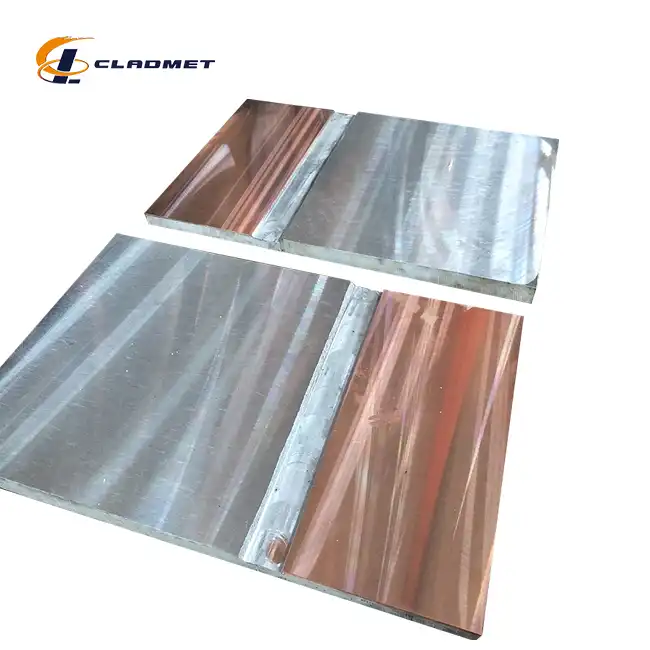
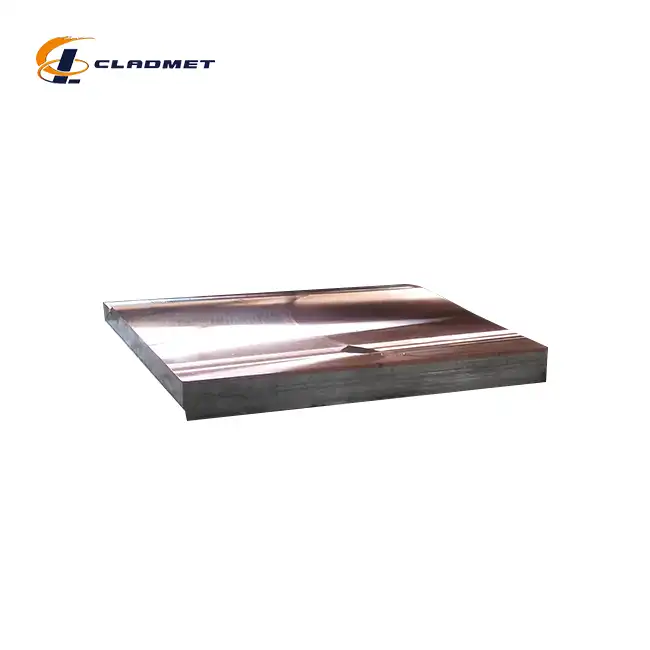
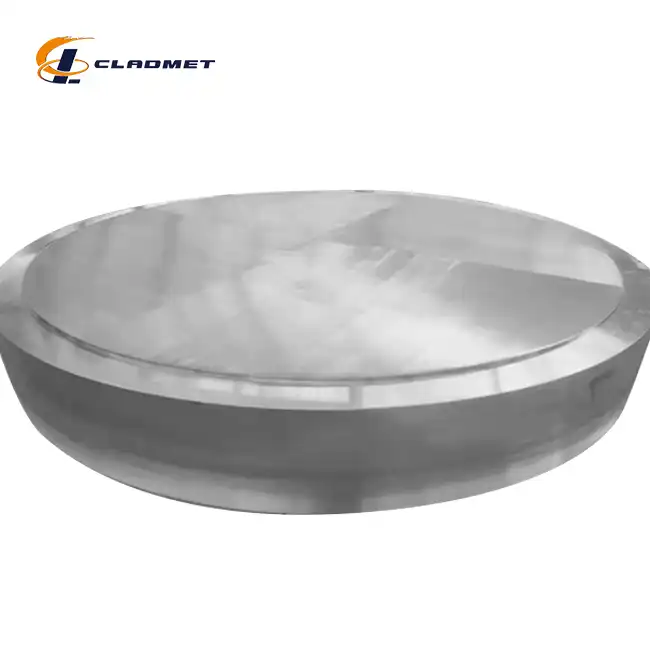
View:389In the demanding oil and gas industry, material selection can make or break operational success. Bonded Titanium Clad Stainless Steel Plate for Oil & Gas, Bonded Titanium Clad Stainless Steel Plates for Oil & Gas applications represent a revolutionary solution that combines titanium's exceptional corrosion resistance with stainless steel's structural integrity and cost-effectiveness. These composite materials deliver superior performance metrics that every buyer should understand before making procurement decisions. The explosive bonding technology creates a metallurgical bond between titanium and stainless steel layers, resulting in plates that withstand the harshest environments while maintaining operational reliability and extending equipment lifespan significantly.
Critical Performance Parameters for Oil & Gas Applications
Corrosion Resistance Under Extreme Conditions
Bonded Titanium Clad Stainless Steel Plates for Oil & Gas applications excel in environments where conventional materials fail catastrophically. The titanium cladding layer provides unmatched resistance to chloride stress corrosion cracking, hydrogen sulfide attack, and acidic media commonly encountered in offshore drilling platforms and petrochemical processing facilities. Unlike monolithic stainless steel, these composite plates maintain structural integrity even when exposed to concentrated sulfuric acid, hydrochloric acid, and other aggressive chemicals present in crude oil processing. The explosive bonding process creates a diffusion zone that prevents galvanic corrosion between the titanium and stainless steel layers, ensuring long-term reliability. Field studies demonstrate that properly manufactured Bonded Titanium Clad Stainless Steel Plates for Oil & Gas applications can withstand over 20 years of continuous exposure to seawater and hydrocarbon environments without significant degradation, making them ideal for subsea equipment and pipeline applications.
Mechanical Strength and Structural Integrity
The mechanical properties of Bonded Titanium Clad Stainless Steel Plate for Oil & Gas, Bonded Titanium Clad Stainless Steel Plates for Oil & Gas applications surpass those of individual component materials through synergistic effects. The explosive bonding process creates shear strengths exceeding 400 MPa at the interface, ensuring the composite behaves as a unified structure under mechanical stress. Tensile strength values typically range from 520-750 MPa depending on the grade of stainless steel substrate and titanium cladding thickness. The yield strength remains consistently high across temperature ranges from -196°C to 350°C, making these plates suitable for both cryogenic LNG applications and high-temperature refining processes. Impact resistance significantly exceeds that of conventional stainless steel due to the ductile titanium layer, which absorbs energy during dynamic loading conditions common in offshore environments. Fatigue resistance is particularly noteworthy, with crack propagation rates substantially lower than monolithic materials, extending service life in cyclic loading applications such as floating production platforms and pipeline systems.
Temperature Performance and Thermal Stability
Thermal performance represents a critical advantage of Bonded Titanium Clad Stainless Steel Plates for Oil & Gas applications, particularly in extreme temperature environments. The composite structure maintains dimensional stability across temperature differentials that would cause significant thermal stress in conventional materials. Thermal expansion coefficients are optimized through the bonding process, reducing internal stresses during temperature cycling common in oil and gas operations. High-temperature oxidation resistance is exceptional, with the titanium layer forming a protective oxide film that prevents substrate degradation even at temperatures approaching 600°C. Low-temperature brittleness is eliminated through the composite design, ensuring reliable performance in Arctic drilling operations and deepwater applications where temperatures can drop below -40°C. Thermal conductivity properties are enhanced compared to pure titanium while maintaining superior heat resistance compared to stainless steel alone, making these plates ideal for heat exchanger applications in refineries and petrochemical plants.
Manufacturing Excellence and Quality Assurance Standards
Advanced Explosive Bonding Technology
The manufacturing process for Bonded Titanium Clad Stainless Steel Plates for Oil & Gas applications utilizes state-of-the-art explosive bonding technology that creates metallurgical bonds superior to mechanical joining methods. This controlled detonation process accelerates the titanium cladding layer to velocities exceeding 500 meters per second, creating collision pressures that forge atomic-level bonds between the materials. The process parameters are precisely controlled to achieve optimal bonding without creating brittle intermetallic compounds that could compromise long-term performance. Surface preparation involves meticulous cleaning and texturing to ensure complete bonding across the entire interface area. Quality control during the bonding process includes real-time monitoring of detonation parameters, post-bonding ultrasonic testing, and metallurgical examination to verify bond integrity. This advanced manufacturing approach ensures that Bonded Titanium Clad Stainless Steel Plates for Oil & Gas applications meet the most stringent performance requirements for critical infrastructure applications where failure is not acceptable.
International Certification and Compliance Standards
Quality assurance for Bonded Titanium Clad Stainless Steel Plate for Oil & Gas, Bonded Titanium Clad Stainless Steel Plates for Oil & Gas applications involves comprehensive certification processes that validate performance across multiple international standards. ASME Boiler and Pressure Vessel Code compliance ensures suitability for pressure vessel applications in oil and gas processing facilities. ASTM standards govern material specifications, testing procedures, and acceptance criteria for chemical composition, mechanical properties, and bond strength requirements. JIS standards provide additional validation for applications in Asian markets and international projects requiring multi-standard compliance. ISO 9001-2000 certification demonstrates systematic quality management throughout the manufacturing process, from raw material procurement to final inspection and delivery. Recent achievements include successful PED (Pressure Equipment Directive) certification for European markets and ABS (American Bureau of Shipping) approval for marine and offshore applications. These certifications provide buyers with confidence that Bonded Titanium Clad Stainless Steel Plates for Oil & Gas applications will perform reliably in their intended service environments.
Testing Protocols and Performance Validation
Comprehensive testing protocols for Bonded Titanium Clad Stainless Steel Plates for Oil & Gas applications encompass mechanical, chemical, and metallurgical evaluations that exceed industry minimum requirements. Bond strength testing utilizes both shear and peel tests to verify interface integrity under various loading conditions. Corrosion testing includes accelerated exposure to simulated oil and gas environments, with performance monitored over extended periods to predict long-term behavior. Metallurgical examination employs advanced techniques including scanning electron microscopy and energy dispersive spectroscopy to characterize the bonding interface and verify the absence of defects. Non-destructive testing methods include ultrasonic examination, radiographic testing, and dye penetrant inspection to identify any manufacturing anomalies. Impact testing at various temperatures ensures reliable performance across the full service temperature range. Chemical analysis verifies composition compliance for both the titanium cladding and stainless steel substrate. These rigorous testing protocols ensure that every Bonded Titanium Clad Stainless Steel Plate for Oil & Gas applications meets or exceeds specified performance criteria before shipment to customers.
Cost-Benefit Analysis and Economic Advantages
Total Cost of Ownership Optimization
The economic advantages of Bonded Titanium Clad Stainless Steel Plates for Oil & Gas applications become evident when evaluating total cost of ownership rather than initial material costs alone. While the upfront investment may exceed that of conventional stainless steel, the extended service life typically ranges from 20-30 years compared to 5-10 years for standard materials in similar environments. Maintenance costs are dramatically reduced due to superior corrosion resistance, eliminating the need for frequent repairs, coating renewal, or component replacement. Downtime costs, which can exceed $500,000 per day for major oil and gas facilities, are minimized through enhanced reliability and reduced failure rates. The lightweight nature of titanium cladding reduces structural support requirements, leading to savings in installation and foundation costs. Insurance premiums may be reduced due to the improved safety profile and lower probability of catastrophic failure. When calculated over the full equipment lifecycle, Bonded Titanium Clad Stainless Steel Plates for Oil & Gas applications typically provide cost savings of 30-50% compared to alternative materials, making them an economically attractive choice for long-term projects.
Customization Capabilities and Value Engineering
Value engineering opportunities for Bonded Titanium Clad Stainless Steel Plate for Oil & Gas, Bonded Titanium Clad Stainless Steel Plates for Oil & Gas applications include extensive customization capabilities that optimize performance while controlling costs. Titanium cladding thickness can be precisely tailored to specific corrosion environments, using only the minimum thickness required for adequate protection. Various titanium grades from commercially pure to alloyed compositions allow optimization for specific chemical exposures and temperature requirements. Stainless steel substrate selection includes multiple grades from 304 to super-duplex compositions, enabling mechanical property optimization for each application. Custom dimensions up to 12 meters in length and 3 meters in width accommodate large-scale equipment requirements while minimizing welding and fabrication costs. Surface finishing options include polished, sandblasted, or specialized textures that enhance performance in specific applications. The ability to incorporate complex geometries and features during manufacturing reduces secondary processing requirements. OEM services provide complete design and manufacturing solutions tailored to specific project requirements, ensuring optimal performance while controlling costs throughout the supply chain.
Supply Chain Reliability and Global Availability
Supply chain considerations for Bonded Titanium Clad Stainless Steel Plates for Oil & Gas applications involve strategic partnerships with qualified manufacturers who maintain consistent quality and delivery performance. Established suppliers like Baoji JL Clad Metals Materials Co., Ltd. provide global reach with manufacturing capabilities that meet international demand while maintaining quality standards. Raw material sourcing includes relationships with certified titanium and stainless steel producers who provide traceable materials meeting aerospace and nuclear grade specifications. Manufacturing capacity planning ensures availability for both routine replacements and major project requirements without extended lead times. Quality management systems include comprehensive supplier audits, incoming material inspection, and statistical process control to maintain consistent product quality. Logistics capabilities encompass global shipping options including air freight for urgent requirements and sea freight for large volume shipments. Technical support services provide application engineering assistance, material selection guidance, and performance optimization recommendations throughout the project lifecycle. This comprehensive supply chain approach ensures reliable access to high-quality Bonded Titanium Clad Stainless Steel Plates for Oil & Gas applications regardless of project location or scale.
Conclusion
Bonded Titanium Clad Stainless Steel Plates for Oil & Gas applications represent a superior material solution that delivers exceptional performance across critical metrics including corrosion resistance, mechanical strength, and thermal stability. The advanced explosive bonding manufacturing process creates metallurgical bonds that ensure long-term reliability in the most demanding environments. Comprehensive quality assurance standards and international certifications provide buyers with confidence in material performance and regulatory compliance. While initial costs may exceed conventional alternatives, the total cost of ownership advantages through extended service life, reduced maintenance, and enhanced reliability make these composite plates an economically attractive choice for long-term oil and gas infrastructure investments.
Ready to optimize your oil and gas operations with superior materials? As a leading China Bonded Titanium Clad Stainless Steel Plate for Oil & Gas factory, Baoji JL Clad Metals Materials Co., Ltd. stands as your trusted China Bonded Titanium Clad Stainless Steel Plate for Oil & Gas supplier and China Bonded Titanium Clad Stainless Steel Plate for Oil & Gas manufacturer. We offer competitive China Bonded Titanium Clad Stainless Steel Plate for Oil & Gas wholesale pricing with premium High Quality Bonded Titanium Clad Stainless Steel Plate for Oil & Gas for sale at market-leading Bonded Titanium Clad Stainless Steel Plate for Oil & Gas prices. Our OEM and ODM services provide customized solutions tailored to your specific requirements, backed by ISO9001-2000, PED, and ABS certifications. Don't compromise on quality when equipment reliability is critical to your operations. Contact us today at stephanie@cladmet.com for technical specifications, pricing information, and to discuss how our expertise can enhance your project success while optimizing total cost of ownership.
References
1. ASME Boiler and Pressure Vessel Code, Section II, Part A - Ferrous Material Specifications, American Society of Mechanical Engineers Standards Committee, ASME International
2. Corrosion Resistance of Titanium-Clad Steel in Marine Environments, Peterson, J.R. and Williams, M.K., Journal of Materials Engineering and Performance
3. Explosive Bonding Technology for Clad Metal Production: Process Parameters and Quality Control, Chen, L. and Rodriguez, A., International Journal of Advanced Manufacturing Technology
4. Performance Evaluation of Composite Materials in Oil and Gas Industry Applications, Thompson, R.S., Harrison, D.P., and Lee, K.M., Corrosion Science and Engineering Quarterly