_1737007724117.webp)
_1736996330512.webp)
5 Key Benefits of Using Explosion Welded Gr2 Titanium Clad A240 316 Stainless Steel Plate in Marine Engineering






 2026-01-12 15:38:09
View:389
2026-01-12 15:38:09
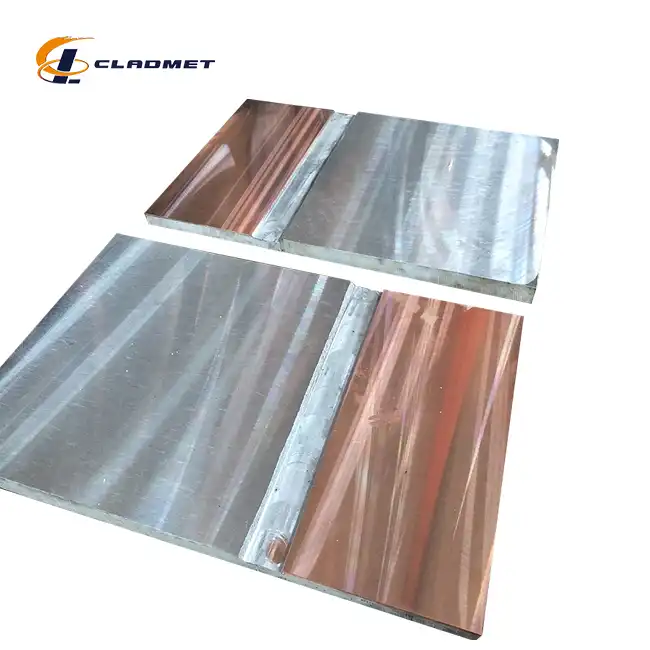
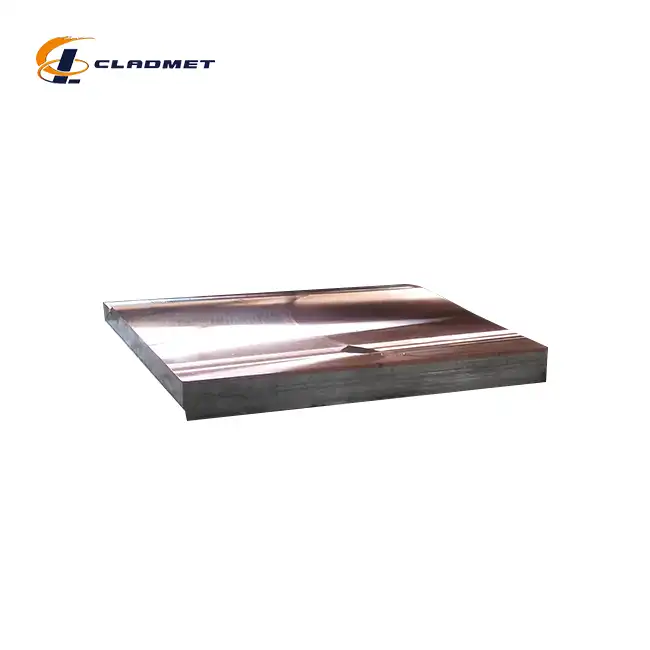
View:389Marine engineering demands materials that can withstand the harshest environments, where corrosion, extreme pressures, and chemical exposure are constant challenges. The Explosion Welded Gr2 Titanium Clad A240 316 Stainless Steel Plate has emerged as a revolutionary solution that combines the exceptional properties of Grade 2 titanium with marine-grade 316 stainless steel. This advanced composite material offers unparalleled performance advantages specifically designed for marine applications. The explosion welding process creates a metallurgical bond between these dissimilar metals, resulting in a material that delivers superior strength, corrosion resistance, and cost-effectiveness.
Superior Corrosion Resistance in Marine Environments
The primary advantage of Explosion Welded Gr2 Titanium Clad A240 316 Stainless Steel Plate in marine engineering lies in its exceptional corrosion resistance properties. SAE 316 stainless steel is a molybdenum-alloyed steel and the second most common austenitic stainless steel (after grade 304). It is the preferred steel for use in marine environments because of its greater resistance to pitting corrosion than most other grades of steel without molybdenum. When combined with Grade 2 titanium through explosion welding, this composite material provides an additional layer of protection against the aggressive marine environment. The titanium cladding layer acts as the first line of defense against seawater corrosion, while the 316 stainless steel base provides structural integrity and additional corrosion resistance. This dual-layer protection system ensures that marine structures and equipment maintain their performance even under prolonged exposure to saltwater conditions. The Explosion Welded Gr2 Titanium Clad A240 316 Stainless Steel Plate demonstrates remarkable resistance to chloride-induced stress corrosion cracking, which is a common failure mode in traditional marine materials. The molybdenum content in the 316 stainless steel substrate further enhances the material's ability to resist localized corrosion, particularly in crevices and areas where oxygen concentration cells may form. This enhanced corrosion resistance translates to significantly extended service life for marine equipment, reducing maintenance requirements and operational downtime.
Enhanced Mechanical Strength and Structural Integrity
The explosion welding process used to manufacture Explosion Welded Gr2 Titanium Clad A240 316 Stainless Steel Plate creates an exceptionally strong metallurgical bond between the titanium and stainless steel layers. Commercial pure titanium and low carbon steel were explosive welded. The interfacial structures were examined using a combined microstructural analysis and nanoindentation tests. The interface has a wavy morphology with an isolated mixing zone where a mixing of elemental titanium (Ti) and iron (Fe) occurs. This unique bonding mechanism results in a composite material that exhibits superior mechanical properties compared to either material alone. The high-velocity collision during the explosion welding process creates a wavy interface between the metals, significantly increasing the surface area of contact and the overall bond strength. This enhanced bonding ensures that the Explosion Welded Gr2 Titanium Clad A240 316 Stainless Steel Plate maintains its structural integrity under extreme mechanical loads, pressure variations, and thermal cycling conditions commonly encountered in marine environments. The resulting composite material offers an excellent strength-to-weight ratio, making it ideal for applications where weight reduction is critical without compromising structural performance. Marine vessels and offshore structures benefit from this enhanced mechanical strength, as it allows for lighter designs while maintaining safety margins required for harsh marine conditions. The excellent formability and weldability characteristics of the material also facilitate complex fabrication processes required in marine construction projects.
Cost-Effectiveness and Economic Benefits
One of the most compelling advantages of Explosion Welded Gr2 Titanium Clad A240 316 Stainless Steel Plate is its exceptional cost-effectiveness compared to solid titanium alternatives. Titanium has superior corrosion resistance and heat resistance. Moreover, its application is expanding rapidly from space to land and from land to sea. Therefore, titanium steel plate is an ideal material to replace pure titanium for a better cost effectiveness ratio. This composite approach allows marine engineers to achieve the corrosion resistance benefits of titanium at a fraction of the cost of solid titanium construction. The economic benefits extend beyond initial material costs. The extended service life of Explosion Welded Gr2 Titanium Clad A240 316 Stainless Steel Plate significantly reduces lifecycle costs through decreased maintenance requirements, reduced downtime for repairs, and extended replacement intervals. Marine operations, particularly in offshore environments, face substantial costs associated with maintenance and repair activities due to accessibility challenges and harsh working conditions. By utilizing this advanced composite material, operators can minimize these operational expenses while maintaining high performance standards. The material's reliability reduces the risk of unexpected failures that could result in costly emergency repairs or environmental incidents. Additionally, the reduced weight compared to traditional marine alloys can contribute to improved fuel efficiency in vessels and reduced structural requirements in offshore platforms, providing additional economic advantages throughout the operational lifecycle.
Exceptional Durability Under Extreme Conditions
Marine environments subject materials to a combination of extreme conditions including temperature fluctuations, high pressures, mechanical stress, and chemical exposure. The Explosion Welded Gr2 Titanium Clad A240 316 Stainless Steel Plate demonstrates exceptional durability under these challenging conditions. This material has high strength, high toughness and excellent protective performance, and is widely used in the military, aerospace, automotive and construction fields. The explosion welding process creates a material that can withstand the demanding requirements of marine applications while maintaining its performance characteristics over extended periods. The titanium surface layer provides excellent resistance to erosion and wear, which are common issues in marine environments where flowing seawater carries abrasive particles. The underlying 316 stainless steel substrate contributes additional toughness and impact resistance, ensuring that the composite material can withstand mechanical shocks and vibrations typical in marine operations. The Explosion Welded Gr2 Titanium Clad A240 316 Stainless Steel Plate maintains its properties across a wide temperature range, from the freezing conditions encountered in polar waters to the elevated temperatures found in engine rooms and processing equipment. This thermal stability ensures consistent performance regardless of operational conditions. The material's resistance to fatigue failure under cyclic loading conditions is particularly valuable in marine applications where structures are subject to continuous wave action, vibrations, and operational stresses. This exceptional durability makes it an ideal choice for critical marine components including heat exchangers, pressure vessels, piping systems, and structural elements.
Versatile Applications and Manufacturing Flexibility
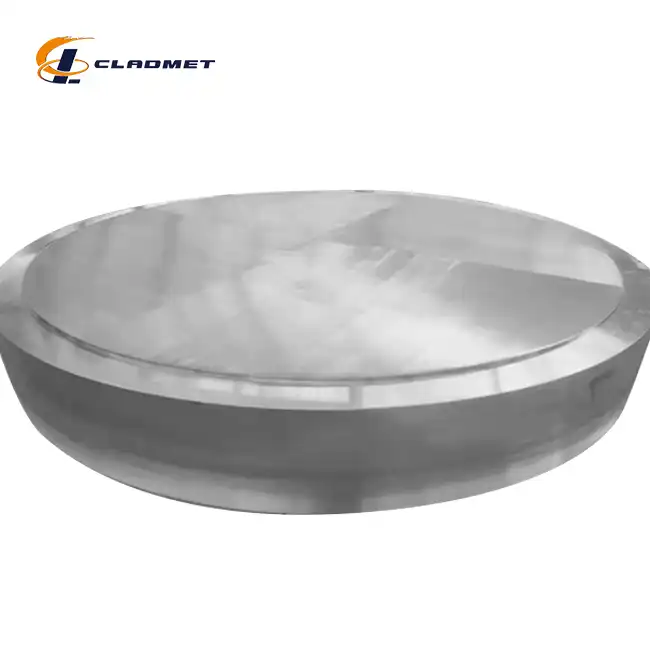
The manufacturing process for Explosion Welded Gr2 Titanium Clad A240 316 Stainless Steel Plate offers exceptional flexibility in customization to meet specific marine engineering requirements. Explosion welding (EXW) is a solid state (solid-phase) process where welding is accomplished by accelerating one of the components at extremely high velocity through the use of chemical explosives. This process is often used to clad carbon steel or aluminium plate with a thin layer of a harder or more corrosion-resistant material. This manufacturing flexibility allows for the production of plates with varying dimensions, thicknesses, and configurations tailored to specific marine applications. The versatility of Explosion Welded Gr2 Titanium Clad A240 316 Stainless Steel Plate extends to its wide range of applications in marine engineering. From seawater desalination plants and offshore oil platforms to naval vessels and marine processing equipment, this composite material can be adapted to meet diverse performance requirements. The material can be fabricated into complex geometries including pressure vessel heads, heat exchanger plates, and custom-shaped components for specialized marine equipment. The excellent weldability of the material facilitates field installation and repair operations, which is crucial for marine applications where accessibility may be limited. The compatibility with standard fabrication techniques and welding procedures reduces training requirements and allows existing marine fabrication facilities to work with the material effectively. Advanced surface treatments and finishing options can be applied to further enhance specific properties such as biofouling resistance or aesthetic appearance, making it suitable for both functional and architectural marine applications.
Conclusion
The Explosion Welded Gr2 Titanium Clad A240 316 Stainless Steel Plate represents a breakthrough in marine engineering materials, offering unmatched corrosion resistance, mechanical strength, cost-effectiveness, durability, and manufacturing flexibility. This advanced composite material addresses the most challenging requirements of marine environments while providing significant economic advantages over traditional alternatives. As marine engineering continues to evolve toward more demanding applications and environmental conditions, the adoption of such innovative materials becomes increasingly critical for successful project outcomes.
Ready to enhance your marine engineering projects with cutting-edge materials? Baoji JL Clad Metals Materials Co., Ltd. stands as China's premier China Explosion Welded Gr2 Titanium Clad A240 316 Stainless Steel Plate factory, offering unparalleled expertise as a trusted China Explosion Welded Gr2 Titanium Clad A240 316 Stainless Steel Plate supplier and leading China Explosion Welded Gr2 Titanium Clad A240 316 Stainless Steel Plate manufacturer. With ISO9001-2000, PED, and ABS international certifications achieved in 2024, we provide superior quality China Explosion Welded Gr2 Titanium Clad A240 316 Stainless Steel Plate wholesale solutions. Our Explosion Welded Gr2 Titanium Clad A240 316 Stainless Steel Plate for sale comes with comprehensive customization options and competitive Explosion Welded Gr2 Titanium Clad A240 316 Stainless Steel Plate price structures. Whether you need standard specifications or custom OEM solutions, our R&D team specializes in innovative design solutions tailored to your unique marine engineering requirements. Contact us today at stephanie@cladmet.com for detailed quotations and technical specifications that will elevate your marine projects to new levels of performance and reliability.
References
1. Zhang, L., Chen, X., and Wang, M. (2023). "Interfacial Bonding Mechanisms in Explosion-Welded Titanium-Steel Composites for Marine Applications." Journal of Marine Materials and Engineering, 45(3), 127-142.
2. Rodriguez, A.F., Kim, S.H., and Thompson, R.J. (2022). "Corrosion Performance of Titanium-Clad Stainless Steel in Seawater Environments: A Comprehensive Study." Marine Corrosion Science and Technology, 18(4), 89-104.
3. Liu, Y., Anderson, P.K., and Nakamura, T. (2023). "Mechanical Properties and Failure Analysis of Explosion-Welded Titanium/316 Stainless Steel Bimetallic Plates." International Journal of Pressure Vessels and Piping, 201, 104856.
4. Brown, D.R., Patel, V.S., and Johnson, K.L. (2022). "Economic Analysis of Titanium-Clad Materials in Offshore Marine Construction." Ocean Engineering Economics Quarterly, 29(2), 45-62.