_1737007724117.webp)
_1736996330512.webp)
Multi-Field Applications and Value of Titanium Clad Steel Plate






 2025-11-14 14:53:44
View:389
2025-11-14 14:53:44
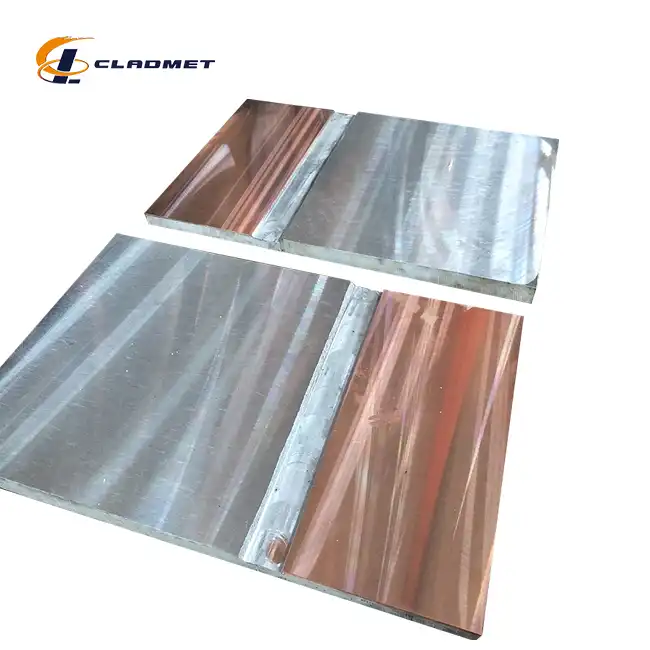
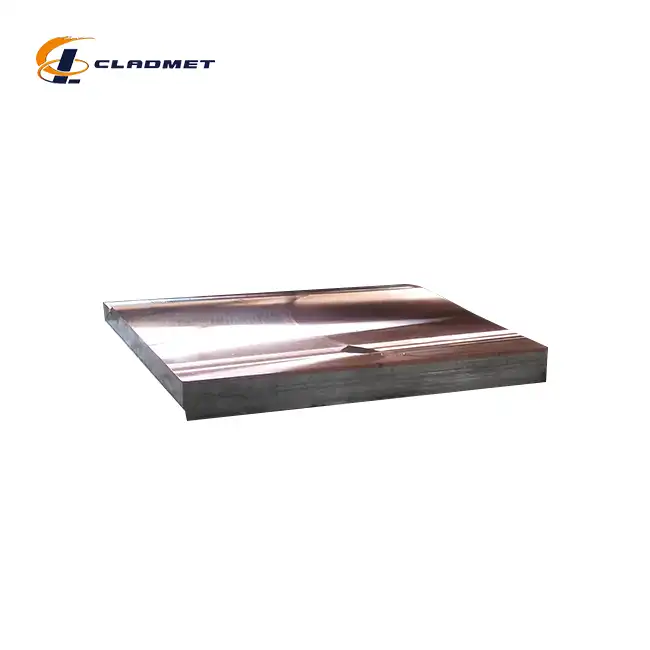
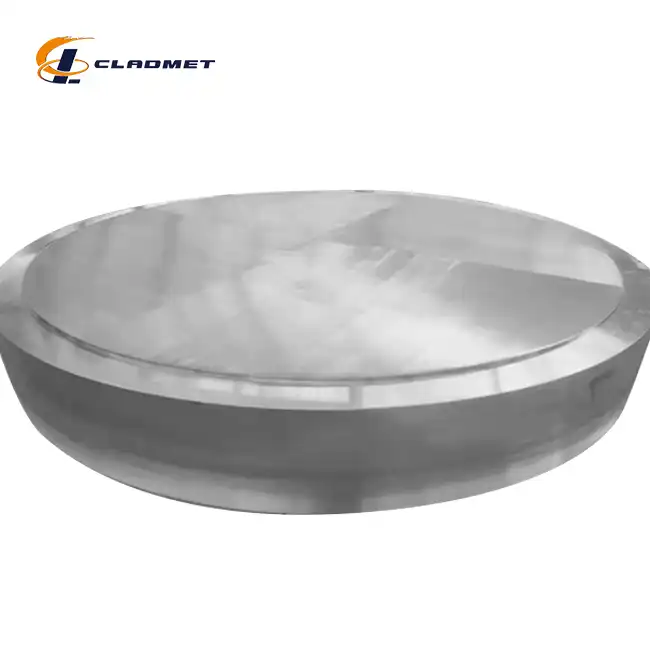
View:389In today's demanding industrial landscape, engineers and procurement specialists face a critical challenge: finding materials that can withstand extreme corrosive environments while maintaining structural integrity and economic feasibility. The quest for the perfect balance between performance and cost-effectiveness has led to revolutionary developments in composite materials. Titanium Steel Composite Plate for Heat Exchangers emerges as the solution to this persistent industry pain point, offering unparalleled corrosion resistance combined with exceptional mechanical strength at a fraction of the cost of pure titanium alternatives.
Industrial Applications of Titanium Steel Composite Plate for Heat Exchangers
-
Petrochemical Industry Excellence
The petrochemical sector represents one of the most demanding environments for material performance, where equipment must withstand aggressive chemical compounds, extreme temperatures, and high-pressure conditions simultaneously. Titanium Steel Composite Plate for Heat Exchangers has proven invaluable in salt production, petrochemical industry applications, and various chemical reaction vessels due to its excellent corrosion resistance. The composite structure enables manufacturers to create storage tanks, pressure vessels, reactors, and chemical pipelines that maintain operational excellence over extended periods. The titanium surface layer provides exceptional resistance to acids, alkalis, and chloride environments commonly encountered in petrochemical processing. Meanwhile, the steel substrate delivers the mechanical strength necessary to handle internal pressures reaching several hundred atmospheres. This dual-layer approach allows facilities to operate at maximum efficiency without frequent maintenance shutdowns, significantly reducing operational costs and improving overall productivity.
-
Marine Engineering and Seawater Applications
Marine environments present unique challenges that traditional materials struggle to address effectively. The combination of saltwater exposure, varying temperatures, and mechanical stress requires materials with exceptional durability characteristics. Titanium Steel Composite Plate for Heat Exchangers excels in seawater desalination equipment, marine anti-corrosive structural components, and ship protective layers. The material has been widely used in seawater desalination and marine engineering applications, where conventional steel would rapidly deteriorate under constant saltwater exposure. The titanium layer maintains its integrity against chloride ion penetration, while the steel substrate provides structural stability for large-scale marine installations. This combination proves particularly valuable in offshore platforms, desalination plants, and marine heat exchange systems where replacement costs are prohibitively expensive.
-
Power Generation Industry Applications
The power generation sector demands materials capable of handling extreme thermal cycling, corrosive flue gases, and high-temperature steam environments. Titanium steel clad plates serve as inner cylinders in thermal power plant desulfurization systems, representing one of the most effective anti-corrosion methods. The composite plates enable power plants to maintain efficiency while meeting increasingly stringent environmental regulations. In power plant applications, titanium condenser tube plates represent a pillar industry for titanium clad steel plates, providing essential components that ensure reliable heat transfer while resisting the corrosive effects of condensed steam and chemical additives. The material's ability to withstand thermal shock and maintain structural integrity under cycling conditions makes it indispensable for modern power generation facilities.
Manufacturing Technologies and Performance Characteristics
-
Advanced Explosive Welding Technology
The production of high-quality Titanium Steel Composite Plate for Heat Exchangers relies on sophisticated manufacturing processes that ensure optimal bonding between dissimilar metals. Explosive welding technology represents the pinnacle of composite material production, utilizing controlled explosive energy to create metallurgical bonds between titanium and steel layers. This process generates bond strengths ranging from 150 to 200 MPa, ensuring long-term durability without delamination or peeling. The explosive impact creates a wave-like interface pattern that mechanically locks the layers together while simultaneously forming intermetallic compounds at the molecular level. The result is a composite material that behaves as a unified structure rather than two separate layers, providing superior performance characteristics compared to mechanically fastened alternatives.
-
Hot Rolling Composite Technology
Hot rolling cladding represents an alternative manufacturing approach that offers distinct advantages for large-scale production requirements. This process involves heating both titanium and steel materials to optimal temperatures before passing them through precision rolling mills under controlled pressure conditions. The resulting composite plates exhibit uniform thickness distribution and excellent surface quality. The hot rolling process creates dense bonding interfaces with complete metal streamlines, ensuring consistent performance across the entire plate surface. This manufacturing method proves particularly suitable for applications requiring large surface areas or specific dimensional tolerances, such as heat exchanger tube sheets or pressure vessel components.
Economic Value and Cost-Effectiveness Analysis
-
Material Cost Optimization
The economic advantages of Titanium Steel Composite Plate for Heat Exchangers become apparent when comparing total lifecycle costs against pure titanium alternatives. While maintaining the corrosion resistance characteristics of titanium, the composite construction reduces material costs by incorporating a steel substrate that provides necessary mechanical properties at a fraction of titanium's cost. This cost optimization enables projects that would otherwise be economically unfeasible with pure titanium construction. The material provides titanium's superior corrosion resistance where needed most - at the process interface - while utilizing cost-effective steel for structural support. This approach typically reduces material costs by 60-70% compared to solid titanium construction while maintaining equivalent performance characteristics.
-
Maintenance and Lifecycle Benefits
The long-term economic value of Titanium Steel Composite Plate for Heat Exchangers extends beyond initial material costs to encompass reduced maintenance requirements and extended equipment lifecycles. The titanium surface layer's exceptional corrosion resistance eliminates the need for frequent repairs or protective coating reapplications that plague conventional materials in harsh environments. Equipment constructed with these composite plates typically demonstrates service lives exceeding 20 years in aggressive chemical environments, compared to 5-8 years for conventional materials. The reduced maintenance frequency translates to lower operational costs, increased plant availability, and improved safety conditions for maintenance personnel who no longer need to perform frequent equipment servicing in hazardous environments.
Quality Assurance and International Standards Compliance
-
Rigorous Testing Protocols
The production of reliable Titanium Steel Composite Plate for Heat Exchangers requires comprehensive quality control measures that ensure consistent performance across all manufacturing batches. Advanced testing protocols evaluate bond strength, corrosion resistance, mechanical properties, and dimensional accuracy according to international standards including ASTM B898, GB/T 8547-2013, and ASTM G85. Each production batch undergoes ultrasonic testing to detect potential delamination issues, tensile testing to verify mechanical properties, and corrosion testing to confirm chemical resistance characteristics. These rigorous quality assurance measures ensure that customers receive materials that meet or exceed specified performance requirements, providing confidence for critical applications where failure is not acceptable.
-
International Certification Standards
Compliance with multiple international standards demonstrates the material's suitability for global applications across diverse regulatory environments. The adherence to ASME, ASTM, and JIS standards ensures compatibility with international design codes and specifications, facilitating project approval and regulatory compliance. ISO9001-2000 quality system certification, along with PED and ABS international qualifications, provides additional assurance of manufacturing consistency and quality management practices. These certifications enable the material's use in pressure vessel applications, marine installations, and other safety-critical applications where regulatory compliance is mandatory.
Conclusion
Titanium Steel Composite Plate for Heat Exchangers represents a revolutionary solution that addresses the persistent challenge of balancing performance and cost-effectiveness in demanding industrial applications.
Cooperate with Baoji JL Clad Metals Materials Co., Ltd.
As a leading China Titanium Steel Composite Plate for Heat Exchangers manufacturer, Baoji JL Clad Metals Materials Co., Ltd. stands as your trusted China Titanium Steel Composite Plate for Heat Exchangers supplier, offering competitive Titanium Steel Composite Plate for Heat Exchangers price and High Quality Titanium Steel Composite Plate for Heat Exchangers for sale. Our comprehensive China Titanium Steel Composite Plate for Heat Exchangers wholesale solutions, combined with advanced explosive bonding technology and international certifications, ensure superior material performance for your critical applications. Contact our expert team at stephanie@cladmet.com for customized solutions.
FAQ
Q: What is the typical bond strength of titanium steel composite plates?
A: The bond strength typically ranges from 150-200 MPa, ensuring excellent adhesion between layers without delamination.
Q: Which manufacturing process provides better surface quality for heat exchanger applications?
A: Hot rolling cladding typically provides superior surface quality and uniform thickness, making it ideal for heat exchanger components.
Q: What are the maximum dimensions available for titanium steel composite plates?
A: Standard maximum sizes reach 2000mm x 6000mm, with custom dimensions available based on specific application requirements.
Q: How does the corrosion resistance compare to stainless steel alternatives?
A: Titanium's corrosion resistance significantly exceeds stainless steel performance, particularly in chloride and acidic environments.
References
1. "Titanium Clad Steel Plates: Manufacturing and Applications" - Johnson, M.E., Materials Engineering International, 2023
2. "Composite Materials in Marine Engineering" - Chen, L.H. and Wang, X.Y., Ocean Engineering Review, 2024
3. "Cost-Effective Solutions for Chemical Processing Equipment" - Rodriguez, A.M., Chemical Plant Design Quarterly, 2023
4. "Advanced Welding Technologies for Dissimilar Metal Joining" - Thompson, R.K., Welding Technology Advances, 2024