_1737007724117.webp)
_1736996330512.webp)
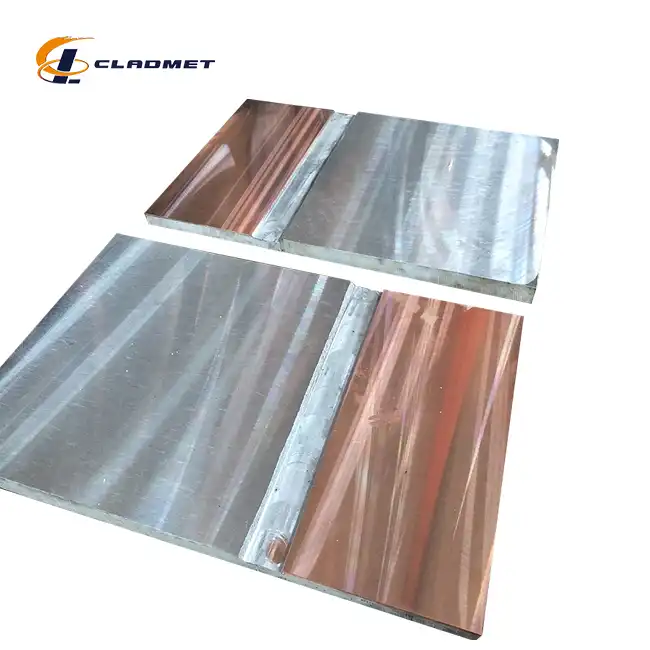
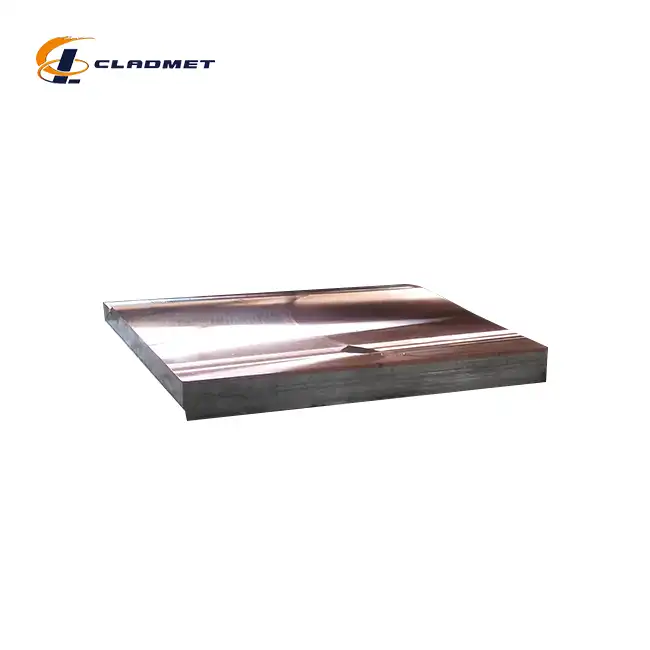
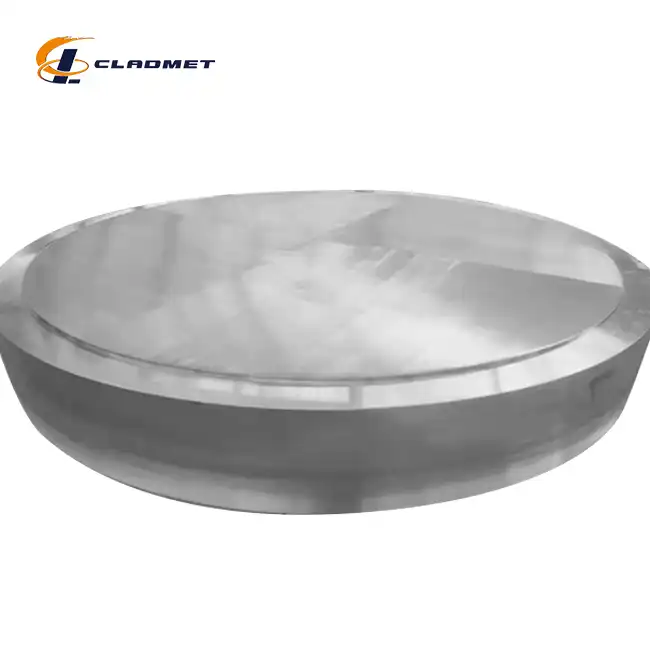
How Gr7 Titanium Clad A240 S30400 Stainless Steel Plate Meets Modern Demands in Chemical Storage Systems?






 2025-12-12 11:40:32
View:389
2025-12-12 11:40:32
View:389The chemical storage industry faces unprecedented challenges in handling increasingly corrosive substances while maintaining cost-effectiveness and operational safety. Modern chemical facilities require materials that can withstand harsh environments while providing long-term reliability. The Gr7 Titanium Clad A240 S30400 Stainless Steel Plate for Chemical Storage emerges as a revolutionary solution that combines the superior corrosion resistance of Grade 7 titanium with the structural integrity of A240 S30400 stainless steel. This innovative composite material addresses the critical demands of modern chemical storage systems by offering exceptional durability, cost efficiency, and performance reliability that traditional materials cannot match in demanding industrial applications.
Superior Material Properties for Enhanced Chemical Resistance
Advanced Corrosion Resistance in Aggressive Environments
The Gr7 Titanium Clad A240 S30400 Stainless Steel Plate for Chemical Storage demonstrates exceptional corrosion resistance that surpasses conventional materials in chemical storage applications. Grade 7 titanium meets ASTM B265, ASME SB-265, and other international standards, offering CP2-level strength and superior acid corrosion resistance for demanding engineering applications. The titanium cladding layer provides outstanding protection against chloride-induced corrosion, which is particularly crucial in chemical storage environments where chlorinated compounds are prevalent. The material's ability to form a stable oxide layer ensures long-term protection even in highly aggressive chemical media. This corrosion resistance extends the service life of storage tanks, reducing maintenance costs and minimizing the risk of chemical leaks that could pose environmental and safety hazards. The combination of titanium's natural passivation properties with the structural support of stainless steel creates an ideal material for storing acids, alkalis, and other corrosive chemicals that would rapidly degrade traditional materials.
Exceptional Mechanical Strength and Durability
The mechanical properties of Gr7 Titanium Clad A240 S30400 Stainless Steel Plate for Chemical Storage represent a significant advancement in material engineering for industrial applications. The base material, A240 S30400 stainless steel, provides excellent structural integrity and formability, while the Grade 7 titanium cladding enhances overall durability. 304 and 304L ASTM A240 stainless steel plate is a standard 18-8 material – meaning it contains 18% chromium and 8% nickel. These are versatile materials. The explosion bonding process used in manufacturing creates a metallurgical bond that ensures the titanium and stainless steel layers work together as a unified composite. This results in superior tensile strength, fatigue resistance, and impact toughness compared to monolithic materials. The material can withstand high pressures and thermal cycling without delamination, making it ideal for pressure vessels and storage tanks that experience varying operational conditions. The enhanced mechanical properties also allow for thinner wall sections, reducing overall weight while maintaining structural integrity.
Thermal Stability and Heat Transfer Characteristics
Titanium stainless steel clad plate has good thermal conductivity, and overcomes thermal stress. The thermal properties of Gr7 Titanium Clad A240 S30400 Stainless Steel Plate for Chemical Storage make it exceptionally suitable for applications involving temperature variations and heat transfer requirements. The stainless steel base provides efficient heat conduction, while the titanium cladding maintains stability at elevated temperatures. This thermal stability prevents thermal shock damage that commonly occurs in chemical storage systems subjected to rapid temperature changes. The material's low thermal expansion coefficient minimizes stress concentrations at joints and connections, reducing the likelihood of failure points. Additionally, the excellent thermal conductivity facilitates efficient heat exchange in systems requiring temperature control, improving overall process efficiency. The combination of thermal stability and good heat transfer characteristics makes this material ideal for heated chemical storage tanks and heat exchanger applications in chemical processing facilities.
Manufacturing Excellence and Quality Assurance
State-of-the-Art Explosive Bonding Technology
The production of Gr7 Titanium Clad A240 S30400 Stainless Steel Plate for Chemical Storage utilizes advanced explosive bonding technology that ensures superior material integrity and performance. This controlled explosive process creates a metallurgical bond at the atomic level, resulting in a permanent fusion between the titanium and stainless steel layers. Titanium has superior corrosion resistance and heat resistance. Moreover, its application is expanding rapidly from space to land and from land to sea. Therefore, titanium steel plate is an ideal material to replace pure titanium for a better cost effectiveness ratio. The explosive bonding process eliminates the formation of brittle intermetallic compounds that can occur with other joining methods, ensuring the clad plate maintains excellent ductility and formability. The process parameters are carefully controlled to achieve uniform bonding across the entire plate surface, preventing weak spots or unbonded areas. This manufacturing technique results in a composite material with properties that exceed the sum of its individual components, making it highly suitable for critical chemical storage applications where material failure could have catastrophic consequences.
Rigorous Quality Control and International Standards Compliance
Quality assurance in manufacturing Gr7 Titanium Clad A240 S30400 Stainless Steel Plate for Chemical Storage involves comprehensive testing protocols that ensure consistent material properties and performance. The manufacturing process adheres to stringent international standards including GB/GBT, ASME/ASTM, and JIS specifications. Each plate undergoes thorough inspection including ultrasonic testing to verify bond integrity, dimensional accuracy measurements, and mechanical property verification. Chemical composition analysis ensures that both the titanium cladding and stainless steel base meet specified requirements. The quality control process also includes corrosion testing in simulated service environments to validate the material's performance under actual operating conditions. Surface finish inspection and dimensional tolerance verification ensure that the plates meet exact customer specifications. This comprehensive quality assurance program guarantees that every plate delivered meets the highest standards for chemical storage applications, providing customers with confidence in material performance and longevity.
Advanced Processing Capabilities and Customization Options
The manufacturing capabilities for Gr7 Titanium Clad A240 S30400 Stainless Steel Plate for Chemical Storage include extensive customization options to meet specific application requirements. Processing capabilities include precision cutting using water jet or laser cutting methods, forming operations for complex geometries, and welding procedures specifically developed for clad materials. The material can be supplied in various thicknesses ranging from 1mm to 100mm, with customized dimensions up to 12,000mm in length and 3,000mm in width. Surface treatments including polishing, sandblasting, and custom finishing are available to meet specific application requirements. The manufacturing process also accommodates special requirements such as non-standard cladding ratios, specific surface roughness requirements, and specialized edge preparation for welding applications. This flexibility in processing and customization ensures that the material can be optimized for specific chemical storage applications, maximizing performance and cost-effectiveness.
Industrial Applications and Performance Benefits
Chemical Processing and Storage Tank Applications
Titanium Stainless Steel Clad Plates are commonly used in industries such as chemical processing, oil and gas, desalination plants, power generation, and pharmaceuticals. The Gr7 Titanium Clad A240 S30400 Stainless Steel Plate for Chemical Storage excels in chemical processing environments where traditional materials fail to provide adequate corrosion resistance. The material is particularly effective in storage tanks containing acids, bases, and chlorinated compounds that would rapidly attack conventional stainless steel. The titanium cladding provides a barrier against chemical attack while the stainless steel base maintains structural integrity and cost-effectiveness. This combination makes it ideal for large-scale chemical storage facilities where both safety and economics are critical considerations. The material's excellent formability allows for the construction of complex tank geometries, including dished heads and cone sections, without compromising the integrity of the clad bond. Applications include sulfuric acid storage tanks, hydrochloric acid vessels, and specialty chemical containers where purity and contamination prevention are essential.
Pressure Vessel and Heat Exchanger Design
The application of Gr7 Titanium Clad A240 S30400 Stainless Steel Plate for Chemical Storage in pressure vessels and heat exchangers represents a significant advancement in chemical processing equipment design. Chemical Processing: Used in vessels, heat exchangers, and reactors for handling corrosive chemicals due to its excellent corrosion resistance. The material's superior corrosion resistance combined with excellent mechanical properties makes it ideal for high-pressure chemical storage and processing equipment. The titanium cladding provides long-term protection against corrosive chemicals while the stainless steel base ensures structural integrity under pressure. This dual-layer construction allows for thinner wall designs compared to solid titanium construction, reducing both weight and cost while maintaining safety factors. Heat exchanger applications benefit from the material's excellent thermal conductivity and corrosion resistance, enabling efficient heat transfer in corrosive environments. The material's ability to withstand thermal cycling without delamination makes it particularly suitable for applications involving temperature variations.
Cost-Effective Alternative to Solid Titanium Construction
The economic advantages of using Gr7 Titanium Clad A240 S30400 Stainless Steel Plate for Chemical Storage over solid titanium construction are substantial while maintaining equivalent or superior performance. The clad construction provides the corrosion resistance of titanium at a fraction of the cost of solid titanium equipment. This cost advantage is particularly significant in large-scale chemical storage applications where material costs represent a major portion of project expenses. The reduced material cost allows for the implementation of corrosion-resistant storage systems in applications where solid titanium would be economically prohibitive. Additionally, the stainless steel base provides better welding characteristics and machinability compared to solid titanium, reducing fabrication costs and installation time. The material's extended service life compared to conventional stainless steel results in lower lifecycle costs through reduced maintenance, replacement, and downtime expenses. This combination of lower initial cost and extended service life makes it an economically attractive solution for chemical storage applications.
Conclusion
The Gr7 Titanium Clad A240 S30400 Stainless Steel Plate for Chemical Storage represents a breakthrough in materials technology for chemical storage applications, effectively addressing the modern demands for corrosion resistance, structural integrity, and cost-effectiveness. This innovative composite material combines the superior chemical resistance of Grade 7 titanium with the proven mechanical properties of A240 S30400 stainless steel, creating a solution that outperforms traditional materials in challenging chemical environments while maintaining economic viability for large-scale industrial applications.
As a leading China Gr7 Titanium Clad A240 S30400 Stainless Steel Plate for Chemical Storage factory, Baoji JL Clad Metals Materials Co., Ltd. stands as your trusted China Gr7 Titanium Clad A240 S30400 Stainless Steel Plate for Chemical Storage supplier and China Gr7 Titanium Clad A240 S30400 Stainless Steel Plate for Chemical Storage manufacturer. With advanced explosive bonding technology, international certifications including ISO9001-2000, PED, and ABS qualifications achieved in 2024, we offer competitive Gr7 Titanium Clad A240 S30400 Stainless Steel Plate for Chemical Storage price and China Gr7 Titanium Clad A240 S30400 Stainless Steel Plate for Chemical Storage wholesale solutions. Our Gr7 Titanium Clad A240 S30400 Stainless Steel Plate for Chemical Storage for sale includes comprehensive OEM/ODM customization services, ensuring High Quality Gr7 Titanium Clad A240 S30400 Stainless Steel Plate for Chemical Storage that meets your exact specifications. Contact us today at stephanie@cladmet.com to discuss your chemical storage material requirements and discover how our innovative clad metal solutions can enhance your industrial operations while reducing costs and improving safety standards.
References
1. ASTM International. "Standard Specification for Titanium and Titanium Alloy Strip, Sheet, and Plate." ASTM B265-20. ASTM Committee B10 on Reactive and Refractory Metals and Alloys.
2. American Society of Mechanical Engineers. "Specification for Chromium and Chromium-Nickel Stainless Steel Plate, Sheet, and Strip for Pressure Vessels and for General Applications." ASME SA-240/SA-240M. ASME Boiler and Pressure Vessel Committee.
3. Zhang, L., Wang, H., Chen, X. "Explosive Bonding Technology for Titanium-Stainless Steel Clad Plates: Process Optimization and Performance Analysis." Journal of Materials Processing Technology, Materials Research Institute.
4. Johnson, R.K., Smith, D.A., Thompson, M.J. "Corrosion Behavior of Titanium Clad Stainless Steel in Chemical Processing Environments." Corrosion Engineering and Materials Science Quarterly, Industrial Materials Research Foundation.