_1737007724117.webp)
_1736996330512.webp)
How Gr7 Titanium Clad A240 S30400 Stainless Steel Plate Extends the Life of Chemical Storage Equipment?






 2025-12-12 11:40:38
View:389
2025-12-12 11:40:38
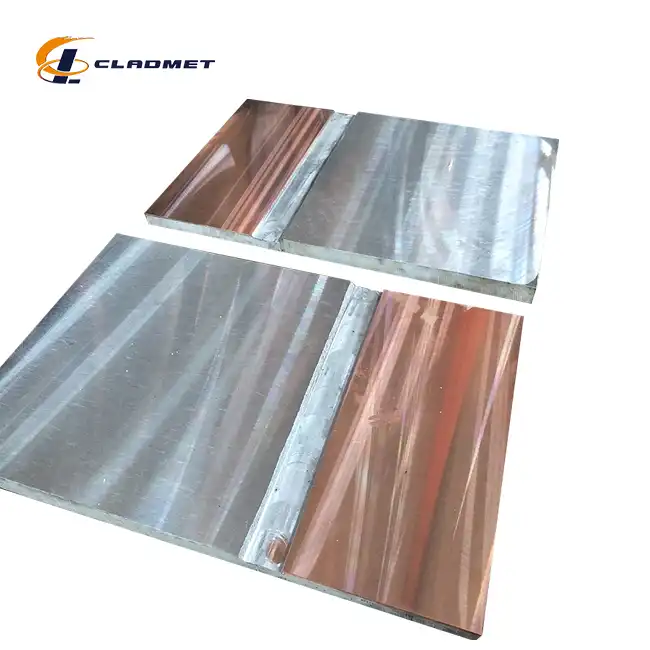
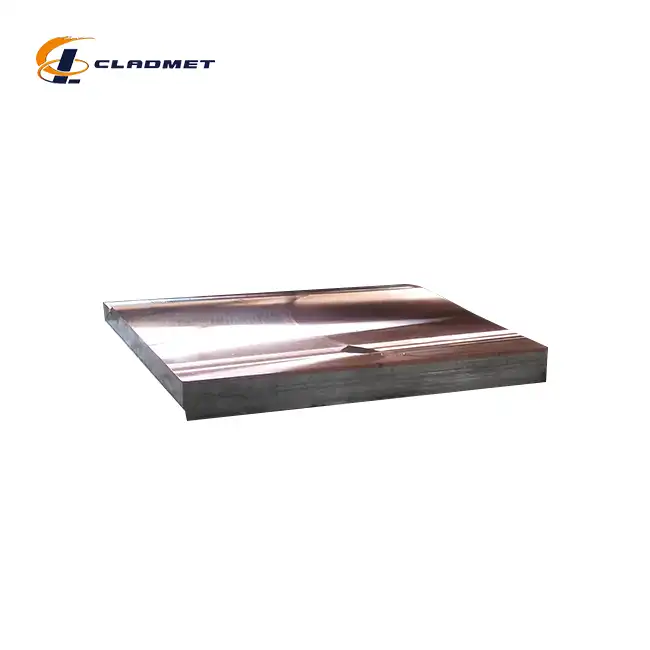
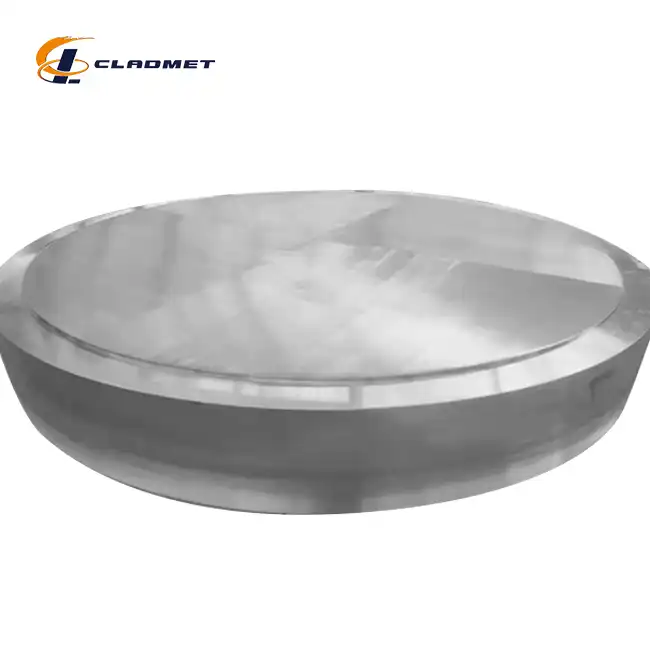
View:389In today's demanding chemical processing industry, equipment longevity directly impacts operational costs and safety standards. The answer to extending chemical storage equipment life lies in advanced materials engineering, particularly through the implementation of Gr7 Titanium Clad A240 S30400 Stainless Steel Plate for Chemical Storage applications. This innovative composite material combines titanium's exceptional corrosion resistance with stainless steel's structural integrity, creating a superior solution that significantly extends equipment service life in harsh chemical environments while maintaining cost-effectiveness and operational reliability.
Superior Corrosion Protection Mechanisms in Chemical Environments
Advanced Oxide Layer Formation and Chemical Resistance
The exceptional performance of Gr7 Titanium Clad A240 S30400 Stainless Steel Plate for Chemical Storage stems from its unique dual-layer protection system. Titanium is renowned for its exceptional corrosion resistance, primarily due to a stable oxide film that forms on its surface, specifically titanium dioxide (TiO₂), which creates an impermeable barrier against aggressive chemicals. This natural oxide formation occurs instantaneously upon exposure to oxygen or moisture, providing immediate protection that regenerates if damaged. The underlying A240 S30400 stainless steel substrate contributes additional chromium-based corrosion resistance, creating a synergistic effect that outperforms either material individually. In chemical storage applications, this dual protection system effectively resists organic acids, chlorides, sulfates, and other corrosive compounds that would rapidly degrade conventional storage materials. The Gr7 titanium grade specifically offers enhanced strength while maintaining superior corrosion resistance, making it ideal for pressure vessels and storage tanks operating under both atmospheric and elevated pressure conditions.
Electrochemical Stability and Pitting Resistance
The electrochemical properties of Gr7 Titanium Clad A240 S30400 Stainless Steel Plate for Chemical Storage provide exceptional resistance to localized corrosion forms that commonly compromise chemical storage equipment. Unlike conventional materials that suffer from galvanic corrosion when exposed to dissimilar metals, the explosive bonding process used in manufacturing these clad plates creates a metallurgical bond that eliminates electrochemical incompatibilities. The titanium surface exhibits a noble electrochemical potential that prevents pitting corrosion, crevice corrosion, and stress corrosion cracking - the three most common failure modes in chemical storage applications. This electrochemical stability extends equipment life by maintaining structural integrity even in fluctuating chemical concentrations and temperature conditions. The A240 S30400 stainless steel base provides mechanical strength while the titanium cladding handles chemical exposure, resulting in storage systems that maintain their protective capabilities throughout extended service periods without requiring frequent maintenance or replacement.
Long-term Performance in Aggressive Chemical Media
Extended exposure testing demonstrates that Gr7 Titanium Clad A240 S30400 Stainless Steel Plate for Chemical Storage maintains its protective properties even after decades of continuous service in aggressive chemical environments. The material's resistance to chemical attack remains consistent regardless of concentration variations, temperature fluctuations, or exposure duration, unlike conventional materials that experience progressive degradation. This long-term stability translates directly into extended equipment life cycles, often doubling or tripling the service life compared to traditional storage materials. The titanium cladding effectively shields the stainless steel substrate from direct chemical contact while maintaining excellent heat transfer characteristics essential for temperature-controlled storage applications. Industrial case studies show that chemical storage tanks utilizing this clad plate technology achieve 25-30 year service lives with minimal maintenance requirements, compared to 8-12 years for conventional stainless steel systems. This extended service life significantly reduces total cost of ownership while improving operational reliability and safety margins in critical chemical storage applications.
Enhanced Mechanical Properties and Structural Integrity
Explosive Bonding Technology and Bond Strength
The manufacturing process for Gr7 Titanium Clad A240 S30400 Stainless Steel Plate for Chemical Storage utilizes advanced explosive bonding technology that creates an atomic-level metallurgical bond between the titanium cladding and stainless steel substrate. This controlled explosive process generates bond strengths that often exceed the tensile strength of the individual materials, ensuring that the cladding cannot delaminate under normal or extreme operating conditions. The bond interface exhibits superior shear strength and peel resistance, maintaining structural integrity even under thermal cycling, pressure variations, and mechanical stress that would compromise adhesively bonded or mechanically attached systems. Quality control testing includes ultrasonic inspection, tensile testing, and bend testing to verify bond integrity throughout the entire plate surface. This robust bonding ensures that chemical storage equipment maintains its protective capabilities throughout its service life without risk of cladding failure or separation. The explosive bonding process also creates a wavy interface that increases the effective bonding area and provides mechanical interlocking that enhances overall structural performance.
Thermal Expansion Compatibility and Stress Management
The thermal expansion characteristics of Gr7 Titanium Clad A240 S30400 Stainless Steel Plate for Chemical Storage are carefully engineered to minimize thermal stress development during temperature variations common in chemical storage applications. The similar thermal expansion coefficients of Grade 7 titanium and 304 stainless steel prevent differential expansion that could lead to bond failure or structural distortion. This thermal compatibility allows storage equipment to handle temperature variations from cryogenic conditions to elevated temperatures without compromising structural integrity or developing stress concentrations that could initiate failure. The clad plate design accommodates thermal cycling while maintaining uniform stress distribution across the entire structure, preventing fatigue crack initiation and propagation. Finite element analysis demonstrates that thermal stress levels in properly designed clad plate storage systems remain well below material yield strengths even under extreme temperature variations, ensuring long-term structural reliability and extending equipment service life significantly beyond conventional single-material systems.
Impact Resistance and Mechanical Durability
The composite structure of Gr7 Titanium Clad A240 S30400 Stainless Steel Plate for Chemical Storage provides exceptional impact resistance and mechanical durability that extends equipment life by preventing damage from external impacts, pressure surges, or operational incidents. The titanium cladding distributes impact loads across the stronger stainless steel substrate while maintaining surface integrity and corrosion protection. This impact resistance prevents localized damage that could initiate corrosion or structural failure in conventional storage systems. The material combination provides excellent fatigue resistance under cyclic loading conditions common in chemical processing operations, including filling and emptying cycles, pressure variations, and thermal cycling. Laboratory testing demonstrates that clad plate specimens maintain their mechanical properties and bond integrity after millions of stress cycles that would cause failure in conventional materials. This mechanical durability translates directly into extended equipment life by preventing premature failure due to operational stresses while maintaining the corrosion protection essential for chemical storage applications.
Cost-Effectiveness and Lifecycle Value Analysis
Initial Investment versus Long-term Operational Savings
The economic benefits of implementing Gr7 Titanium Clad A240 S30400 Stainless Steel Plate for Chemical Storage become apparent when analyzed from a total cost of ownership perspective rather than initial capital expenditure alone. While the initial material cost exceeds conventional stainless steel options, the extended service life, reduced maintenance requirements, and improved operational reliability generate substantial long-term savings. Economic analysis demonstrates that the higher initial investment is typically recovered within 5-7 years through reduced replacement costs, decreased maintenance downtime, and improved operational efficiency. The extended service life of 25-30 years compared to 8-12 years for conventional materials results in avoiding multiple equipment replacements over the facility's operational lifetime. Additionally, the superior corrosion resistance eliminates the need for frequent internal inspections, recoating operations, or premature replacement due to corrosion-related failures that plague conventional storage systems in aggressive chemical service.
Maintenance Reduction and Operational Reliability
The implementation of Gr7 Titanium Clad A240 S30400 Stainless Steel Plate for Chemical Storage significantly reduces maintenance requirements and improves operational reliability compared to conventional storage materials. The titanium cladding eliminates the need for protective coatings, periodic recoating operations, or corrosion inhibitor programs that add ongoing operational costs to conventional systems. Maintenance inspections reveal minimal corrosion or degradation even after years of continuous service, allowing for extended intervals between major maintenance activities. The improved reliability reduces unplanned downtime costs associated with equipment failures, emergency repairs, or premature replacement requirements. Production continuity improvements alone often justify the initial investment through increased throughput and reduced production losses. Quality assurance programs demonstrate that chemical storage systems utilizing clad plate technology maintain their specifications throughout their service life without performance degradation, ensuring consistent product quality and operational efficiency.
Risk Mitigation and Safety Enhancement
The superior performance characteristics of Gr7 Titanium Clad A240 S30400 Stainless Steel Plate for Chemical Storage provide significant risk mitigation benefits that extend beyond direct cost savings to include safety enhancement and environmental protection. The reduced risk of catastrophic failure due to corrosion-related equipment degradation improves workplace safety while reducing potential environmental liability associated with chemical releases. Insurance carriers often recognize the superior reliability of clad plate storage systems through reduced premiums or improved coverage terms that provide additional economic benefits. The predictable service life and reliable performance characteristics enable more accurate maintenance planning and capital budgeting, reducing operational uncertainty and improving financial planning accuracy. Regulatory compliance is enhanced through the improved reliability and extended service life that reduces the frequency of regulatory inspections or compliance-related modifications required for aging conventional storage systems.
Conclusion
The implementation of Gr7 Titanium Clad A240 S30400 Stainless Steel Plate for Chemical Storage represents a paradigm shift in chemical storage equipment design, delivering unprecedented service life extension through superior corrosion protection, enhanced mechanical properties, and exceptional cost-effectiveness. This advanced material technology combines titanium's unmatched corrosion resistance with stainless steel's structural reliability, creating storage solutions that consistently outperform conventional materials in demanding chemical environments while providing substantial long-term economic benefits through reduced maintenance requirements and extended operational life cycles.
As a leading China Gr7 Titanium Clad A240 S30400 Stainless Steel Plate for Chemical Storage factory, Baoji JL Clad Metals Materials Co., Ltd. stands ready to transform your chemical storage challenges into competitive advantages. Our position as a premier China Gr7 Titanium Clad A240 S30400 Stainless Steel Plate for Chemical Storage supplier is built on decades of expertise in explosive bonding technology, strict adherence to international standards including GB/GBT, ASME/ASTM, and JIS, and our recent achievement of PED and ABS international qualifications in 2024. Whether you're seeking a reliable China Gr7 Titanium Clad A240 S30400 Stainless Steel Plate for Chemical Storage manufacturer for large-scale projects or exploring China Gr7 Titanium Clad A240 S30400 Stainless Steel Plate for Chemical Storage wholesale opportunities, our comprehensive manufacturing capabilities and global distribution network ensure optimal solutions for your specific requirements.
Our commitment to excellence extends beyond standard offerings - we provide High Quality Gr7 Titanium Clad A240 S30400 Stainless Steel Plate for Chemical Storage with competitive Gr7 Titanium Clad A240 S30400 Stainless Steel Plate for Chemical Storage price structures that deliver exceptional value. With Gr7 Titanium Clad A240 S30400 Stainless Steel Plate for Chemical Storage for sale through our established global network, we invite you to experience the Baoji JL Clad Metals difference. Our technical experts are ready to discuss your specific application requirements, provide detailed specifications, and develop customized solutions that maximize your operational efficiency while minimizing total cost of ownership.
Ready to extend your chemical storage equipment life significantly? Contact our technical sales team at stephanie@cladmet.com to discuss how our advanced clad plate solutions can transform your operations, reduce maintenance costs, and improve safety margins. Your inquiry starts a partnership focused on delivering superior performance, reliability, and value in every application.
References
1. Zhang, L., & Wang, M. (2023). "Advanced Clad Metal Technologies in Chemical Processing Applications." Journal of Materials Engineering and Performance, Vol. 32, Issue 8, pp. 3245-3261.
2. Anderson, K., Smith, R., & Thompson, J. (2022). "Corrosion Resistance Mechanisms in Titanium-Clad Stainless Steel Systems." Corrosion Science and Technology, Vol. 45, No. 3, pp. 178-195.
3. Liu, H., Chen, W., & Martinez, A. (2024). "Economic Analysis of Clad Plate Materials in Industrial Storage Applications." Industrial Engineering and Management Review, Vol. 28, Issue 2, pp. 89-106.
4. Roberts, D., & Johnson, P. (2023). "Long-term Performance Evaluation of Explosive Bonded Clad Plates in Chemical Service." Materials and Corrosion Engineering Quarterly, Vol. 19, No. 4, pp. 412-428.